Flow measurement is the quantification of fluid motion. Flow can be measured in various methods. Common types of flowmeters used industrially include:
a) Obstruction type (differential pressure or variable area)
b) Inferential (turbine type)
c) Electromagnetic
d) Positive displacement flowmeters that collect a fixed volume of fluid and then count the number of fill cycles to measure flow rate.
e) Fluid dynamics (vortex shedding)
f) Anemometer
g) Ultrasonic
h) Mass flow meters (Coriolis force).
Flow measurement methods, aside from positive displacement flowmeters, rely on the forces generated by the flowing fluid as they overcome known contractions for indirect calculation of flow. Flow may be measured by assessing the fluid velocity in a known area. For extremely large flows, tracer methods may be employed to infer flow rate from changes in concentration of dye or radioactive isotope.
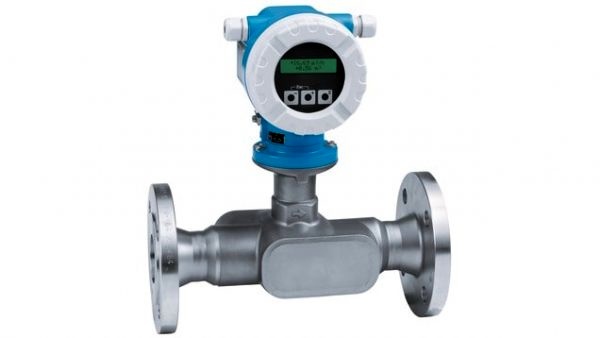
What is a Flowmeter?
Let’s take a closer look at what a flowmeter is.
If you want to know the flow rate in your pipe or river, that's when you need a flowmeter. Therefore, a flowmeter is a tool that can complete flow measurement.
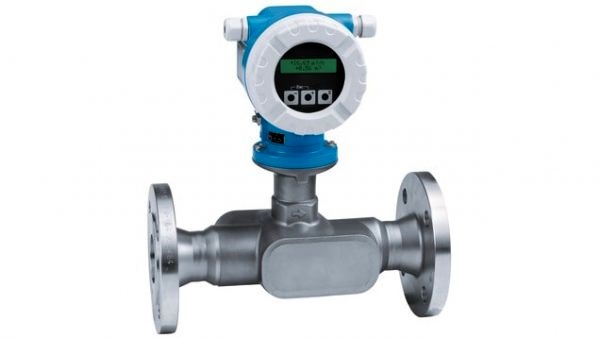
Flowmeters comprise a main device, a transducer, and a transmitter.
The transducer senses the fluid passing through the primary device.
The transmitter produces a usable flow signal from the raw transducer signal.
These components are often combined, so the actual flowmeter may consist of one or several physical devices.
The type of flowmeter depends on various needs and applications.
For example, we prefer vortex flowmeters for measuring steam flow.
Also, we select ultrasonic flowmeters for measuring flow in pipes without contact.
For measuring flow in an undefined liquid (wastewater or corrosive liquids), turbine-type flowmeters cannot be used.
How Does a Flowmeter Work?
Flowmeters are devices that measure the amount of liquid, gas, or vapor passing through them.
Some flowmeters measure flow as the amount of fluid passing through the flowmeter over a period of time (e.g., 100 liters per minute).
Other flowmeters measure the total amount of fluid that has passed through the flowmeter (e.g., 100 liters).
Flow measurement can be described by the following equation:
Q = A x v
Where Q is the flow rate, A is the cross-sectional area of the pipe, and v is the average velocity of the fluid in the pipe.
Applying this equation, fluid flowing at an average velocity of 1 meter per second through a pipe with a cross-sectional area of 1 square meter has a flow rate of 1 cubic meter per second.
Now consider the following equation:
W = rho x Q
Where W is the flow rate (read again), and rho is the fluid density.
Using this equation, the flow rate would be 1 kilogram per second when 1 cubic meter per second of fluid with a density of 1 kilogram per cubic meter is flowing.
(The same approach can be applied for common 'pounds.' Without going into details—a pound is assumed to be a unit of mass.)
Principles of Flow Measurement
Flowmeters can be divided into volumetric flowmeters and mass flowmeters.
Volumetric Flowmeters:
Differential head type
Orifice plates
Venturi meters
Annubar
Differential area type (Rotameter)
Electromagnetic flowmeters
Ultrasonic flowmeters
Turbine flowmeters
Vortex flowmeters
Positive displacement meters
Mass Flowmeters:
For various applications, we offer different types of flowmeters, such as:
Metal tube rotameter
Differential pressure flowmeter
Venturi meter
Orifice meter
Ultrasonic flowmeter
Thermal flowmeter
Open channel flowmeters
Both gas and liquid flow can be measured in physical amounts of either volumetric or mass flow, respectively in units such as liters per second or kilograms per second. These measurements are related to the density of the materials. The density of a liquid is nearly independent of conditions. This is not the case for gases, whose density heavily depends on pressure, temperature, and to some extent composition.
When gases or liquids are transported for their energy content, such as when natural gas is sold, flow rates may also be expressed in terms of energy flow such as gigajoules per hour or BTU per day. Energy flow rate is the volumetric flow rate multiplied by the energy content per unit volume or the mass flow rate multiplied by the energy content per unit mass. Energy flow rates are usually derived from mass or volumetric flow rates using flow computers.
Gas
Gases are compressible, and when subjected to pressure, they warm or cool, changing volume. The volume of a gas under a set of pressure and temperature conditions does not equate to the same gas under different conditions. The term 'actual flow' will refer to a meter and 'standard' or 'base' flow will refer to a meter with units like acm/h (actual cubic meters per hour), sm3/sec (standard cubic meters per second), kscm/h (thousand standard cubic meters per hour), LFM (linear feet per minute), or MMSCFD (million standard cubic feet per day).
Mass flow rate of gas can be measured directly, independent of pressure and temperature effects, using thermal mass flowmeters, Coriolis mass flowmeters, or mass flow controllers.
Liquid
For liquids, various units are used depending on the application and industry, but may include gallons (US or imperial) per minute, liters per second, bushels per minute, or, when describing river flow, cumecs (cubic meters per second) or hectares. A common unit for measuring the volume transferred (e.g., the volume of water transferred by flow) in oceanography is one sverdrup (Sv), equivalent to 106 m3/s.
Primary Flow Element
A primary flow element is a device placed in the flowing fluid that creates a physical property that can be accurately correlated with flow. For instance, an orifice plate creates a pressure drop that is a function of the square of the volumetric flow velocity through the orifice. A primary flow element vortex flowmeter creates a series of pressure oscillations...