When precise positioning and speed control are needed, most engineers turn to servo motors and stepper motors. But what is the difference between these two, and which option is suitable?
When engineers hear the term “motor,” they typically think of AC and DC motors.
These motors are found in constant motion applications such as flywheels or conveyor belts. In industrial automation, you can find two other types of motors: servo motors and stepper motors.
These motors are used in applications where precise movement, speed, and torque are required. In this article, we will compare the differences between servo motors and stepper motors and illustrate common applications for both.
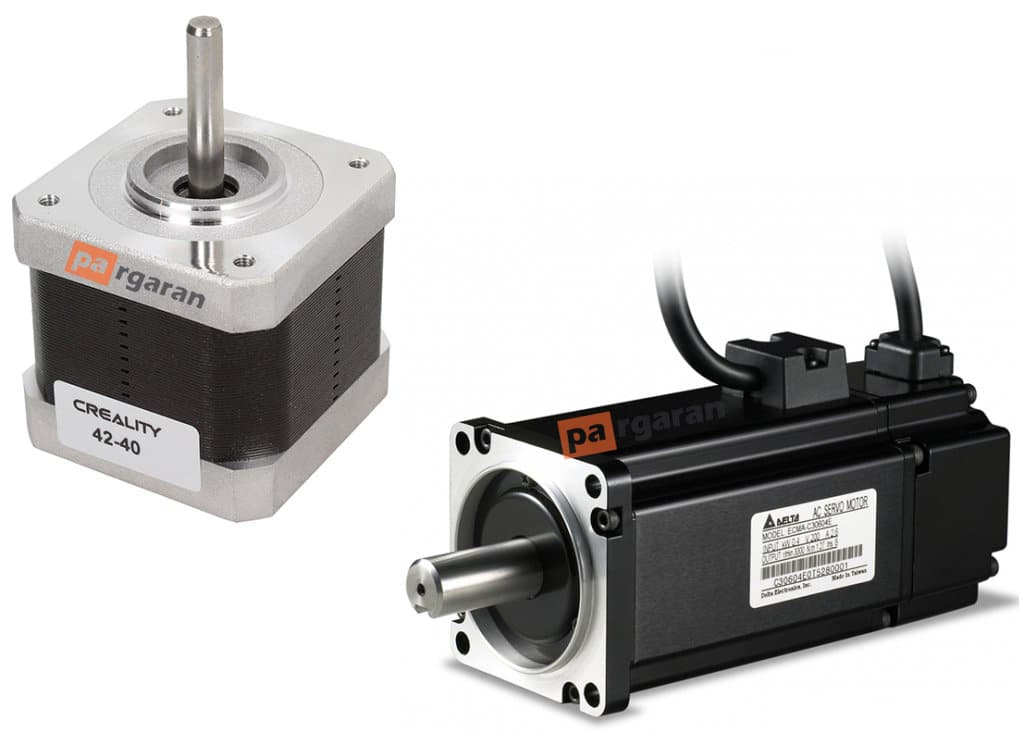 Servo motors are different from continuous motion motors due to their feedback loop and drive system.
What is a Servo Motor?
A servo motor is very similar to a conventional continuous motion motor. There are AC and DC servo motors, brushed and brushless motors, and synchronous or asynchronous (induction) motors.
What distinguishes servo motors from conventional motors is the feedback loop and drive system.
Each servo motor has an encoder and a drive controller: the encoder reports the position of the shaft to the drive controller, thus creating a closed-loop system.
The drive system amplifies and filters the input voltage before applying current to the motor. The PLC informs the drive system of the motor's position and speed.
Depending on whether the motor is AC or DC, the motor speed is typically controlled by sine wave and PWM signals.
Just like a conventional AC motor, adjusting the frequency changes the motor's speed.
Similarly, for a conventional DC motor, changing the voltage alters the speed. With an AC servo motor, the drive accepts an electrical signal from a PLC or other controllers and sends current at a specific frequency until the desired shaft position is reached.
What is a Stepper Motor?
A stepper motor still utilizes a rotating magnetic field to convert electrical current into rotational motion, but it has a much higher density of magnetic poles.
Stepper motors divide a full rotation into many equal steps.
When a magnetic pole is activated, the output shaft moves one step, which gives the motor its name “stepper.” If the poles are energized sequentially at a high frequency, the rotational motion appears smooth.
This type of control is typically done with specific output cards that can control the high output frequency needed. As the density of the steps increases, the positional accuracy of the output shaft also improves.
Stepper motors usually do not have encoders because the steps are precisely divided. A stepper motor can easily be commanded to rotate a specific number of degrees by counting how many times the outputs are energized.
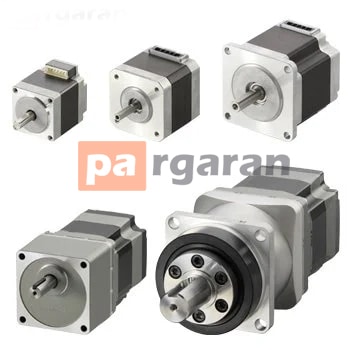 Stepper motors do not require encoders because the steps are precisely divided.
Applications of Servo Motors and Stepper Motors
Servo Motor
Typically, a servo motor is integrated with a gearbox, drive controller, and a linear actuator, which may be a lead screw or a belt and pulley system that converts rotational motion into linear motion.
This system is used for precise and accurate movement of tools from one point to another.
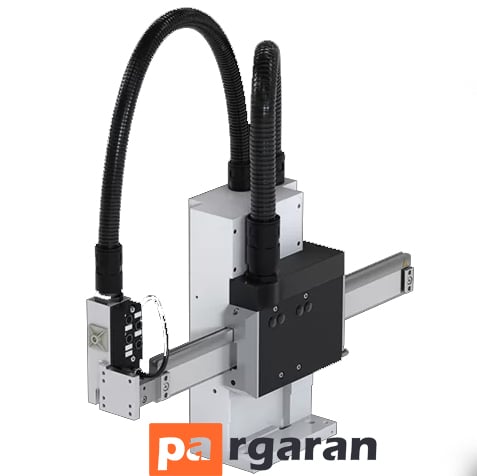
Servo motors excel in pick-and-place applications due to their speed and precision.
Inside the PLC, the gearbox ratio and actuator ratios enter a scaling algorithm.
Thus, when the PLC instructs the servo to move a specified distance at a specific speed, the drive system can calculate the specific frequency and stop the servo.
Once the encoder reports the correct number of rotations. This type of system is commonly found in pick-and-place stations where an item must be picked from one location and placed in another.
Servo motors are excellent tools for pick-and-place stations due to their speed and precision.
A jointed robot typically has six servo motors and gearing. This robot moves an end effector around in a controlled manner.
With the high torque capacity of servo motors, robots can move large loads throughout their working envelope. Servo motors also have the ability to precisely control their output torque. This feature makes servo motors an excellent choice for pressing applications.
Stepper Motor
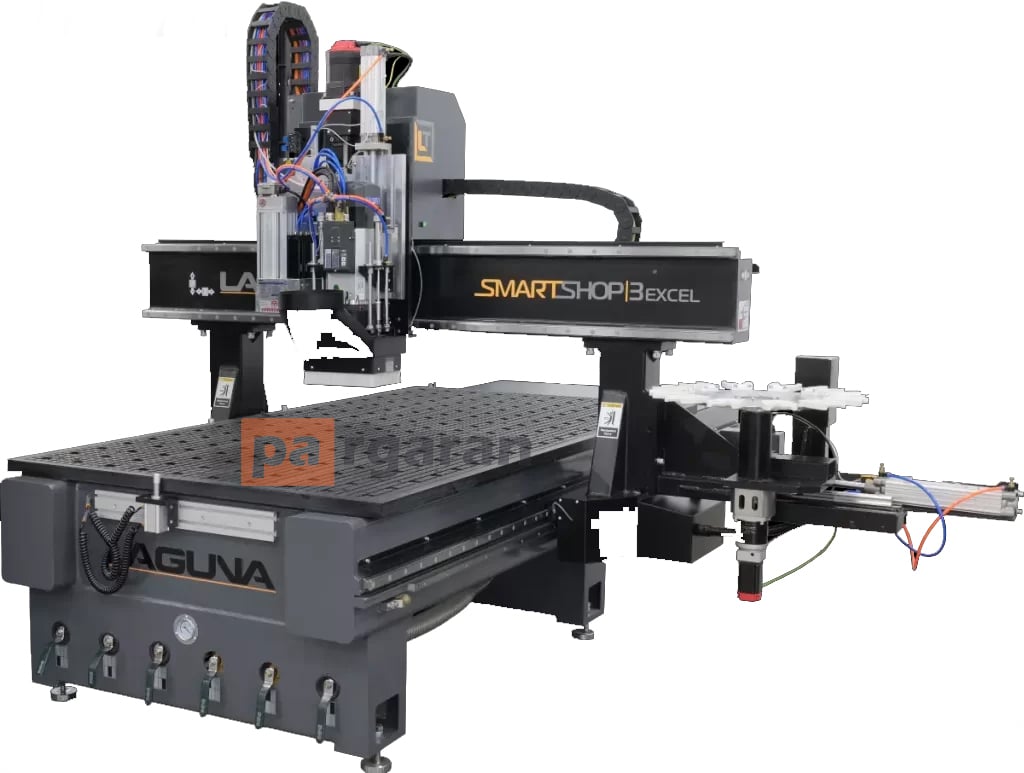
Stepper motors are suitable for machining due to their controlled movements.
Stepper motors have unique features that make them an excellent candidate for very specific motion profiles.
They can utilize full torque when stationary. Speed can be controlled by the frequency of the pulse for each pole and can rotate at very low speeds without the risk of overheating.
With these specific features and lower cost, stepper motors are commonly found in 3D printing machines, CNC machining centers, welding equipment, and low-cost robotics.
The small form factor, operation on DC voltage, and open-loop design make stepper motors an excellent choice for hobbyists and small electronic devices. Stepper motors perform well in applications requiring slow, small movements.
Comparing Servo Motors and Stepper Motors
...