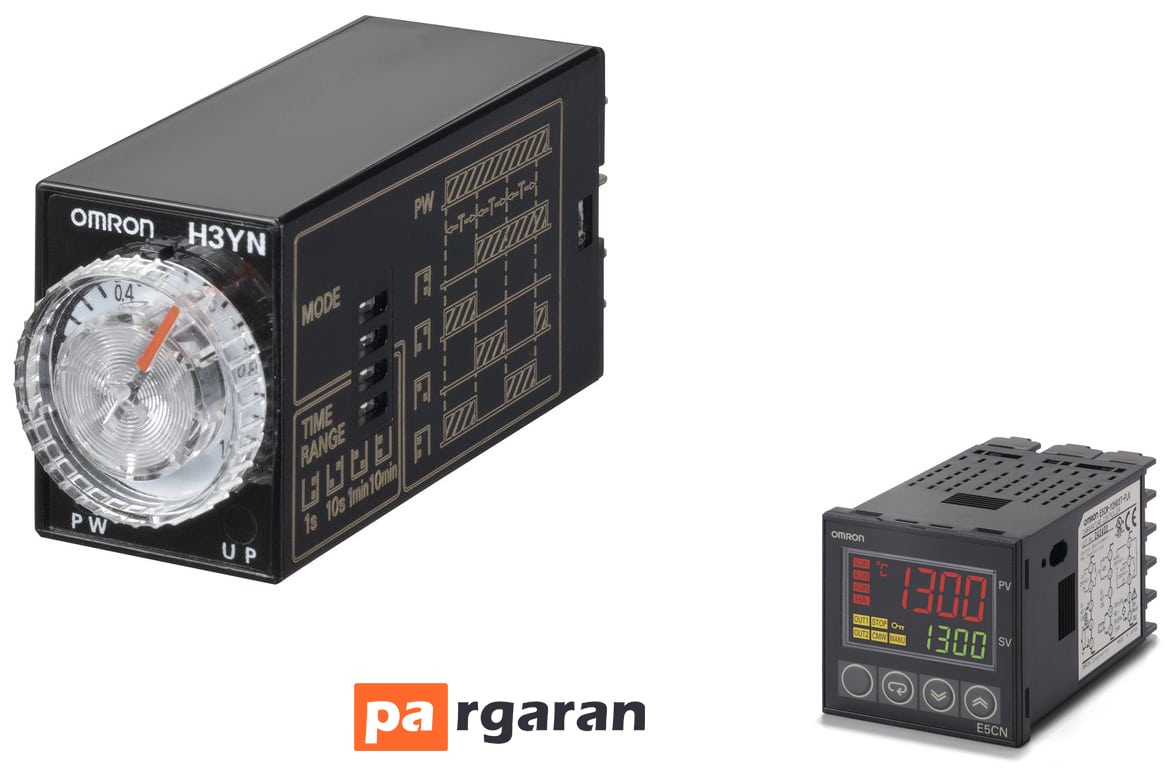
What is a Timer | Applications of Timer in Industry
A timer is a control device that outputs a signal after receiving an input signal, following a predetermined time interval.
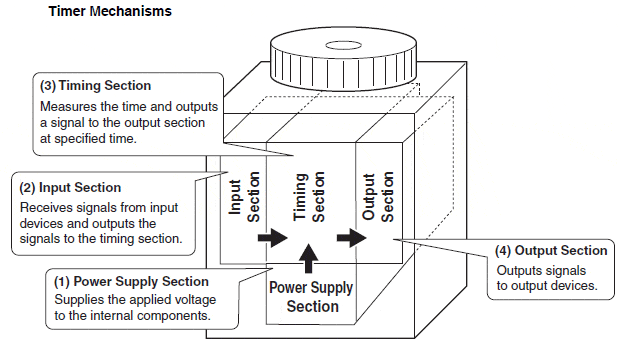
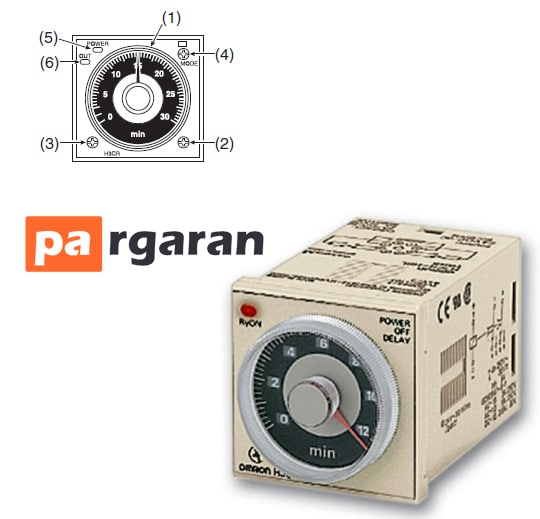
Timer Settings and Indicators
Example for H3CR-A Omron
- Time Set Button
- Time Unit Selector
- Time Range Selector
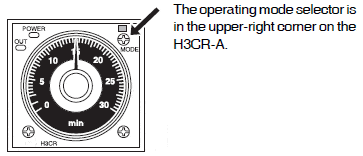
- Operational Mode Selector
Using the time unit selector and the time range selector, various time ranges can be set with the H3CR-A.
The timer indicators do not move with time like the hands of a clock. You cannot see the progression of time.
You cannot see the progression of time.
Therefore, two operational indicators on the upper left of the timer are present to identify the timer's status.
5. Run/Power Indicator (Green)
(Run indicator) The run indicator: shows whether the time is being measured or if the time has reached.
(Power indicator) The power indicator: indicates whether power is supplied to the timer or not.
Essentially, the indicators light up when power is supplied. However, when the time is being measured, they blink.
6. Output Indicator (Orange)
Used to observe the output status. It lights up when a signal is output.
Timer Operational Modes
The operational mode determines the method of output that is used after the set time is reached.
The four main operational modes below are the most commonly used.
ON Delay Operation
Model A
OFF Delay Operation
Model D
Flicker Operation
Model B
Interval Operation
Model E
ON-delay Operation
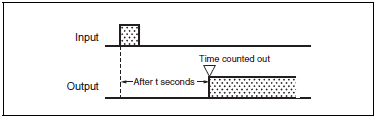
With ON Delay operation, the timer receives an input and then outputs a signal by switching the timer contacts after a predetermined delay.
This name is used because there is a delay between receiving the input signal (i.e., turning on) and the output signal.
ON delay operation is an operational mode that is often used for automatic machinery.
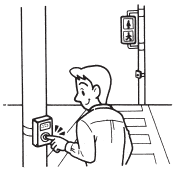
Application: Push Signaling
When the pedestrian button for a traffic signal is pressed, the signal light changes from red to green after a delay.
OFF-delay Operation
With OFF Delay operation, the output is activated simultaneously with the input and is turned off after the set time, when the timer contacts switch. The time set is calculated from the moment the input is turned off.
This name is used because there is a delay between turning off the input and turning off the output.
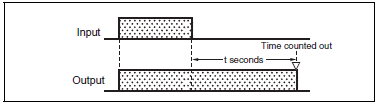

Application: Car Ceiling Lights
When you enter your car, the ceiling light turns on when the door opens. After you enter and close the door, the light stays on for a few seconds.
Flicker Operation
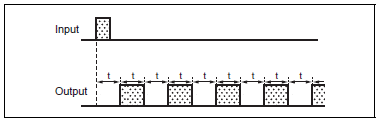
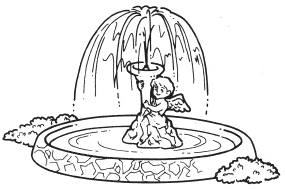
With Flicker operation, an output periodically turns on and off at a set time after receiving the input.
Application: Automatic Fountain Control
Water is released periodically and stops at intervals of two minutes.
Interval Operation
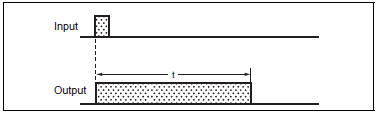
With Interval operation, the output is activated at the same time as the input and the output is turned off after a set time.
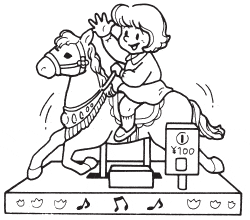
Application: Amusement Park Ride
With a 100 yen insertion, the ride operates for five minutes.
Timer Start Methods
There are two start methods for operational modes.
Example: ON Delay Operation
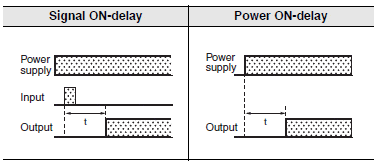
The ON Delay signal operation: Time measurement starts when the input section receives an input, while voltage is applied to the timer’s power supply section.
The ON Delay power startup: Time measurement starts when voltage is applied to the timer's power supply section.
Accuracy
Operation will not be stable unless a short period passes after the power supply is turned on for the timer's timing section.
Power Startup: This operation is unstable because the time measurement starts simultaneously with the power being turned on.
Therefore, a deviation in time operation occurs immediately after starting the timer.
Signal Startup: Stable time accuracy is ensured because voltage is applied to the timer before it is turned on.
Accuracy with signal start is generally considered better. However, for some models, like the H3CR, there is no change in accuracy.
*Accuracy refers to the correctness of time.
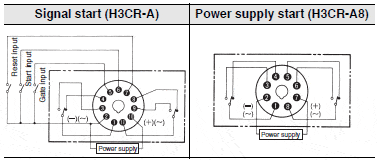
Terminal Arrangement
- Models with signal start require three external inputs, thus having more terminals.
- Models powered (H3CR-A8) are H3CR timers commonly used for automatic machinery.
What is a Timer or Time Switch?
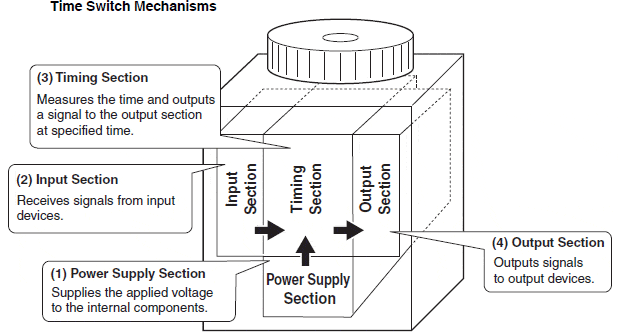
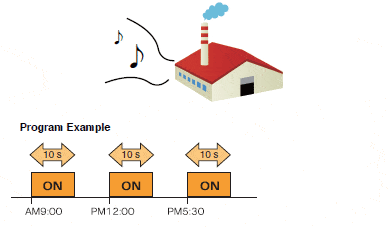
A time switch is a control device that turns a load on and off at specified times.
However, most models of time switches do not have an input section.
If an input section is present, it is not used for output signal to the timing section but for controlling some functions of the time switch, such as setting the time.
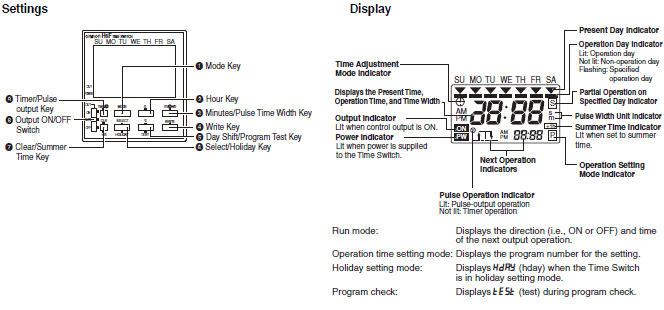
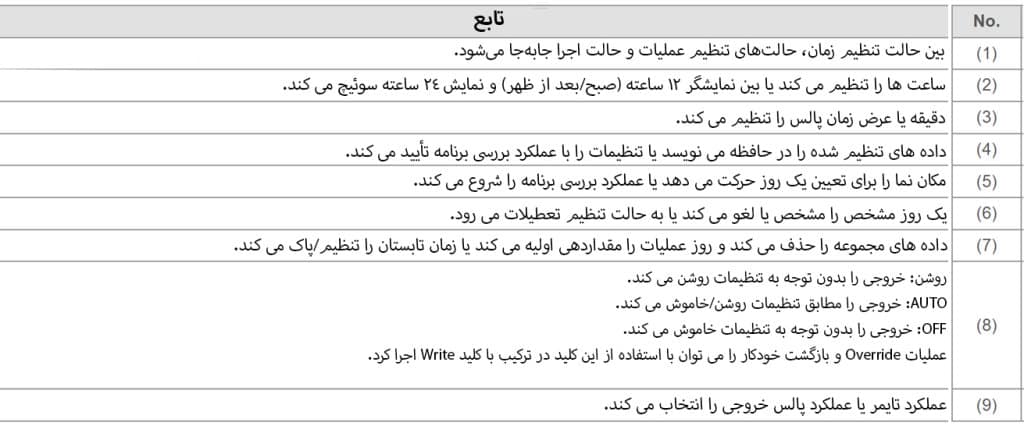
Settings and Indicators of Time Switches
Example for H5F
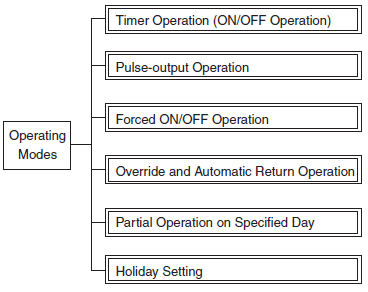
Operating Modes of Time Switches
The operational status determines the ON/OFF output method that is used for set times.
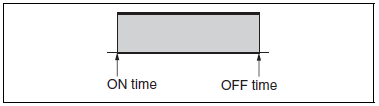
With timer operation, the time switch controls the output ON and OFF according to the set times.
Application 1: Warm-up Operation for Packing Machines
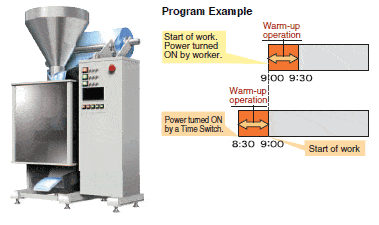
The packing machine can be warmed up before employees arrive at work so that work can begin immediately.
Application 2: School Bells!
Bells can be rung at the start of classes, at lunch time, and at the end of classes.