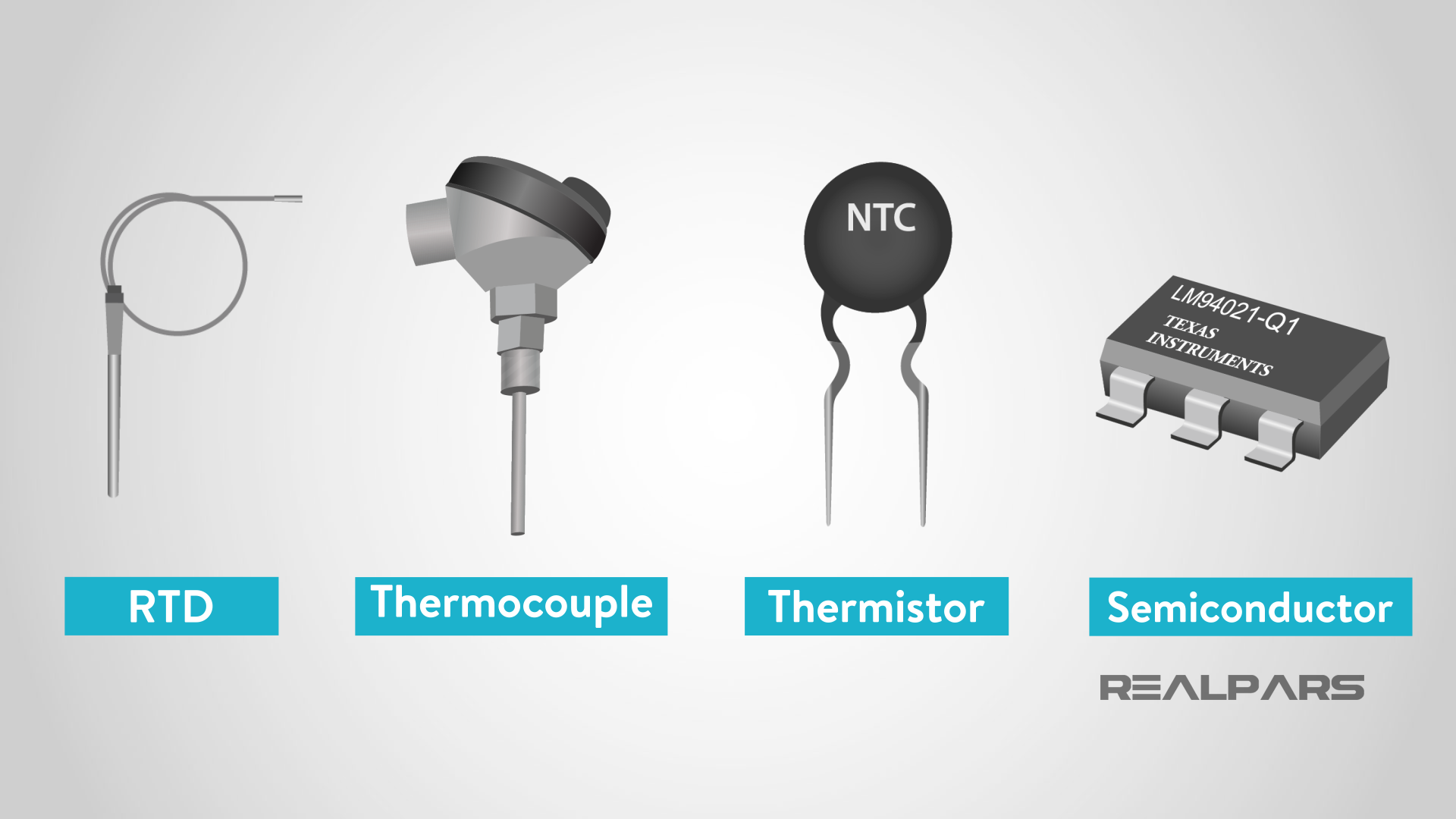
Temperature sensors operate by providing readings through electrical signals. The sensors are comprised of two metals that produce voltage or electrical resistance by measuring the voltage at the diode terminals. As voltage increases, temperature also rises.
Temperature sensors are devices that provide temperature measurements through an electrical signal. The simplest way to measure temperature is by using a thermometer, which measures how warm or cold something is. With technological advancements, we now have access to various temperature sensors that are much more precise.
Temperature sensors are extremely useful and essential for a wide range of applications. In fact, you may be using them more than you think! They are utilized in microwaves, refrigerators, and water heaters in your home. Temperature sensors are indeed employed in this regard. For example, thermometers play a critical role in geotechnical monitoring and renewable energy.
This article explains how temperature sensors work, the different types of sensors, and the most common applications for which they are used.
Temperature Sensor Technologies
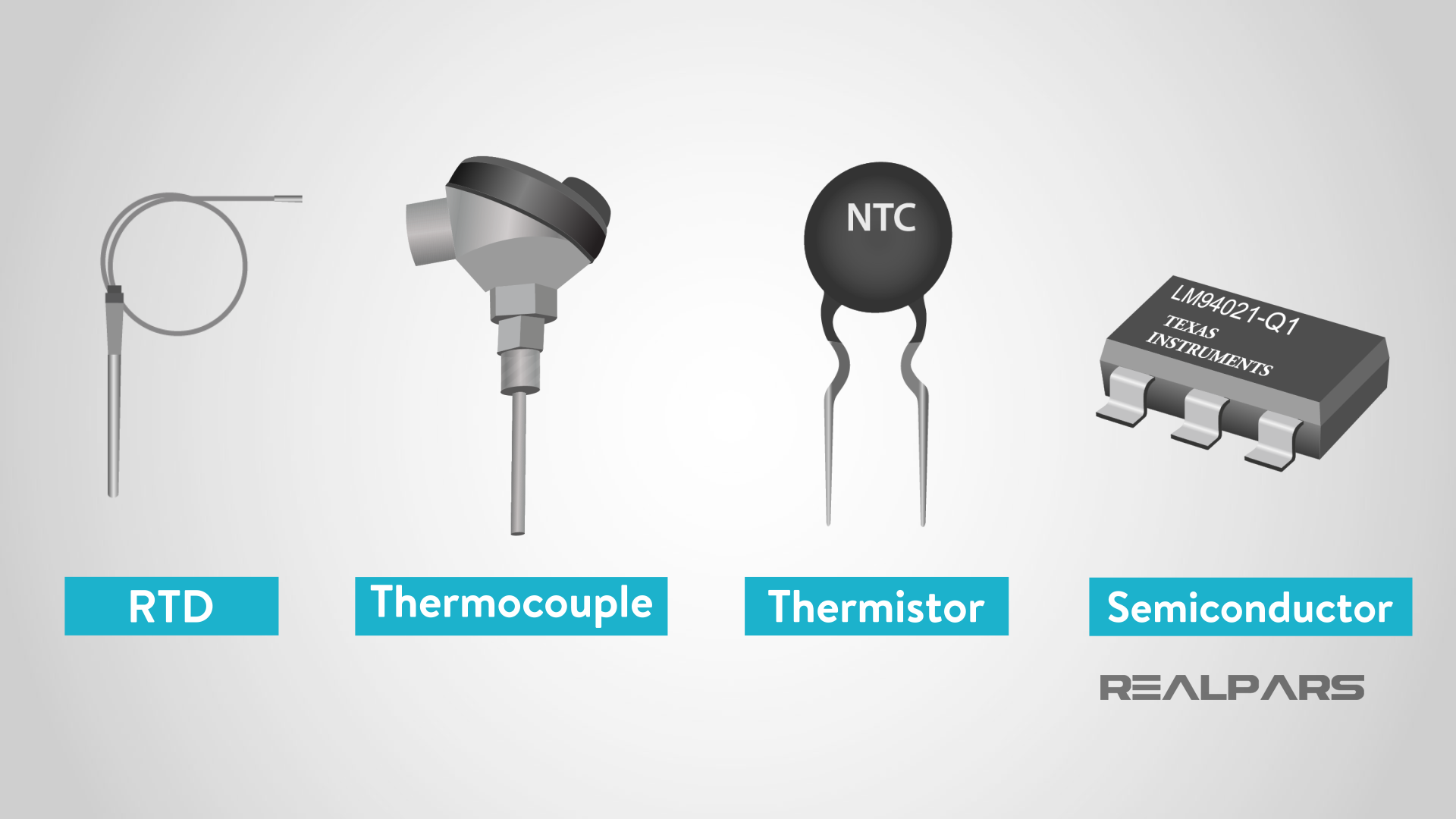
Over the years, we have invented various technologies for measuring temperature in different specific applications.
But why different technologies?
This is due to the various applications where one technique may perform better than others for a particular case, and there is no single method recommended for all applications.
Temperature Transmitter
Before diving into the details of this subject, let’s see what a "temperature sensor" (temperature converter) is and what "temperature transmitter" means.
Generally, a sensor or transducer is a physical device capable of converting one type of process variable to the desired signal type.
To elaborate on this general statement, let me provide an example for you.
Temperature, pressure, flow, etc., are some process variables and are actually the physical characteristics of our real world.
With modern technology and due to remarkable advances in electrical engineering over the past century, we like to convert any measurable process value into an electrical signal, and a temperature sensor is a device that converts temperature into an electrical signal, no matter how trivial this signal may be!
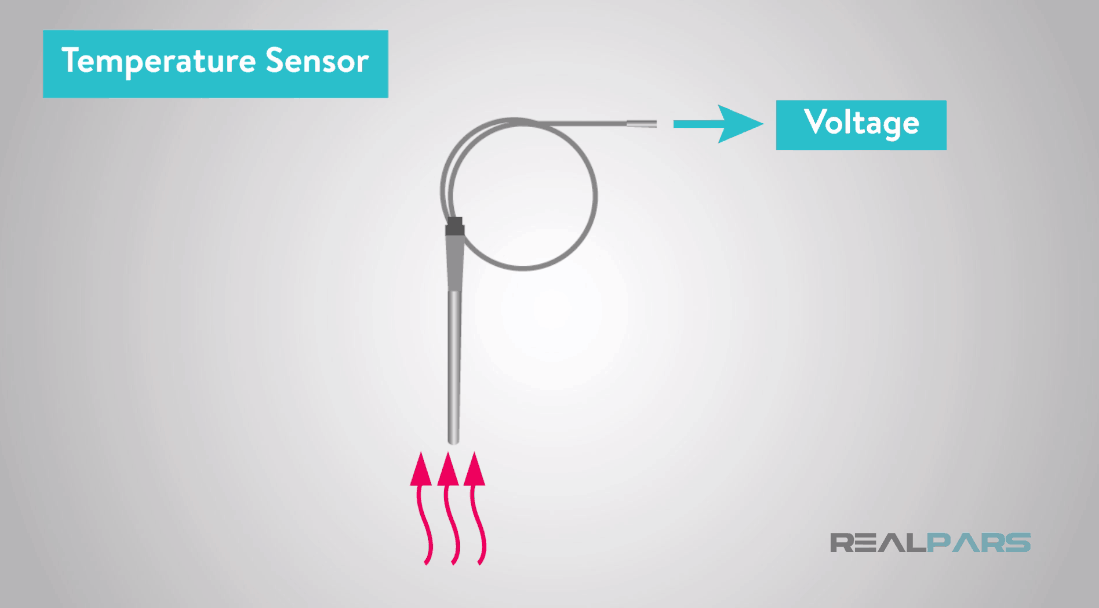
So far, I have taken a significant "first step" in converting "temperature" to "electrical signal."
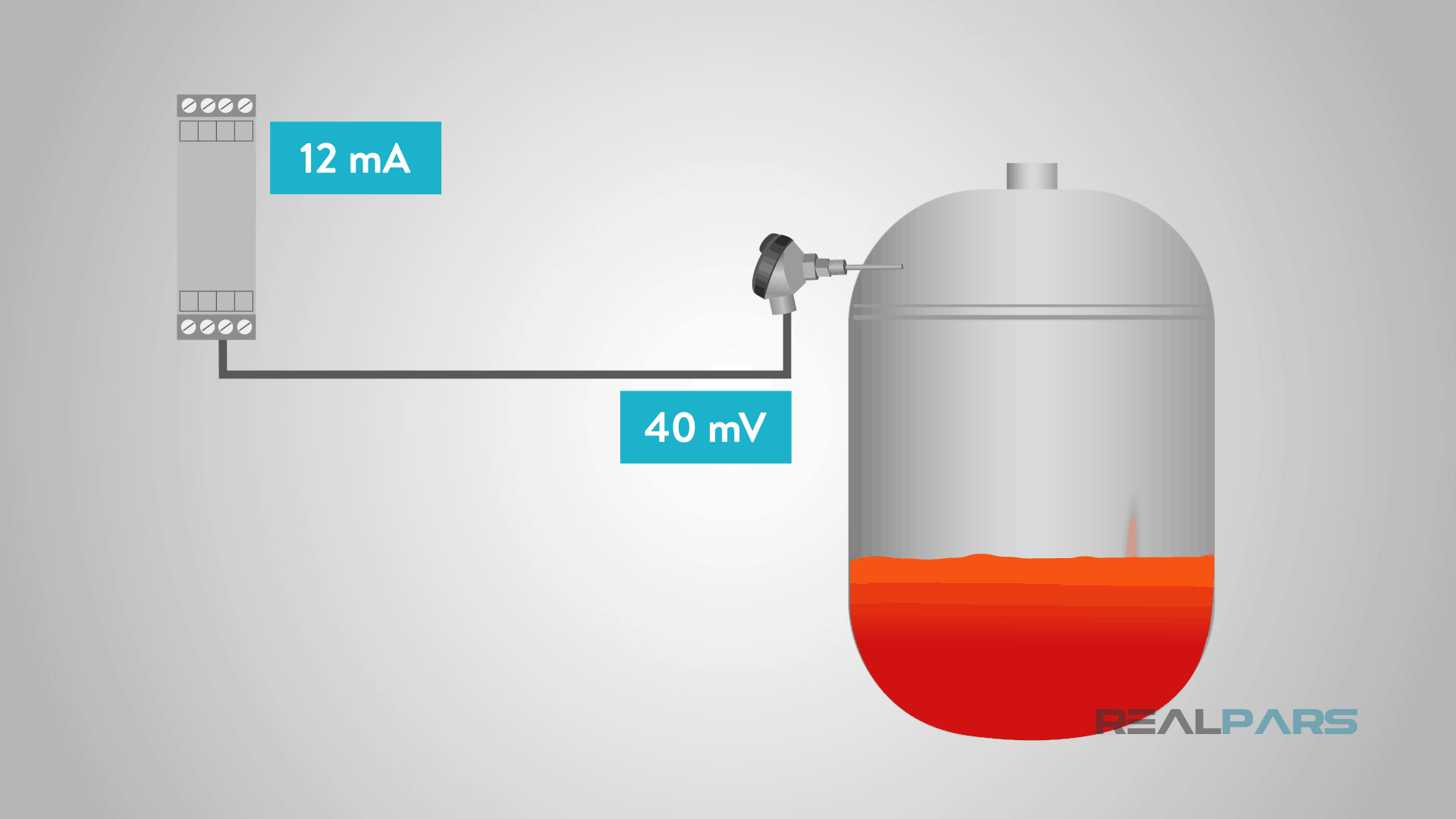
Depending on various sensor technologies, this signal may have different ranges and, for industrial applications, I need to restrict my signals to some globally accepted "signal range" in electrical terms.
Some of these globally accepted electrical signal ranges:
Types of Temperature Sensors:
Sensors come in various types categorized by their connections. Depending on the type of application being used or the industry in which you work, there are two main categories of temperature sensors:
1- Contact Temperature Sensors
Contact temperature sensors measure the warmth or coldness of an object or substance through direct contact. They are generally used to detect a wide range of temperatures in solids, liquids, or various gases.
2- Non-contact Temperature Sensors
These thermometers never make direct contact with an object or substance, making them widely applicable in hazardous environments like power plants. They measure how warm or cold something is by detecting the radiation emitted from a heat source.
To understand how temperature sensors operate, we will delve deeper into each type of temperature sensor below:
Resistance Temperature Detectors (RTD)
Now let’s return to the various technologies of the "temperature transducer".
An RTD or "Resistance Temperature Detector" is a device whose resistance varies with temperature.
Since a "passive" device requires an external electric current to be applied to it, and then the voltage drop across it is measured. This voltage is a good indication of temperature.
When a device is referred to as "passive", it means that it requires an external current (or voltage) source.
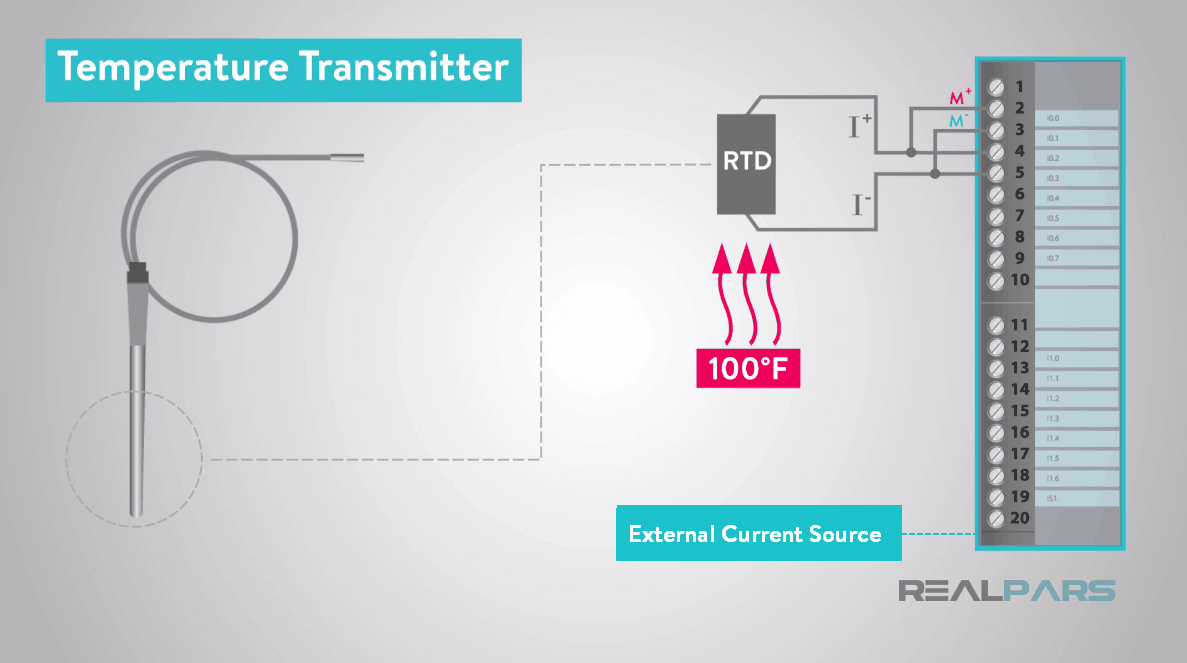
To put it clearly, a large amount of external current can lead to power loss in the RTD resistance and excess heating, so to avoid this type of error, the current must be maintained at a minimal level.
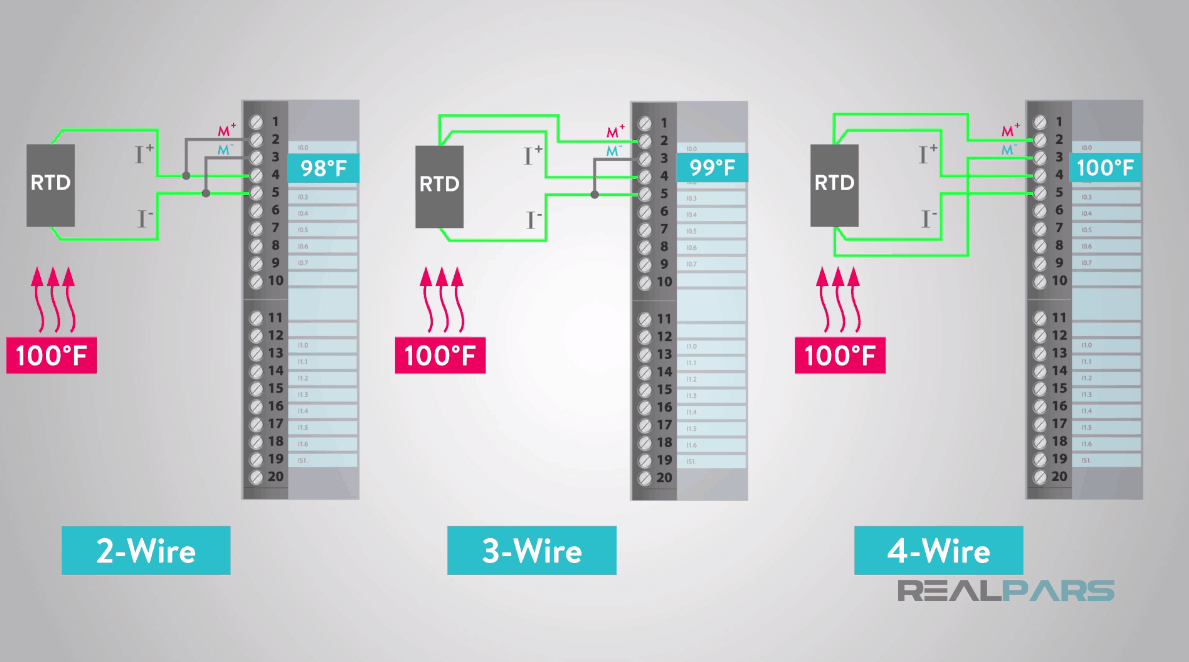
This simple wiring diagram illustrates the most basic application of an RTD called the "two-wire" configuration.
More precise readings require 3 or 4 wire configurations.
In fact, the distance between the temperature measurement point and the measuring system requires wiring, and since the actual wiring has its own resistance, some measuring errors can be concealed this way!
Three-wire (3 wire) and four-wire (4 wire) solutions have been developed to eliminate this error.
One of the most common RTDs is the “PT100,” which consists of a thin layer of platinum on a plastic substrate and shows a resistance of 100Ω at 32 degrees Fahrenheit.
Its resistance varies with temperature and can typically measure temperatures from -330 to 1560 degrees Fahrenheit.
The relationship between resistance and temperature for the PT100 is relatively linear.
...