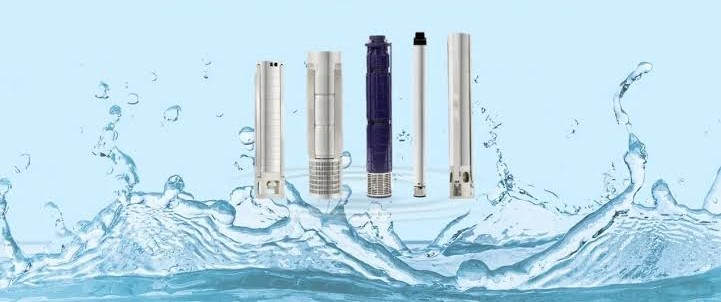
In this article, we aim to understand why we should use a submersible pump and how to choose one. A pump is a device used to transfer fluids from one place to another. There are various types of pumps utilized in different industries worldwide. The submersible pump is a well-known type of pump. It is a type of multistage centrifugal pump, also referred to as a well pump.
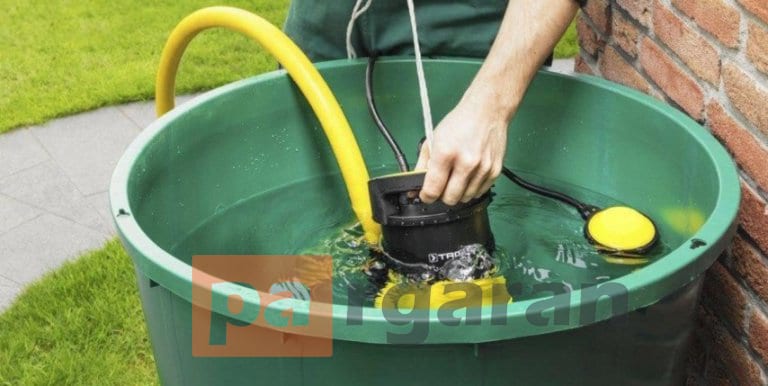
What is a Submersible Pump?
It is a mechanical device that pushes water to the surface instead of pulling it. It has a hermetically sealed motor connected to the pump body which aids in pushing the fluid to the surface.
The most famous type is a centrifugal pump. Submersible pumps are primarily used for pumping water from wells. This type of pump converts rotational motion (speed) into kinetic energy, propelling water to the surface while the diffuser blades convert most of this kinetic energy into pressure energy.
One significant advantage of this pump is that it can prevent cavitation – these pumps are known as submersible pumps because they are completely submerged in water.
Therefore
The primary purpose of these pumps is to extract water from tanks, wells, or other reservoirs by immersing themselves in water or other fluids. These pumps are also used in heavy oil applications where pressurized liquid from the ground is used to feed a hydraulic motor in wells instead of an electric motor.
In 1928, Armais Arutunoff discovered the first submersible pump. He was the oil transportation system engineer of Armenia. The design of this pump was established by Pleuger Pumps in 1929.
Typically, this pump does not require priming as it is completely submerged in the fluid. However, a high-quality pump creates complexity and cannot operate properly without issues, thus it never comes out of the water.
These pumps are a good choice in many scenarios because they prevent cavitation in the pump. Submersible pumps have extensive applications across various industries.
For instance, single-stage submersible pumps are used for industrial, sewage, and drainage purposes. Multistage pumps are preferred for industrial, commercial, municipal, and residential applications.
How Does a Submersible Pump Work?
The operation of a submersible pump is somewhat different from a jet pump because jet pumps move fluid by pulling it while submersible pumps move fluid by pushing.
The submersible water pump is a machine connected to a fully sealed motor. It is a type of centrifugal pump. Therefore, its operation is very similar to other types of centrifugal pumps.
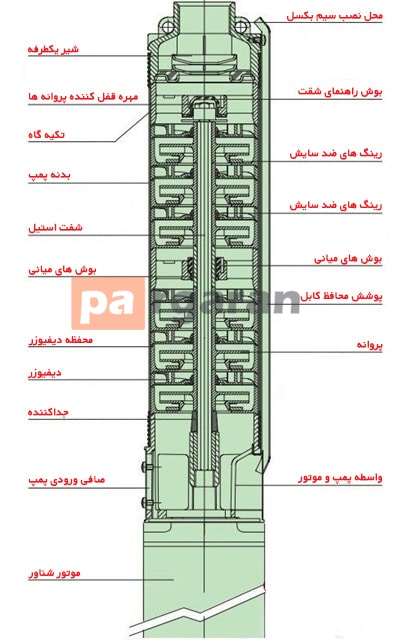
Submersible pumps are entirely submerged in water. During the operation of the submersible water pump, it pushes water to the surface. As the water from the well or tank enters the pump through the foot valve, it is struck by the impeller.
The impeller is a rotating unit with several fixed blades. It is connected to an electric motor via a shaft. The impeller rotates as the shaft turns. When water strikes the impeller blades, the blades convert the kinetic energy of the water into velocity, increasing the speed of the water.
After passing through the impeller, the water enters the diffuser, which further converts the velocity of the water into pressure energy. In this way, the diffuser increases the pressure of the water. Subsequently, the pressurized water is discharged through the pump outlet. This is how submersible pumps drive water to the surface.
Components of a Submersible Pump:
Most Popular Submersible Pumps:
Centrifugal Submersible Pumps
They drive water upward using rotational energy from an impeller (similar to a propeller or fan) within a hermetically sealed pump unit. The rotating impeller increases the fluid’s velocity and pressure, directing it towards the pump's outlet to create a water flow.
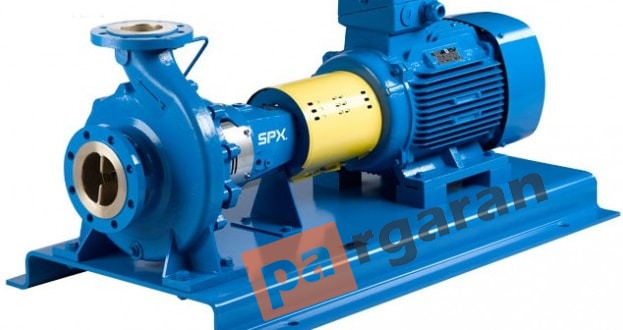
Screw Rotor Pumps
They contain a rotating screw that directs water upwards and out of the well. This is a positive displacement pump, meaning it moves the fluid by repeatedly trapping a fixed volume of water and moving it through the system.
Air Lift Pumps
They work by mixing compressed air with water. Compressed air is pumped into the well, mixed with water, and as the air moves upward and out of the well, it carries the water with it.
Deep Well Jet Pumps
They use a surface pump to pump water into the well under high pressure. Then, a converging nozzle at the bottom of the well converts that pressurized water into high-speed water. The jet of water is directed into the rising pipe, where it pulls the surrounding water upwards.
Hydraulic Ram Pumps
They are also fed by a surface pump. The ram pump converts both the pressure and flow of water from the surface pump to effectively bring additional water along with the primary surface pump water to the surface. The additional water fills the reservoir at the top, and the main water is returned to the surface pump to restart the process.
Submersible Electric Pumps
If the electric motor of the pump and the pump are coupled together and installed in the well intended for pumping, it is called a submersible electric motor type. Water fills the electric motor and is used for cooling processes, thermal management, and also lubrication.