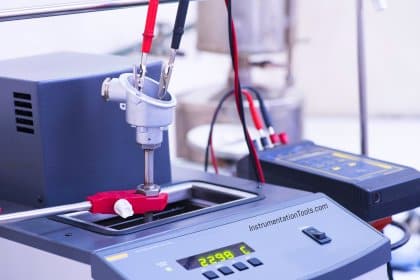
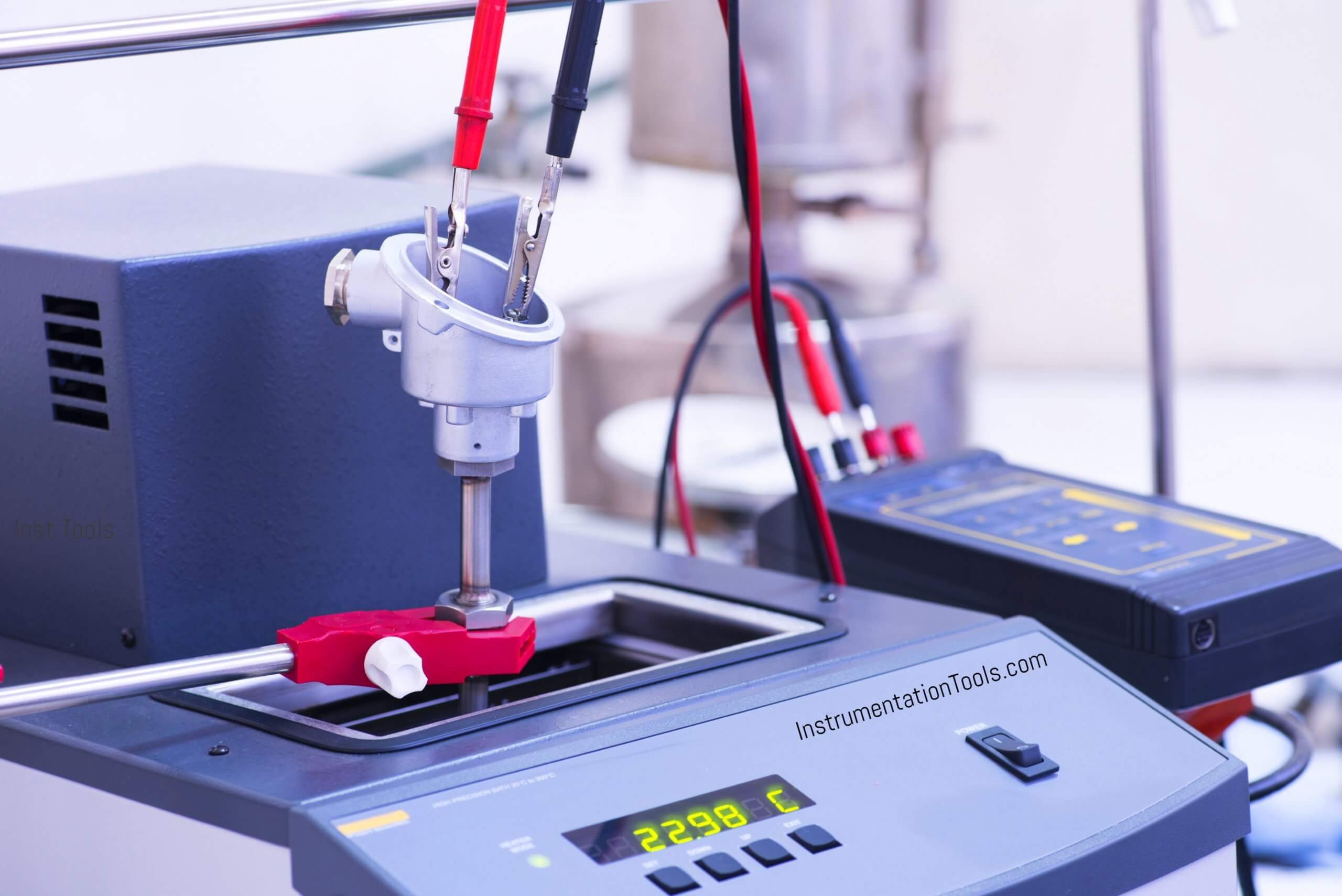
Stability and Uniformity are important characteristics of a temperature bath.
Always remember to check the stability and uniformity before purchasing a temperature bath.
Stability of the Temperature Bath
Temperature stability measures how accurately the device maintains the setpoint temperature.
It is defined as the difference between the highest and lowest readings of the temperature sensors after stability is achieved.
Procedure to Find Stability of the Temperature Bath
- Place the RTD sensor in the center of the temperature bath.
- Set the desired temperature for the temperature bath.
- Allow the bath to stabilize at the desired temperature.
- Record the Master RTD readings every minute for a duration of 10 minutes.
- The difference between the highest and lowest values is the stability of the temperature bath.
Uniformity of the Temperature Bath
Temperature uniformity measures the potential temperature variations between different points.
The temperature bath is equipped with a fan for circulation to ensure good uniformity.
There are two types of uniformity: horizontal and vertical.
1- Vertical Uniformity
Uniformity is calculated by placing sensors at different immersion depths of the temperature bath, with one sensor in the center.
2- Horizontal Uniformity
Uniformity is assessed by placing sensors at the four corners, with one sensor in the center at the same immersion depth in the temperature bath.
Procedure to Find Uniformity of the Temperature Bath
- Place the RTD sensor.
- Set the desired temperature for the temperature bath.
- Allow the bath to stabilize at the desired temperature.
- Record readings every minute for 10 minutes for each of the five sensors at each location.
- The difference between the maximum deviation from the center and other sensors is considered the uniformity of the temperature bath.
For any questions or comments, please contact the Pargaran Group.
For more information, click here.