


What is SCADA?
SCADA stands for Supervisory Control and Data Acquisition. The SCADA system is a collection of software and hardware components that enables monitoring and control of factories both locally and remotely.
SCADA also monitors, collects, and processes data in real time.
The Human-Machine Interface (HMI) facilitates interaction with field devices such as pumps, valves, motors, sensors, and more.
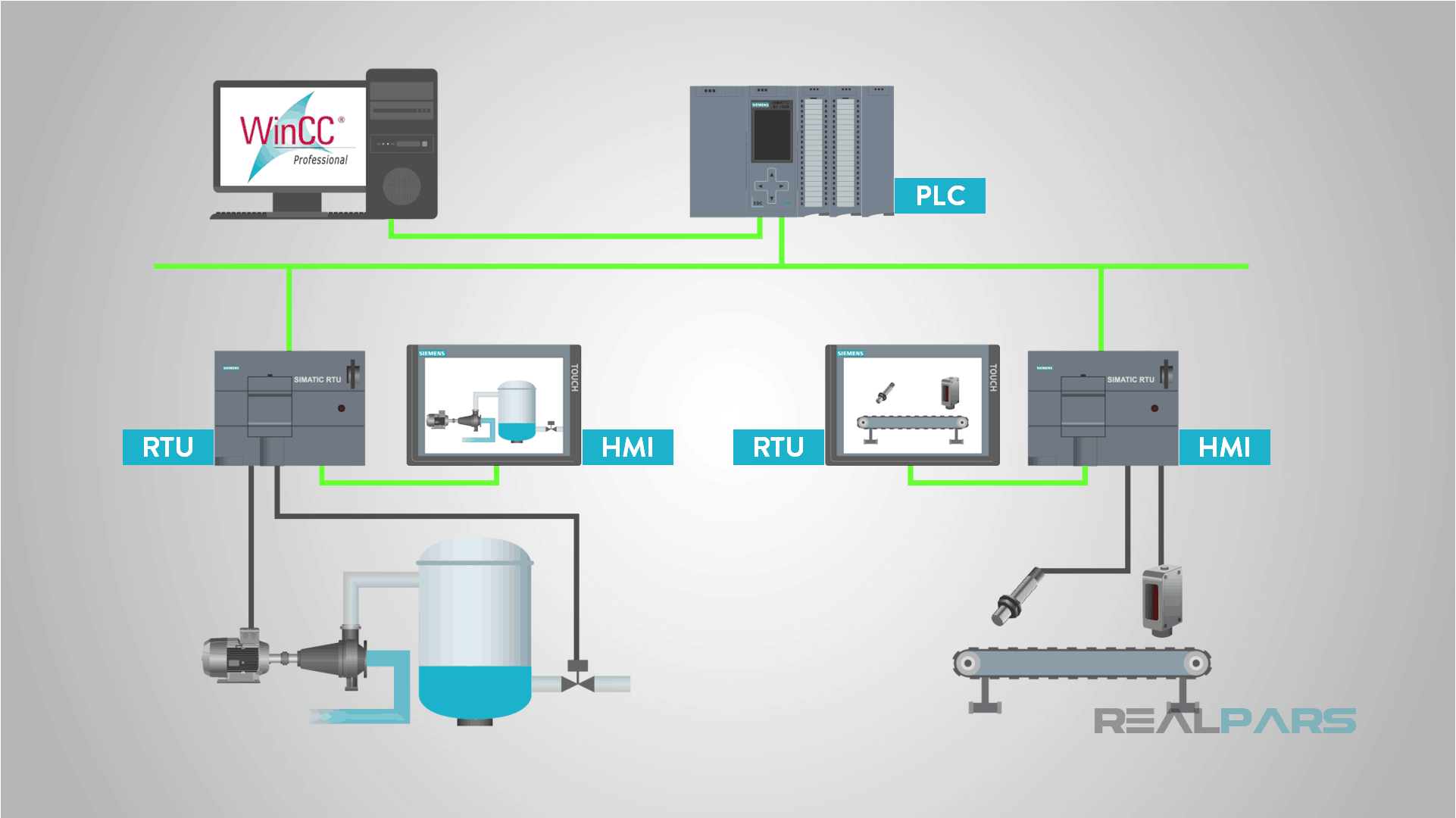
The SCADA software also allows for the recording of received information and data sheets for historical purposes.
The structural design of a standard SCADA system begins with Remote Terminal Units (RTUs) or Programmable Logic Controllers (PLCs).
As you know, RTUs and PLCs are microprocessors that communicate and interact with field devices such as valves, pumps, and HMIs.
These communication data from processors are directed to SCADA computers, where the software interprets and displays the data, allowing operators to analyze and respond to system events.
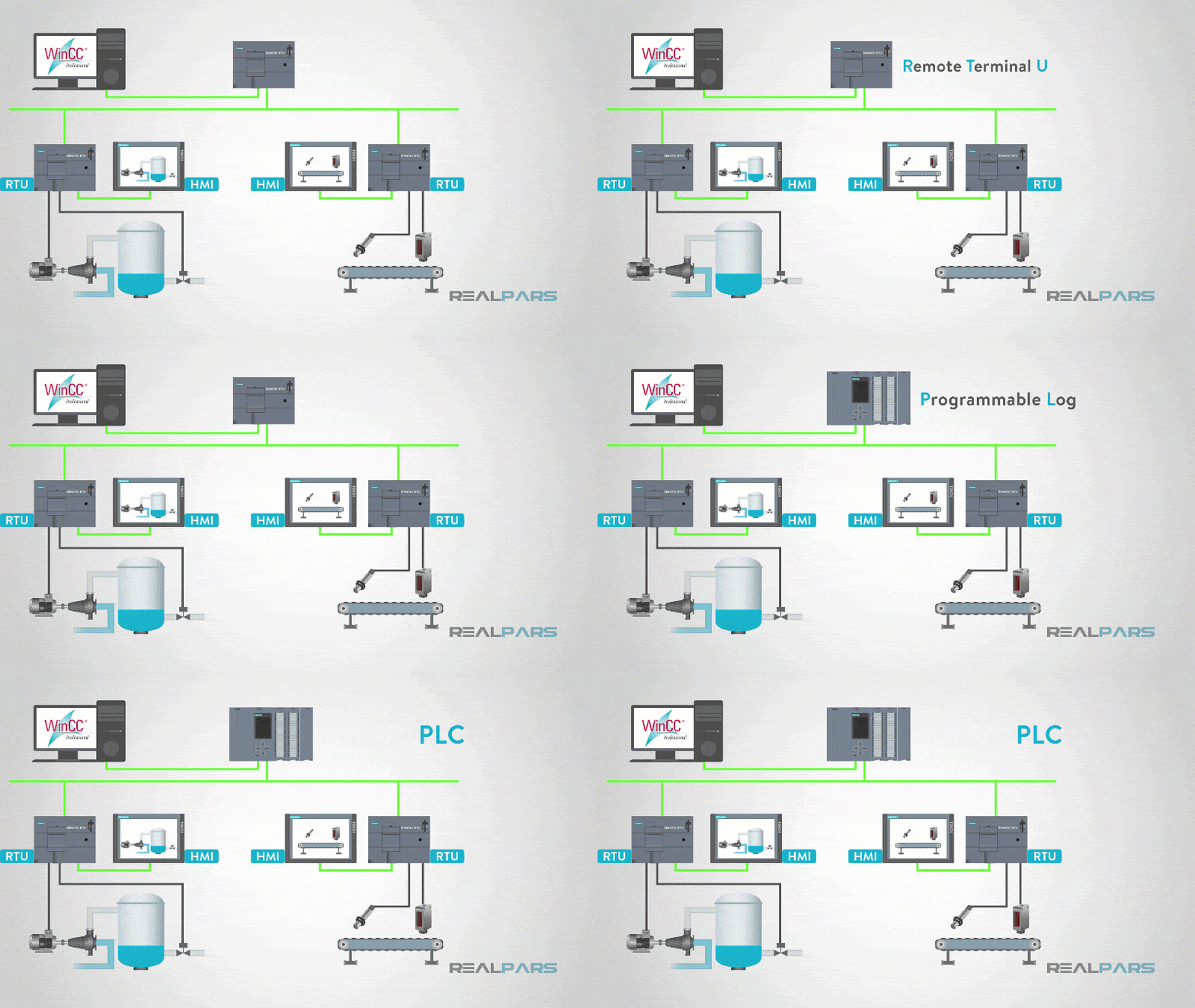
Before SCADA, factory personnel had to monitor and control industrial processes through selector switches, push buttons, and analog signal dials.
This meant factories needed to keep their personnel on-site during production to control the processes.
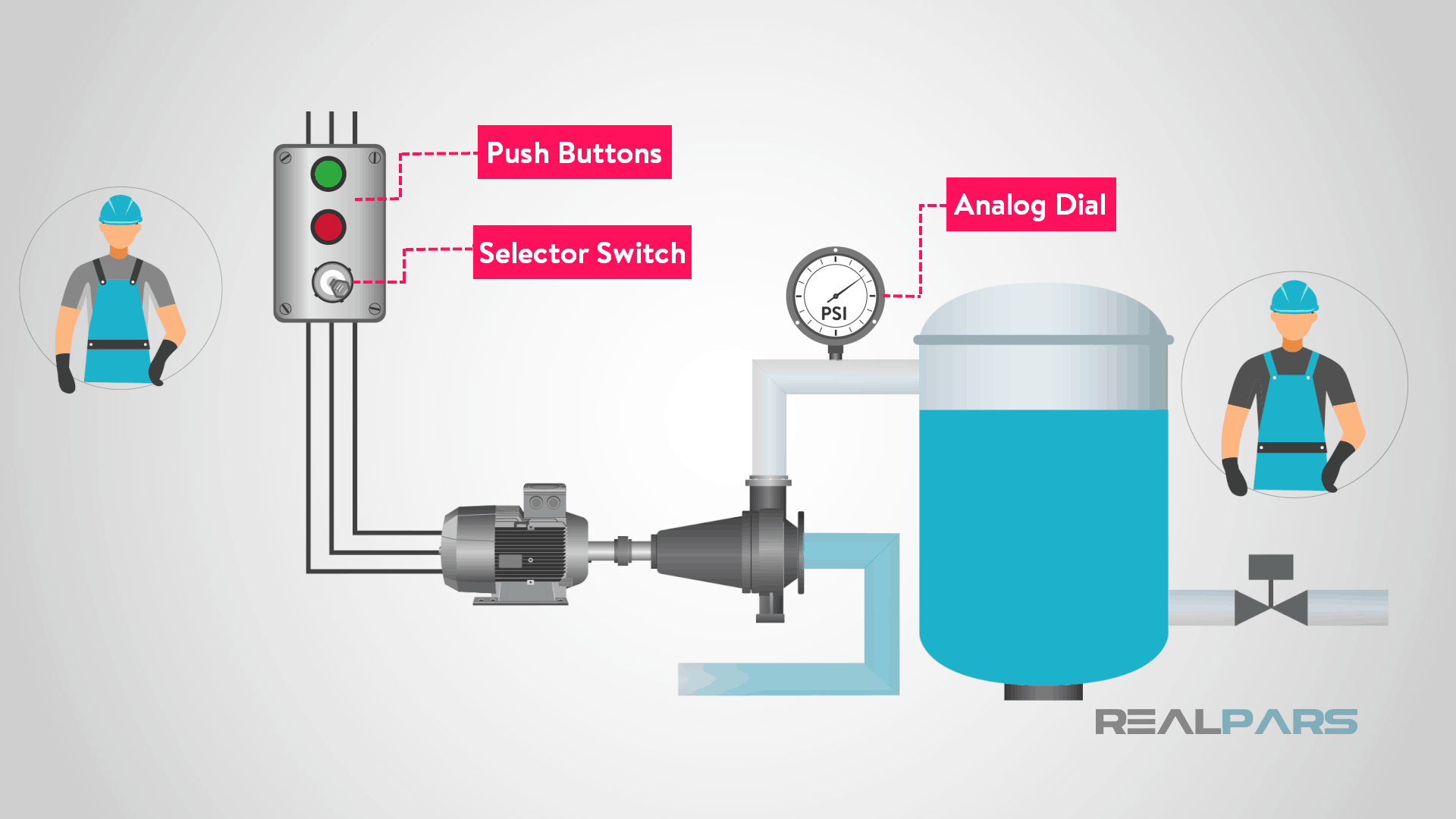
With increased production and more distant sites, relays and timers were used to assist in monitoring and controlling processes. Using these devices, fewer factory personnel were required to oversee and control operations on-site.
While relays and timers provided a level of automation, the panels required for these devices had real value; troubleshooting was a nightmare, and reconfiguration was difficult at best.
These issues, combined with the need for larger industrial factories to grow, facilitated the birth of automation.
Uses of SCADA and Industrial Examples
SCADA is used to help automate and manage industrial processes that have become too complex or cumbersome for human monitoring and control.
SCADA is particularly beneficial for processes that can be monitored and controlled remotely, especially in cases where waste reduction and efficiency improvement are possible.
Some common industrial examples of SCADA industrial automation are as follows:
- Electric power generation and distribution;
- Oil and gas refining operations;
- Telecommunications infrastructure;
- Transportation and maritime infrastructure;
- Manufacturing and other industrial processes;
- Food and beverage processing;
- Chemical manufacturing;
- Water and power infrastructures, including sewage and waste control.
With SCADA, these processes can be accurately monitored and optimized over time for improved performance.
Who Uses SCADA?
SCADA systems are used by organizations and industrial companies in both the public and private sectors for controlling and maintaining efficiency, distributing data for smarter decision-making, and communicating system issues to help minimize downtime.
SCADA systems work well in a variety of companies because they can encompass everything from simple configurations to large, complex installations.
SCADA systems are the backbone of many modern industries, including:
- Energy
- Food and beverage
- Manufacturing
- Oil and gas
- Power
- Recycling
- Transportation
- Water and wastewater
- and more...
Almost anywhere you look in today's world, some form of a SCADA system is working behind the scenes: maintaining refrigeration systems in your local supermarket, ensuring production and safety at a refinery, achieving quality standards at a wastewater treatment plant, or even tracking your energy use at home, just to name a few examples.
Effective SCADA systems can lead to significant time and cost savings. Numerous case studies have been published highlighting the benefits and savings of using a modern SCADA software solution like Ignition.


