


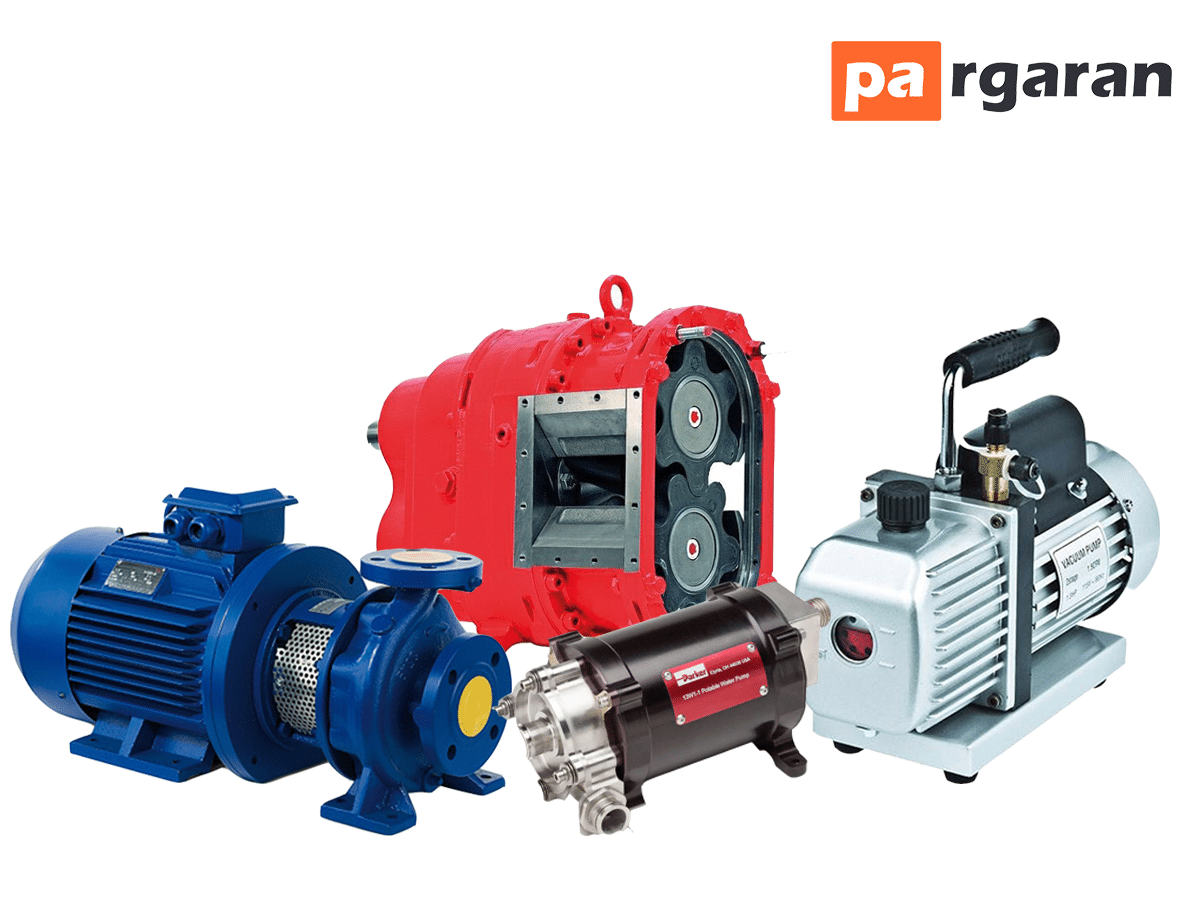
Pump
Today, pumps are widely utilized across various industries around the world for different applications.
A pump comes in several types designed to meet the needs of different applications.
In this article, stay with Pergaran as we thoroughly explore and explain the different types of pumps and their functions, and more.
Table of contents:
- What is a Pump?
- History
- Types
- Applications, Advantages, and Disadvantages
What is a Pump?
A pump is a mechanical device used to transfer various fluids (liquids and gases) from one place to another.
This device elevates fluids from lower levels to higher ones and, in some cases, moves fluids from low-pressure areas to high-pressure areas.
The device operates by converting the mechanical energy of the fluid into pressure energy (hydraulic energy).
Essentially, a pump takes mechanical energy from an external source such as a motor and transfers it to the fluid flowing through it. Following this process, the energy of the fluid increases upon exiting the pump.
This mechanical device is used to transport or move fluid from one point to another within a piping system or hydraulic system.
History
All human achievements and inventions were born out of a sense of need.
The production and construction of pumps began with the need to transfer water, prompting ancient Egyptians (around 2000 BC) to create this important device.
The Egyptians invented a type of water wheel that lifted water from a depth of 6 meters using buckets.
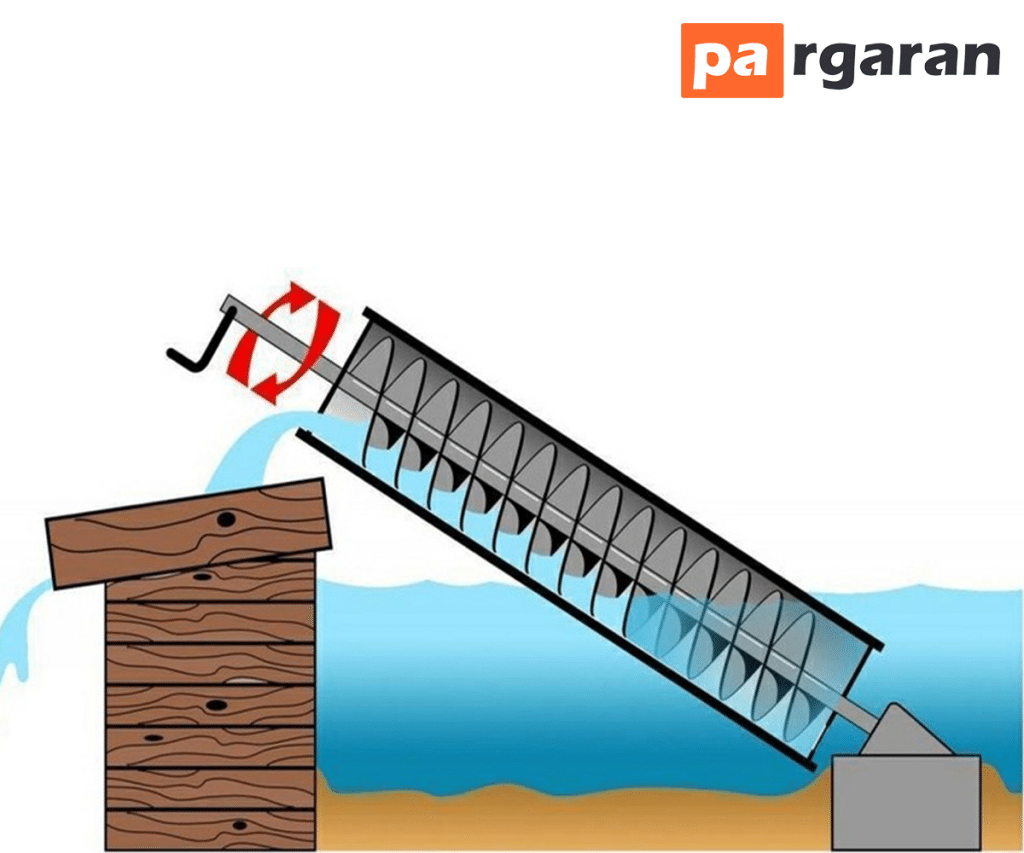
Following the Egyptians, it was Greece's turn, where Archimedes played a crucial role in the invention of reciprocating pumps.
Ultimately, France and England invented and produced the prototype of centrifugal pumps and introduced advanced centrifugal pumps in the late 17th century.
Types of Pumps

Pumps are among the most commonly used equipment in various industries and, as such, come in different types based on their functions and characteristics.
From a general characteristics perspective, they are classified into two main categories:
1- Positive Displacement Pumps:
In these types of pumps, movable components and equipment such as gears, lobes, pistons, and rotors discharge the fluid from the pump chamber and simultaneously increase hydraulic pressure.
Thus, a positive displacement pump does not create pressure; it only generates fluid flow.
In simpler terms, the energy transfer to the fluid is not continuous and is regularly interrupted; during each operational cycle of this type of pump, a specific amount of liquid or fluid is pumped.
Positive displacement pumps, which displace a definite volume for each operational cycle, can be further categorized into two main types:
Reciprocating pumps include:
- Piston
- Diaphragm
In these models of pumps, the force and energy required to produce the necessary pressure for the fluid are generated by a piston, which creates suction that draws water into the cylinder and then discharges the water out.

Rotary pumps include:
- Gear Pump
- Lobe Pump
- Vane Pump
- Progressive Cavity Pumps
- Peripheral Pumps
- Screw Pumps
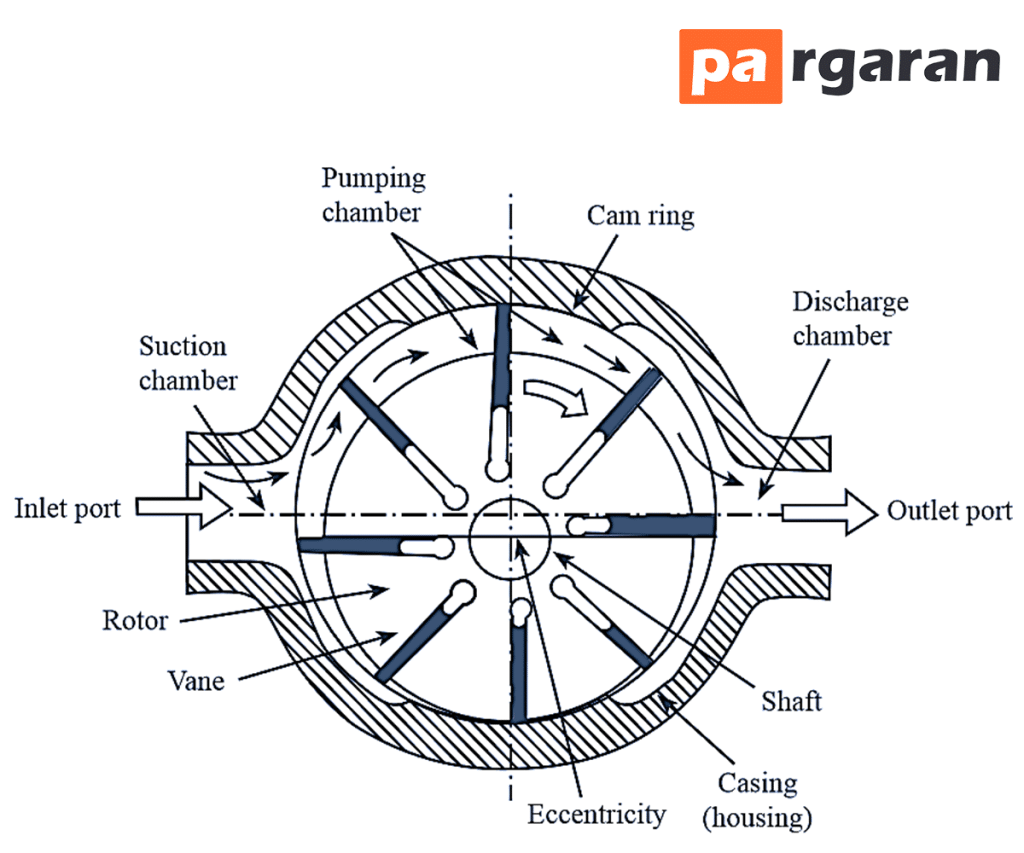
This model of pumps, classified as positive displacement pumps, displaces fluid through the rotational movement of gears, camshafts, or vanes.
Advantages of Positive Displacement Pumps
1- Predictable and Precise Flow
Since the chambers inside such pumps have a fixed volume, flow is proportional to speed. Calculations can be made with a high degree of accuracy of the flow produced during each cycle. This allows for estimating the pump's output or expected flow over a period.
2- Wide Viscosity Control
These designs are unaffected by viscosity, meaning that if the viscosity increases with temperature, the equipment used can handle different types of fluids or a fluid that behaves like a non-Newtonian fluid when being pumped.
3- Continuous Pressure
These units create a steady pressure at pressures up to several bars above the required operating point.
In contrast to centrifugal pumps, where specific pressures and flows are only produced at one point, this can be beneficial in applications where discharge pressure varies, such as tanker loading, spraying applications, or in measurement applications.
4- Reduced Wear and Tear
PD pumps typically operate at lower speeds compared to centrifugal pumps. This lower speed allows for the handling of abrasive or solid liquids that would wear away parts in a centrifugal pump.
5- Preservation of Liquid Properties
The reduced pump speed results in larger pumps; this means that the flow or pressure needed for an application is met by a unit that operates slowly. This reduces wear and ensures the liquid is not affected by the pumping motion, preserving its characteristics. This is especially important for shear-thinning liquids, such as creams, polymers, and gels.
6- Non-slip Designs
All pumps have minimum and maximum viscosity levels defined, which are the viscosity limits engineered and designed for their control. If fluids warm up and their viscosity drops below the designed limit, the pump will not be able to control it, leading to slip.
Pump slippage occurs when fluid circulates at the pump head, leading to reduced flow and pressure generated by the pump. This means that fluid can continue to circulate inside the pump head, and if not detected, may overheat, causing mechanical seals to fail.
Non-slip designs of positive displacement pumps are available. These designs ensure that no matter how viscous the fluid is, pump slippage does not occur.
2- Dynamic or Non-Positive Displacement Pumps:
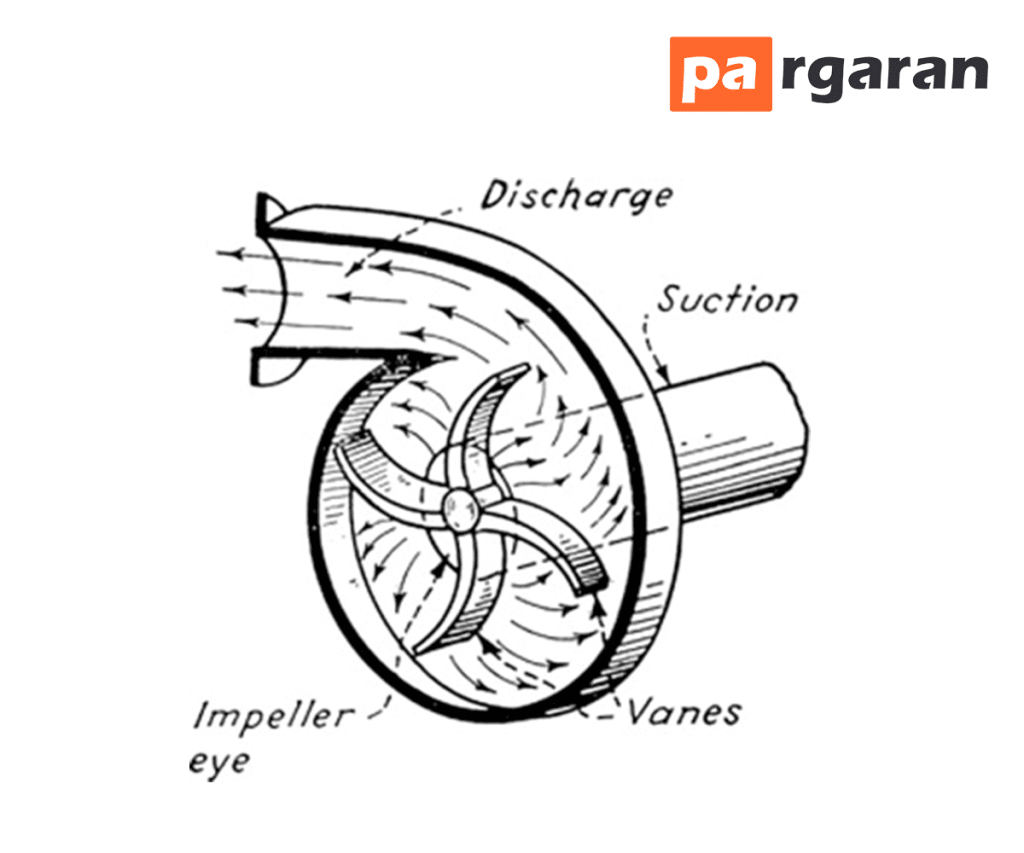
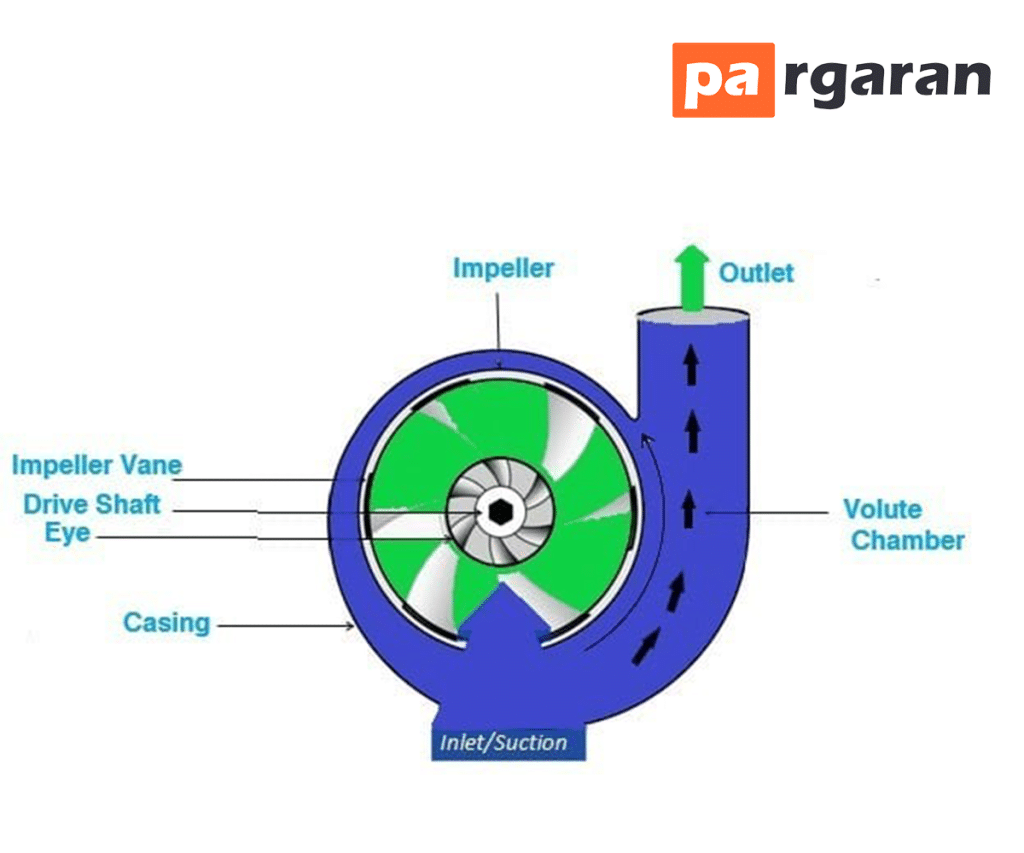
These pumps continuously and consistently transfer kinetic energy to the fluid, and the operation of water pumps in these types is based on converting the kinetic energy produced within the pump into pressure energy, allowing the fluid to flow quickly and forcefully through the outlet.
Dynamic pumps can be categorized based on the means by which the speed increase is achieved.
This type of pump has the following characteristics:
- Continuous energy
- Conversion of added energy into increased kinetic energy (increase in speed)
- Conversion of speed increase (kinetic energy) to an increase in pressure head
- Transfer of low-viscosity and low-pressure fluids with high flow rates
- Utilizing centrifugal force to elevate the fluid inside the pump
The practical difference between dynamic pumps and positive displacement pumps lies in how they operate under closed valve conditions. Positive displacement pumps physically displace fluid, so closing a valve on a positive displacement pump creates a continuous pressure that could lead to mechanical failure in the pipeline or the pump.
Dynamic pumps differ in that they can safely operate under closed valve conditions (for a short duration).
These pumps are functionally divided into two categories:
- Linear
- Centrifugal
Linear Pump:
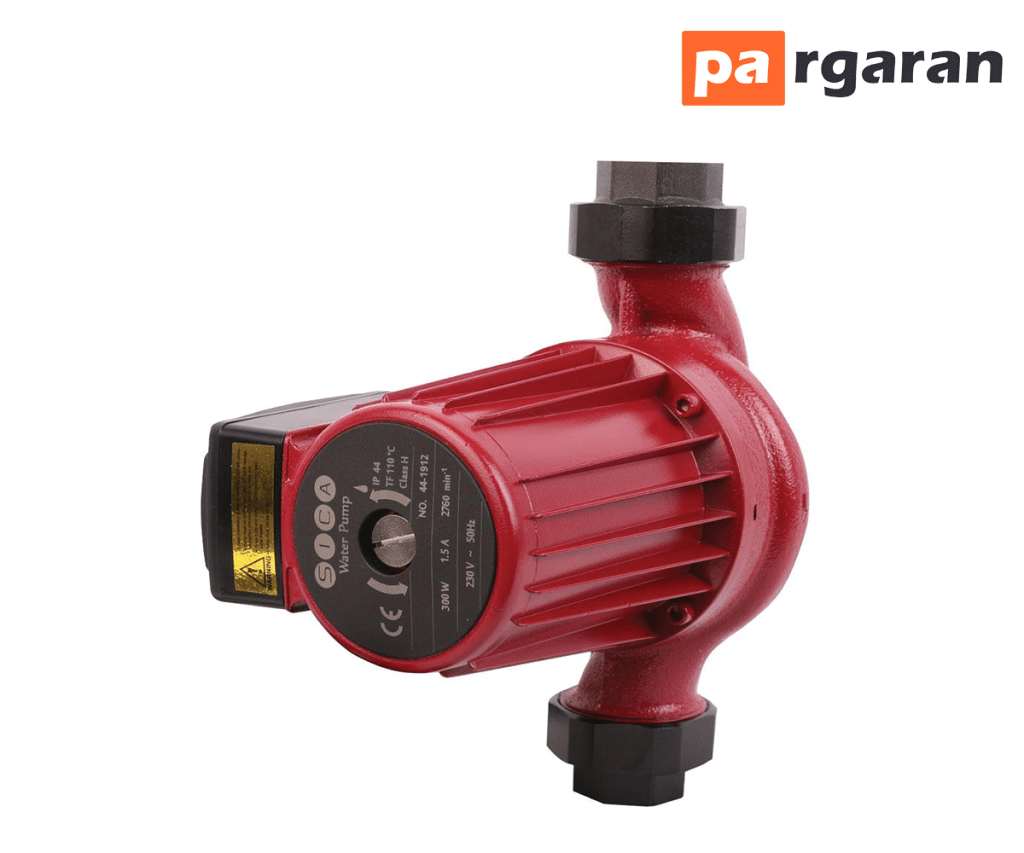
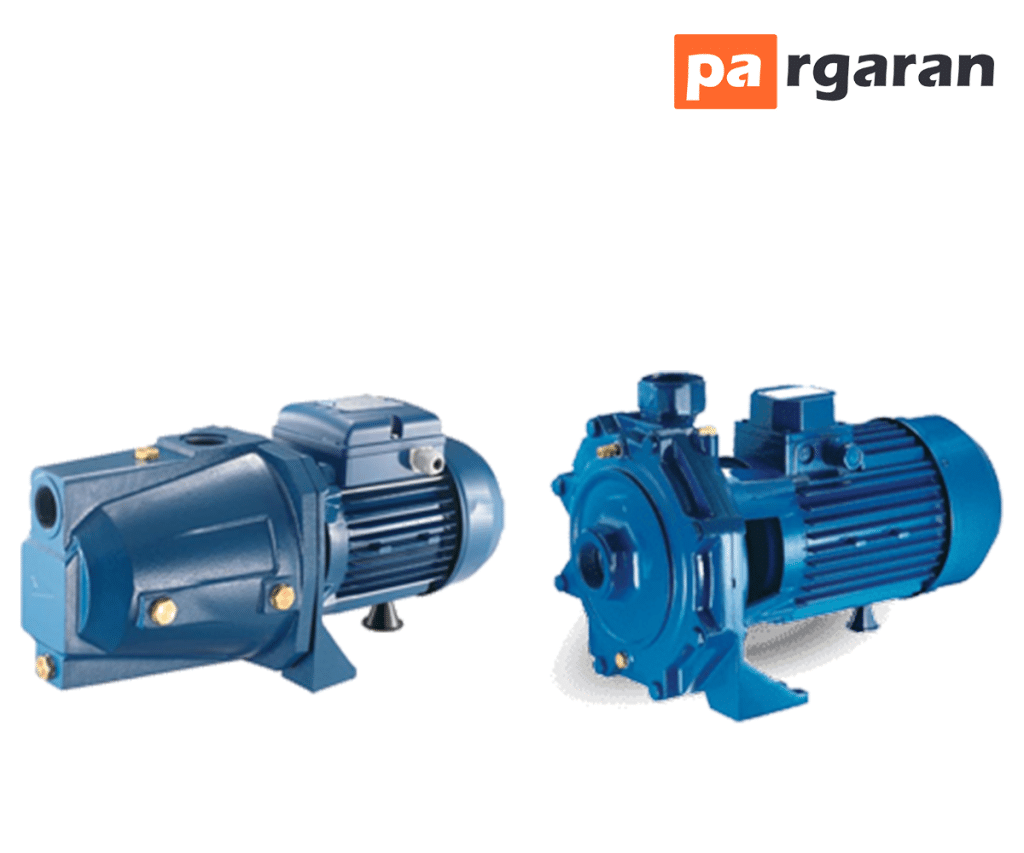
In this model of pump, the fluid enters and exits from the same side without any change in direction. These pumps, having an open impeller, are only suitable for generating high flows at low heads. They are used in agricultural applications for transferring river water to farms and gardens.
Linear pumps typically have a vertical structure and can be of direct connection or frame-mounted types. The inlet and outlet flanges are aligned along a line and are positioned on opposite sides of the pump.
These units are of the centrifugal type and are produced and utilized in two models, linear and ground, based on various capacities.
Two types of circulator pumps are produced structurally in two forms, cast iron and stainless steel.
One of the significant advantages of these pumps is that they can pump fluids at temperatures ranging from 100 to 130 degrees...


