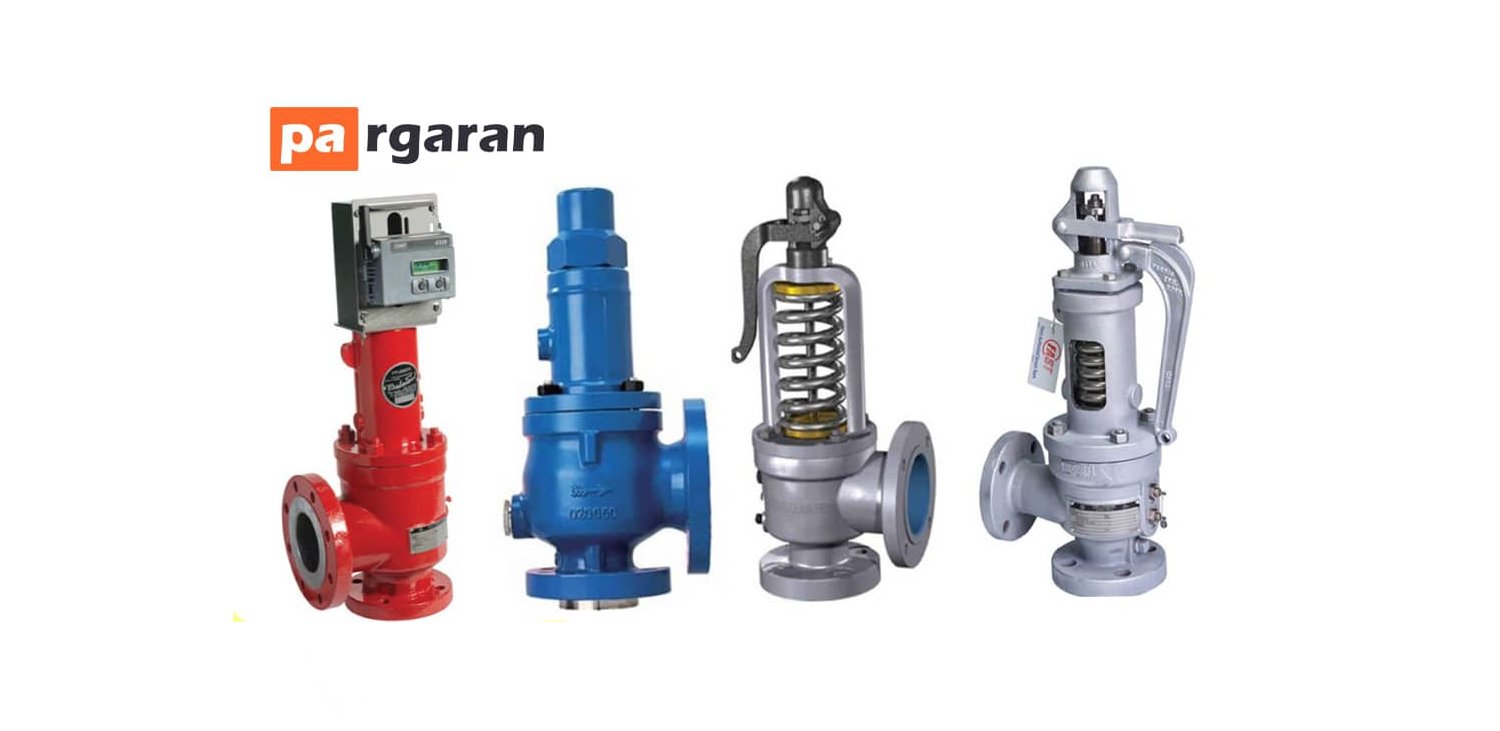
A pressure relief valve, or Relief Valve, is used to release excess pressure in a system by discharging fluid or allowing additional fluid to enter, bringing the pressure to a safe level, and preventing vacuum conditions or damage to the system. The pressure relief valve utilizes the fluid pressure capability as a source for its functional operation, thus it is an automatic valve.
The relief valve can transfer excess fluid outside of the piping system to restore the balance and safe level during instances of pressure imbalance in the reservoir or changes in fluid state due to explosions, etc.; therefore, it can be said that relief valves prevent pressure from returning to the system and protect against intermittent errors in the system.
The opening of the emergency discharge valve is gradual and corresponds with the increase in fluid pressure. The difference between a pressure relief valve and a safety valve is that relief valves are used in hydraulic systems to limit pressure at a specified level, while safety valves are used to discharge excess pressure from the system. In the classification of pressure relief valves, relief valves belong to the category of closed pressure relief devices.
In the industry, the following valves are often confused with each other due to their similar functions:
- Safety Valves
- Pressure Relief Valves (PRV)
- Pressure Safety Valves (PSV)
- Relief Valves
Major differences between relief valves and safety valves include:
- The opening of a relief valve has a direct relationship with increasing pressure, while the opening of a safety valve depends on reaching a set point pressure.
- Unlike relief valves, safety valves can be operated manually using an easing gear.
- Relief valves are used for fluids in compressed air systems, while safety valves are applicable in steam systems.
Pressure relief valves have various variable and fixed components based on the application location and type, which can be observed in the schematic below.
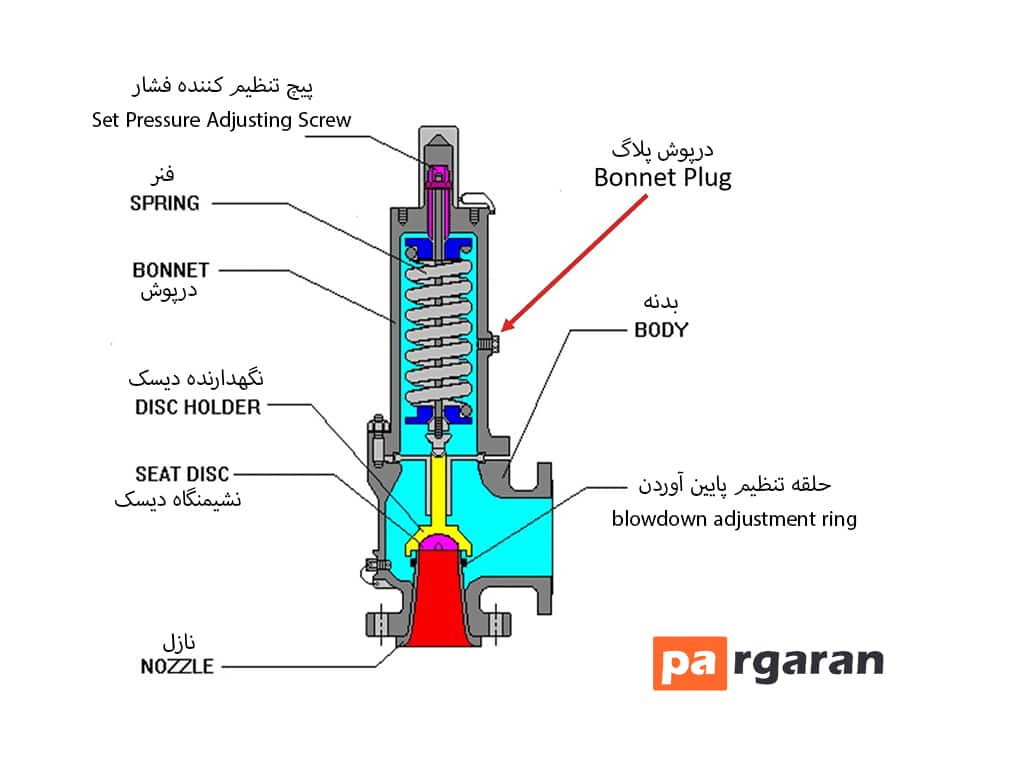
Emergency discharge valves are categorized based on their closing mechanism, structure, and control parameters:

Advantages and Disadvantages of Relief Valves
Weakness |
Strength |
|
Negative impact of back pressure on valve performance |
Usable in all gas and liquid piping systems |
|
Corrosion of springs when corrosive fluids pass through |
Suitable for use at high temperatures and pressures |
| Unsuitable for high-risk systems |
Lower cost compared to other types of valves |
Do you have a friend, customer, or colleague who could benefit from some of this information? Please share this article.
If you have any questions or comments, please contact the Pargaran team.