Today, pneumatic pumps are widely and extensively used across the globe in various industries for different applications.
There are different types of pumps designed according to the needs of various applications.
In this article, join Pergaran for a detailed exploration and explanation of the different types of pumps and their functioning, and more...
Table of Contents:
- What is a Pneumatic Pump?
- Principles and Operation of This Pump
- What is Pneumatic Pressure?
- Types of Pneumatic Pumps
- Components and Parts of These Pumps
- Advantages, Disadvantages, and Applications of This Pump Model
What is a Pneumatic Pump?
Pneumatic systems use gas or compressed air to move media, and when found in industrial applications, they are typically powered by inert gases under pressure or compressed air.
A compressor is centrally used to feed cylinders, motors, and other pneumatic devices including pumps. These systems are often controlled through manual or automatic solenoid valves and can serve as more flexible, cost-efficient, and safer alternatives to electric or gas engines.
In many industrial applications, pneumatic systems are widely utilized.
The pneumatic system controls and transports fluid through pipelines utilizing compressed gas or air.
In fact, compressed air is considered the primary source for most pneumatic systems.
Unlike hydraulic pumps that use liquids, pneumatic pumps utilize air.
A pneumatic pump is designed to create pressure for fluids and move them without the need for electrical power, using air pressure instead. Due to the absence of electrical usage in these types of pumps, they do not create sparks, making it feasible to use pneumatic pumps in oil fields, gas regions, and oil rigs.
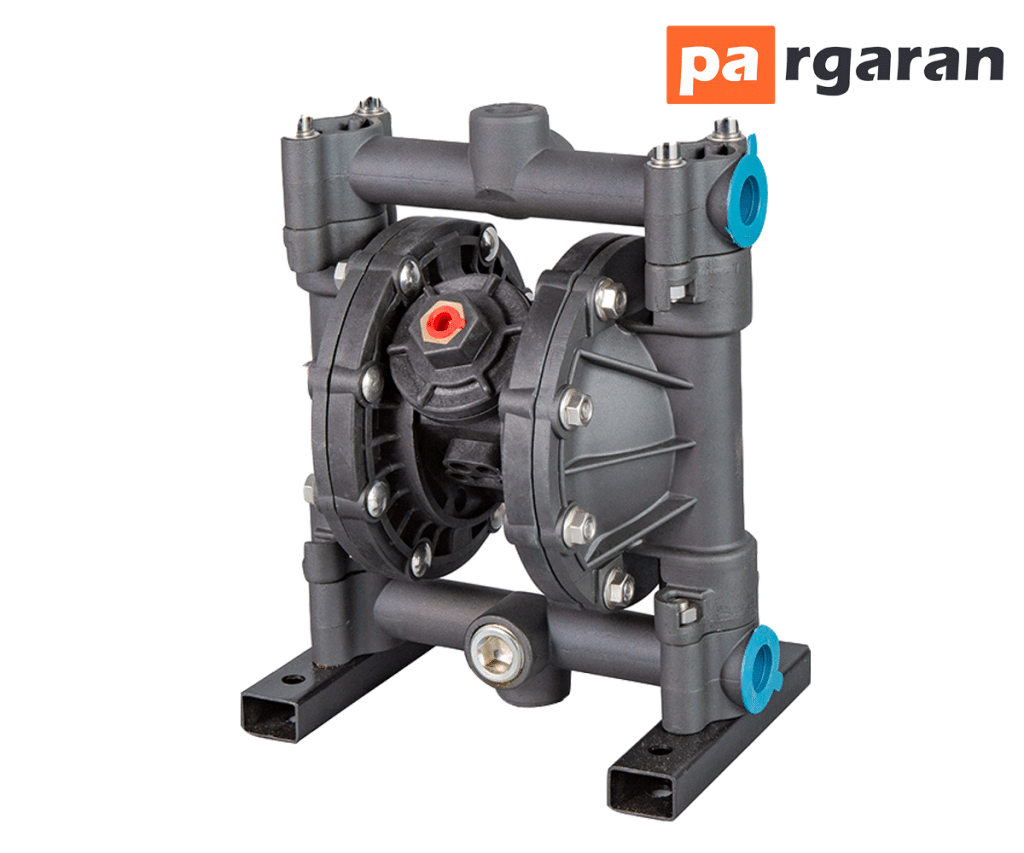
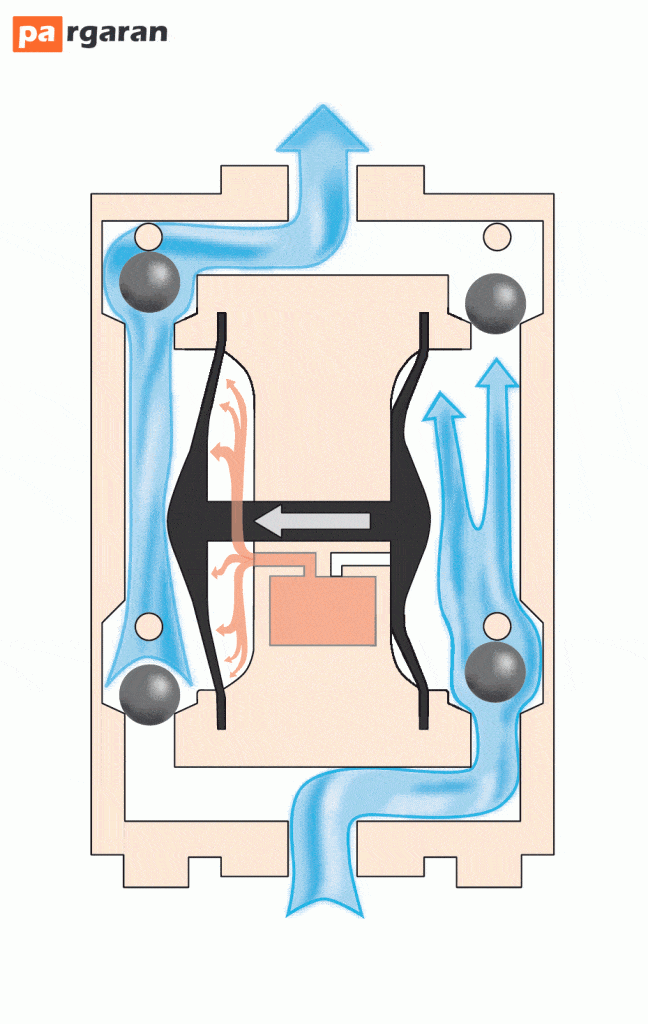
Principles and Operation of Pneumatic Pumps
The fundamental principle of a pneumatic pump is based on the use of compressed gas or air to move the media. When pneumatic pumps are used for industrial applications, they typically involve the use of inert gases under pressure or compressed air.
These pumps employ a dual-piston system. One of these pistons has a significantly smaller diameter than the other and is separated by a sealed chamber filled with liquid or compressed gas.
The compressed gas exerts an external pressure on the larger diameter piston, which in turn applies pressure on the gas or liquid in the intermediate chamber. Thus, the smaller piston receives a significantly amplified force, which is converted into powerful mechanical action.
What is Pneumatic Pressure?
The essential principle of a pneumatic pump revolves around the use of compressed gas or air for media movement. When pneumatic pumps are utilized for industrial applications, the use of inert compressed gases or compressed air is involved.
These pumps utilize a dual-piston system. One of these pistons has a significantly smaller diameter than the other and is separated by a sealed chamber filled with liquid or gas.
The compressed gas applies external pressure on the larger diameter piston, which then exerts pressure onto the gas or liquid in the chamber. Thus, the smaller piston receives a significantly heightened force, which is in turn converted into powerful mechanical performance.
Types of Pneumatic Pumps:
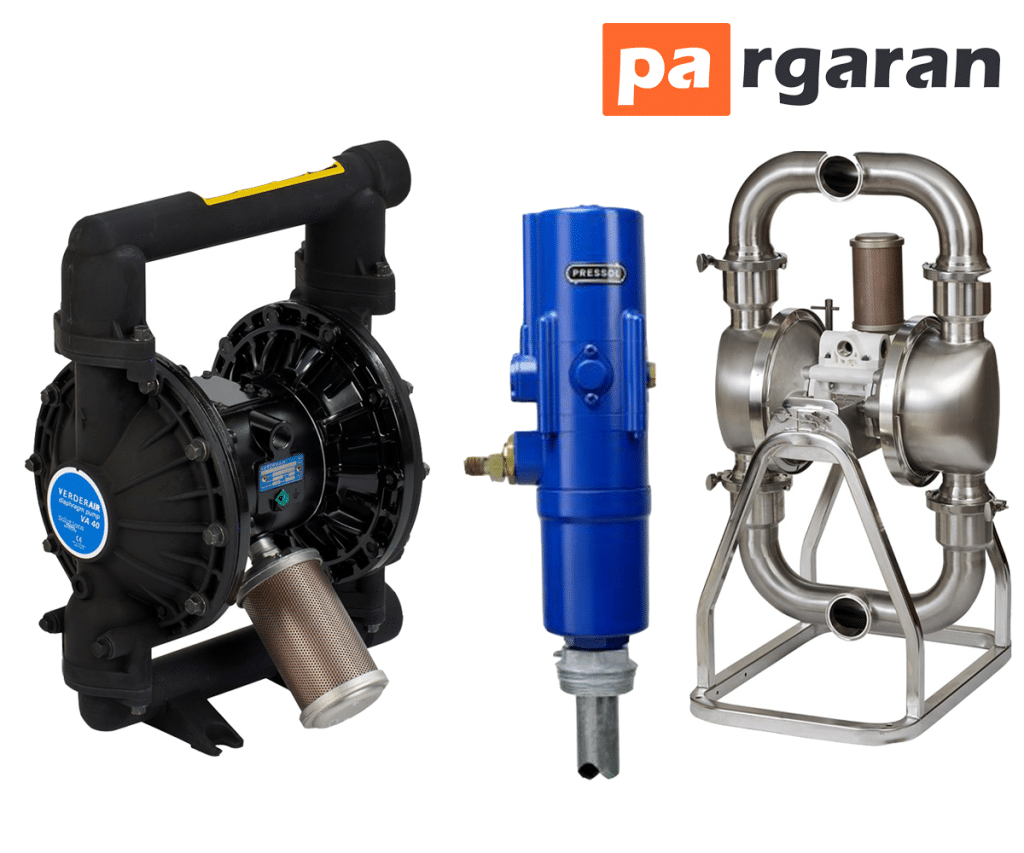
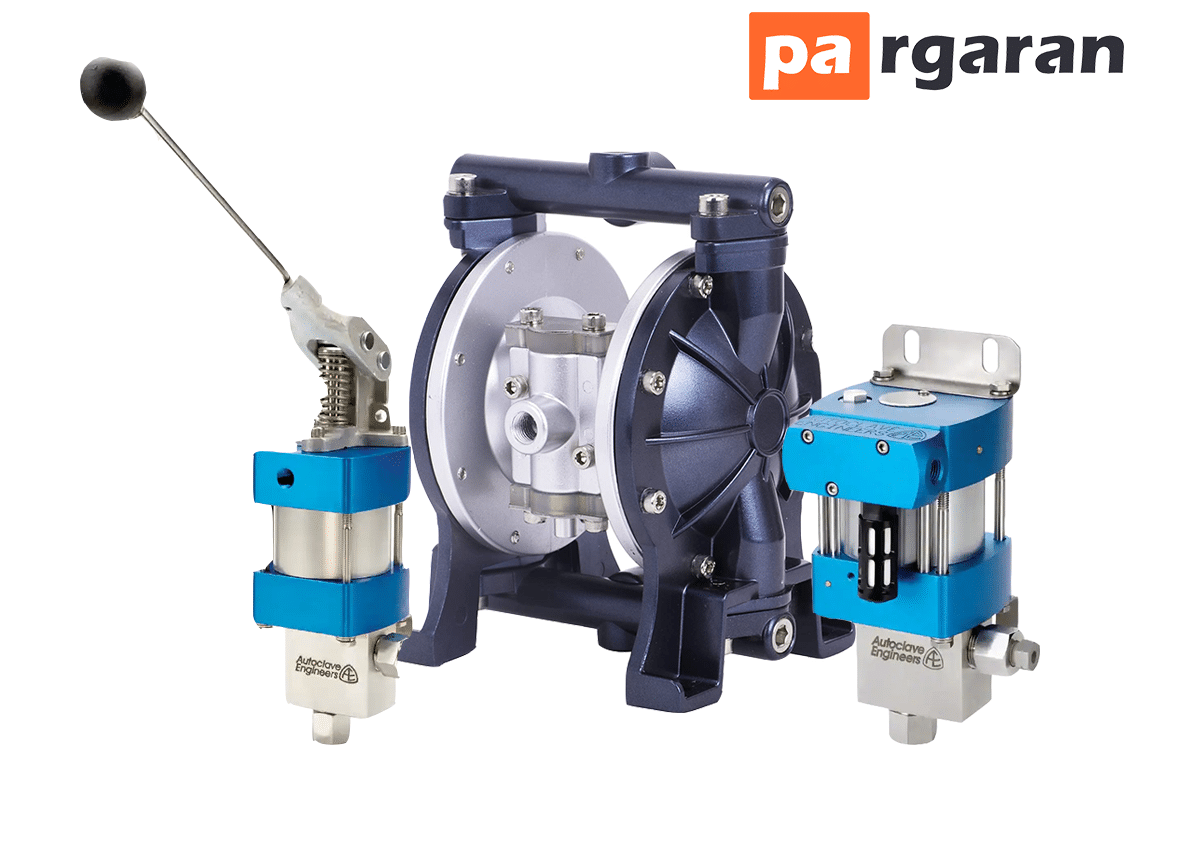
Pneumatic pumps are recognized as positive displacement pumps that are dual-action and non-return spring type. They are capable of utilizing various gases or pressurized fluids as actuators. There are different types of pneumatic pumps manufactured in various sizes and shapes, but here are some that are popular for industrial applications:
- Pneumatic diaphragm pumps (both types of piston) - utilize a piston mechanism to facilitate the movement of media through a cylindrical chamber. This mechanism is powered by a pneumatic, electric, hydraulic, or steam drive.
- Pneumatic liquid pumps - are exclusively used for moving liquids and are more commonly found in small and residential industries.
- Pneumatic test pumps - These pumps are designed and configured to test the potential output of a specific pneumatic system.
*Pressure flow control as a proprietary technology introduced by Elveflow is based on the primary principle of pneumatic pumps. The introduction of piezoelectric technology paves the way for numerous integrated use cases for industrial applications, from droplet production to even sensor calibration. These features enable the pressure flow controller to offer unmatched accuracy and responsiveness in flow adjustment.*
Components and Parts of Pneumatic Pumps
Compressor
Compressors are machines that reduce the volume of air or gas to increase its pressure.
There are two types of pumps: gas and electric. As the pressure in PSI rises during air transfer to the pneumatic line, an air storage tank connects to the compressor.
Storage Tank
The air from compressors is stored as auxiliary storage in the storage tank. The pneumatic actuator is powered by the compressed air in this tank.
Consequently, during compressor downtime, the air in the actuator reaches maximum capacity, preventing irregular flow fluctuations. This allows the compressor to maintain the precise distance between other actuators and the compressor.
Drive Section
In an array of pumps, a piston works in a fiberglass barrel filled with epoxy of a fixed diameter.
During a compression stroke, the piston moves downward and simultaneously lifts it while sucking in.
There is no longer a need for air line lubrication as the assembly has been completed.
Actuators
In pneumatic vacuum pumps, actuators perform hard work. Compressed air is utilized by various actuators; when the compressed air enters the chamber, it powers the piston and moves it forward.
Cycle Valve
Includes a lightweight, unbalanced spool that operates by pilot, directing drive pressure upward and then guiding it to the underside of the actuator piston to reverse the piston cycle. Pilot valves activate the piston stroke with displacement of the unbalanced spool.
Pressure Regulator
Compressor tanks couple with this device. Air is released into the pneumatic line by the pressure regulator.
Pressure Gauge
Both electronic and mechanical pressure gauges are used to measure pressure. With these types of gauges, the air pressure in the compressor can be checked and adjusted by the operator using a computer system.
Check Valve
The expansion tank hose is connected to the compressor by a check valve. Check valves are one-way valves; despite the tank’s expansion, this valve prevents the backflow of compressed air into the compressor.
Applications, Advantages, and Disadvantages of Pneumatic Pumps
Applications:
Pneumatic pumps are particularly designed for use in oil and gas production applications, as well as in many other industries such as pulp and paper, fertilizer dosing, water treatment, food processing, agricultural uses, mining, various HVAC systems, high-pressure washing systems like car washes, and more...