


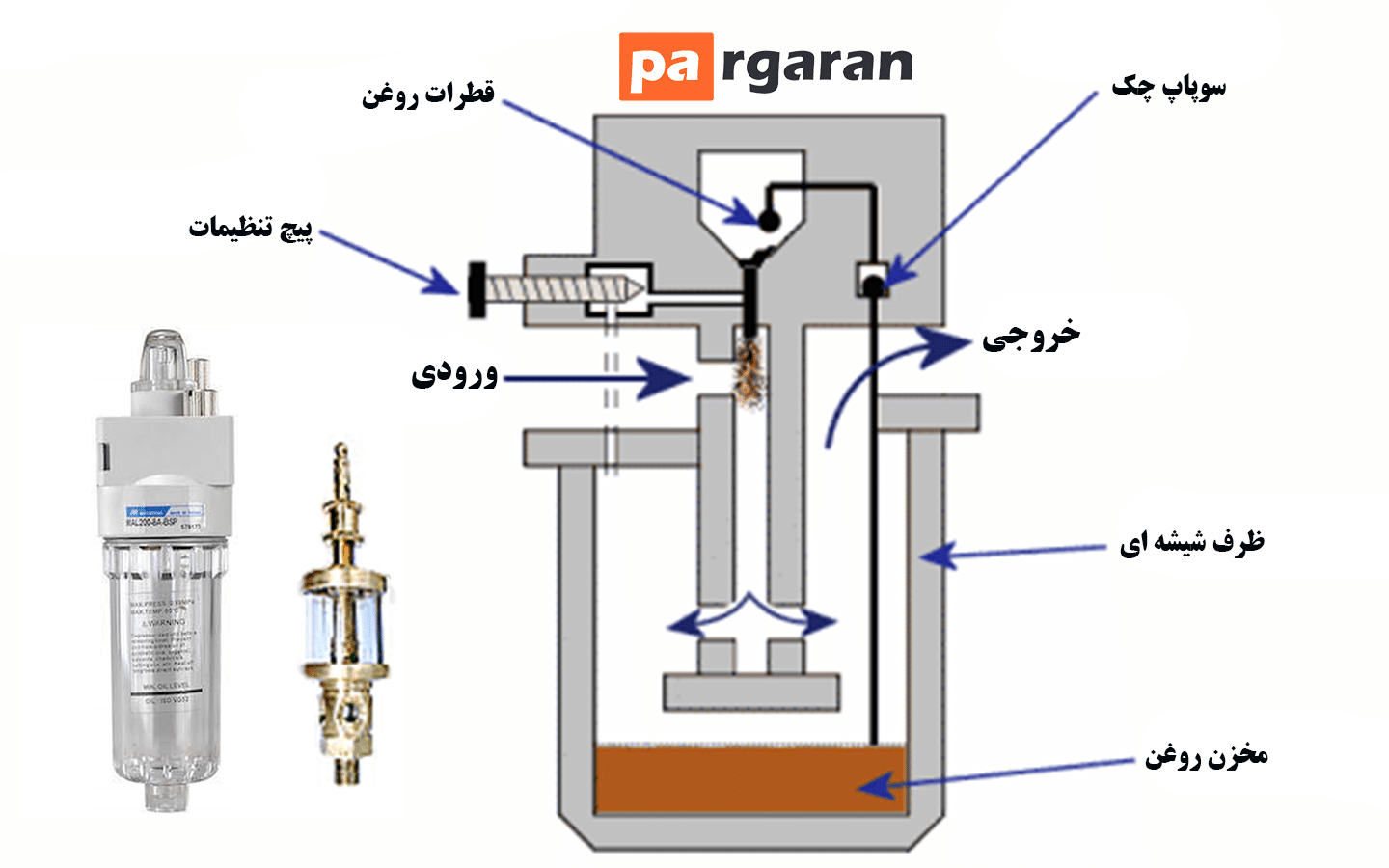
A pneumatic lubricator provides lubrication to the internal parts of pneumatic tools and components like actuators, valves, and motors. This device injects a flow of oil into the air lines to ensure they operate at optimal levels.
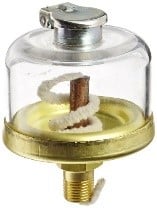
The compressed air enters through the inlet port and passes over the mouth of the needle valve connected to a collector. This tube is often equipped with a porous bronze filter, submerged in a bowl filled with light machine oil. The oil rises due to the venturi effect and is released as an aerosol at the outlet port. The position of the valve is very important.
The needle valve is usually housed in a clear polycarbonate or nylon chamber and always acts as the last element, assisting in regulating the oil flow rate. If these rules are not observed, the oil-laden air can interfere with the pressure regulator, disrupting its operation and, in turn, failing to deliver lubrication to connected equipment, causing machine failure.
Moreover, some compressor oils and external chemicals can degrade the visibility glass made of polycarbonate or nylon, posing further risks.
A lubricator must always be the last element in an FRL (Filter-Regulator-Lubricator) unit. If an FRL is connected 'downstream' from the lubricator to the incoming air, the oil-saturated air can disrupt the pressure regulator's function, causing oil to separate from the air flow and being discharged by the filter, delivering only a very small amount to the connected equipment.
Lubricators reduce internal friction of tools or equipment by releasing a controlled mist of oil into the compressed air. Understanding the lubrication needs of pneumatic components, the type of oil, and the drip rate (amount of oil released downstream) determines its type.
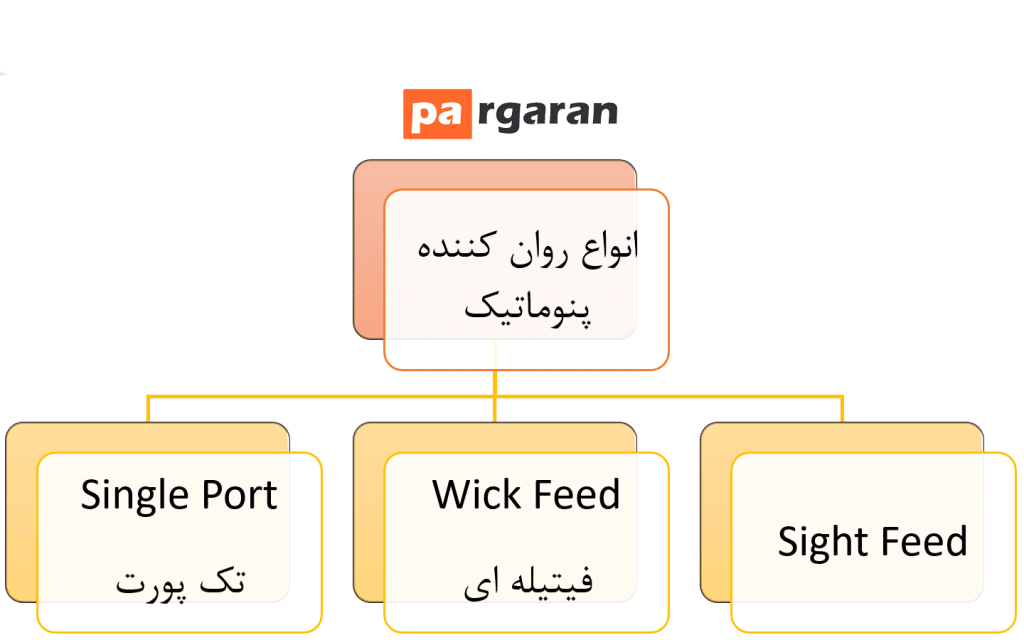
There are two types of lubricators:
- Oil-fog
Oil-fog lubricators supply 100% oil, which you see at the bottom of the glass as larger droplets. They are generally suitable for short distances and applications that require heavy lubrication for only one component.
- Micro-mist
Micro-mist lubricators deliver approximately 10% oil, which you see at the bottom of the sight glass (< 2 micrometers). These lubricators are suitable for long distances and multiple components.
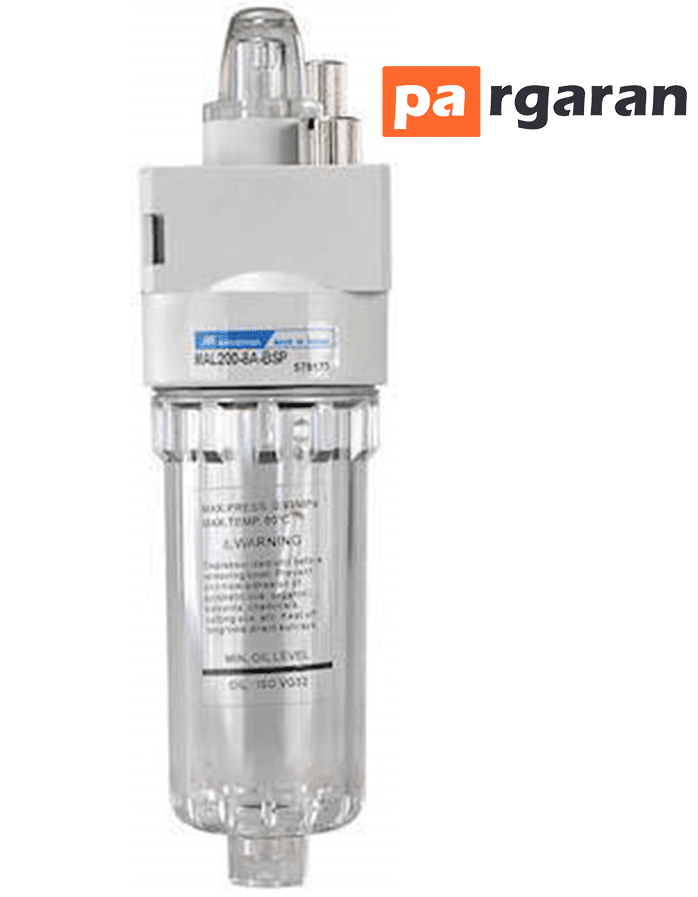
Maintenance of the lubricant occurs when refilling the oil reservoir. Check the oil level through the sight glass or window on the housing. Lubricators also require a pressure differential to allow for oil dripping. Therefore, they create a pressure drop at the outlet.
Consider this to ensure that the correct pressure reaches the end piece. This means that when the system is off, the air is not being lubricated, preventing wastage of oil.
Note: Many pneumatic components are self-lubricating and do not require additional lubrication.
What are the Objectives of a Lubrication System?
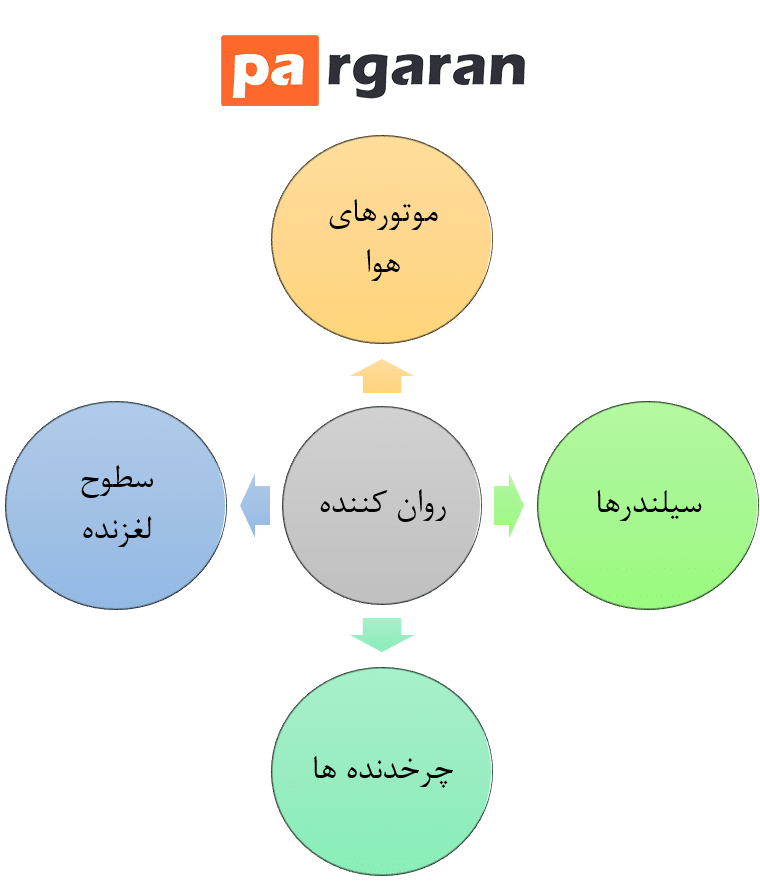
A lubricator is one of the critical elements of pneumatic machinery as it provides lubrication for various machines. Pneumatic lubricators are present in the following scenarios:
Having a lubrication system allows machinery to benefit from less friction, smoother operation, and better speed control, which in turn enhances system efficiency while reducing operating and maintenance costs.
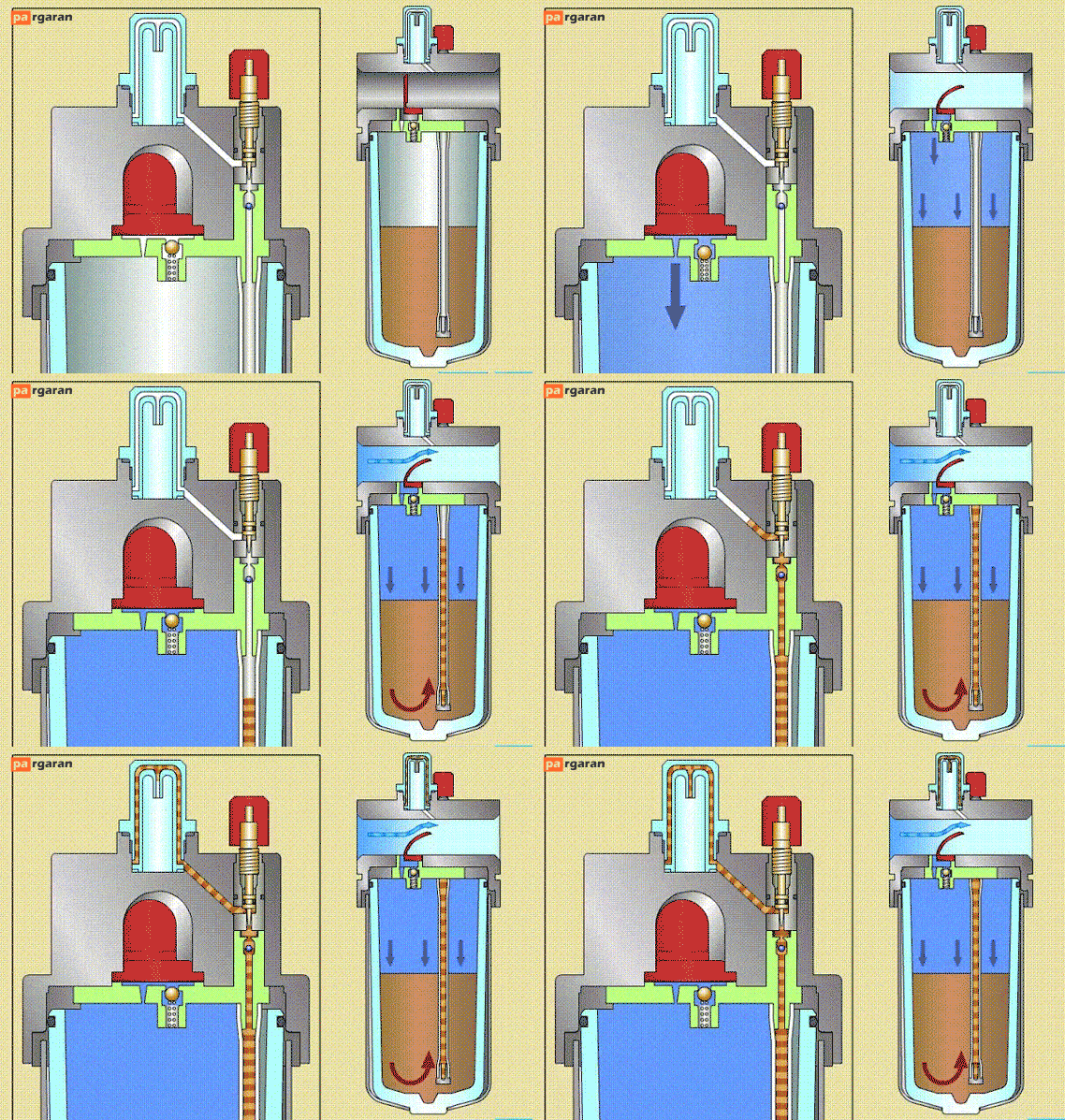
How Does a Pneumatic Lubricator Work?
- A pneumatic lubricator operates based on the principle of venturi pressure differential. Compressed air passes through the point of convergence where the output pressure is lower than the input pressure, aiding in the suction of materials along the passage.
- In a pneumatic lubricator, when the compressed air enters the lubricator door and is blocked by the one-way valve hole along the tube commonly referred to as the venturi tube, this tube is situated in the oil bowl. The oil is sucked in by the compressed air and is released as a mist at the outlet of the compressed air.
- The check valve in the body of the lubricator helps to regulate the oil flow rate, ensuring that oil is always uniformly misted in the compressed air. The oil injection rate ranges between 0-120 drops per minute, which is calculated based on handle settings and supply requirements.
 For effective operation of a lubrication system, only the fluids mentioned in the user manual should be used, which is crucial as incompatible oils affect the functionality of pneumatic machinery and cause polycarbonate wear. The choice of the suitable pneumatic lubricator depends on your application needs and the type of fluid you intend to use.
Types of Pneumatic Lubricators
How to Choose a Pneumatic Lubricator
- Flow rate
- Final components of the system
- Complexity of the pressurized air system in use
- Operating pressure
Structure of a Pneumatic Lubricator
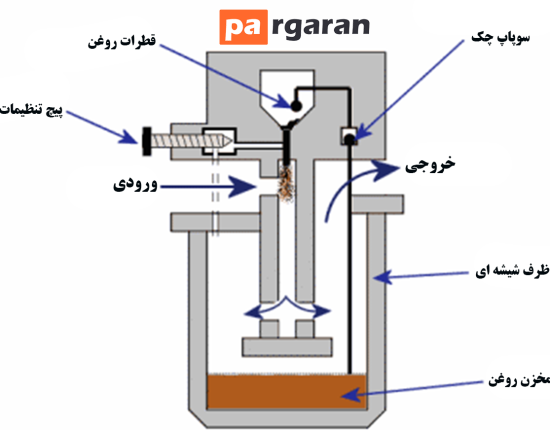
- Filter body
The cup structure contains oil inside and is usually made from polycarbonate materials that offer good heat resistance.
- Oil tube
Delivers oil from the bowl to the oil injector to provide oil spraying in the form of mist in the compressed air system.
- Adjustment screw
Regulates oil flow, helping us to control the amount of oil during operation.
- One-way valve
Located in the filter body, it prevents the reverse movement of compressed air flow, allowing only the compressed air to enter.
- Inlet and outlet
The point where dry compressed air enters and oily compressed air exits.
Why Do We Use Pneumatic Lubricators?
- Through the pneumatic cylinder and thanks to the energy of compressed air, the piston moves rhythmically up and down. During operation, the piston rubs against the walls of the tube, causing friction and heating of the piston which can inflict substantial damage. For effective long-term operation, lubrication is necessary, hence the need for compressed air with lubricant.
- Various pneumatic motors and specialized pneumatic control valves, whose internal structure consists of springs and gears connected to the shaft. Its structure resembles a set of machines that transfer motion. If the gears or shafts are not lubricated, it leads to wear of these parts over time, ultimately resulting in inefficient motor performance and potential damage.
- Compressed air in the motors and cylinders acts to produce heat, pneumatic lubricants also significantly impact temperature reduction.
- Actuators are lubricated to ensure safe and durable functioning of the entire system by automatically injecting oil into compressed air without human intervention, contributing to the extended lifespan of the system and lowering overall compressed air operation and maintenance costs. This ultimately leads to business cost savings in the long run.
مدیر کل
Our engineering team at Pargaran shares the latest technical insights, specifications, and best practices in industrial equipment and automation.


