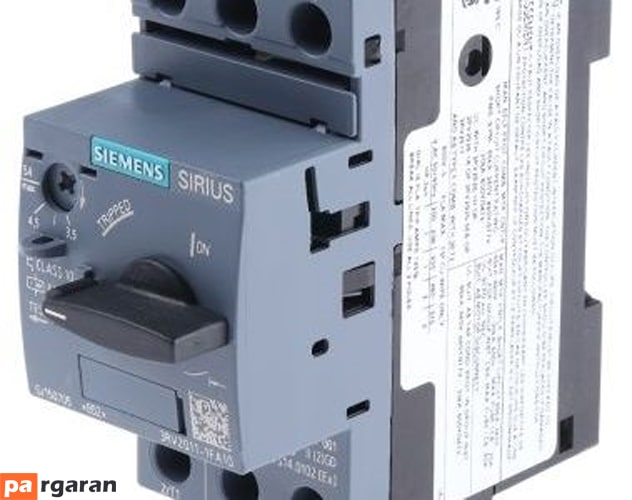
The MPCB switch is used for motor protection. In this article, what is MPCB?, we will learn in detail what MPCB is, how it works, and what capacity it can operate at. You will find answers to such questions here. I hope this is useful for you.
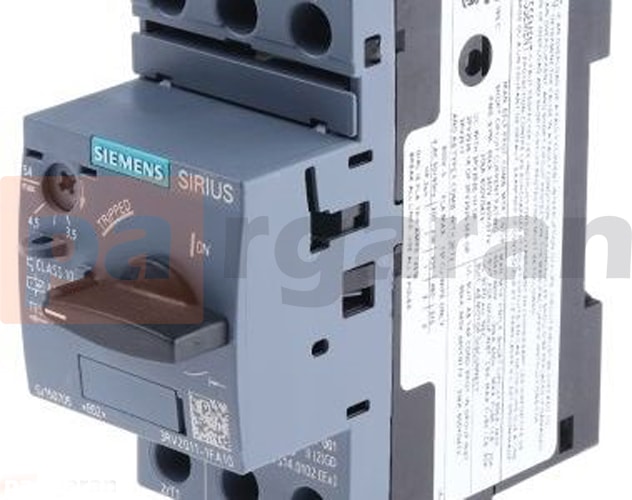
MPCB - Motor Protection Circuit Breaker
Motor protection circuit breakers are a specialized type of electrical protection device that, as their name suggests, are specifically designed for electric motors.
Electric motors are valuable equipment, so the role of the motor protection switch is very important. If a motor is not properly protected, it may require costly repairs or even a complete replacement of the equipment. Electric motors have numerous applications, making adequate protection crucial. An electric motor that is sufficiently protected by an MPCB will have a significantly longer service life.
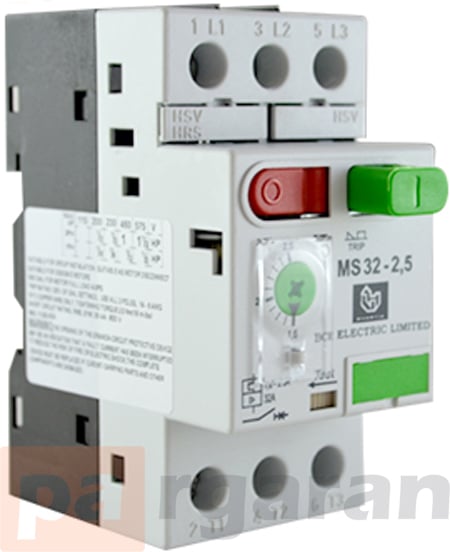
In all industrial and commercial applications of electric motors, MPCB plays a key role in providing electrical protection. The motor protection circuit breaker or MPCB is a specialized electromechanical device that can be used with 60 Hz and 50 Hz motor circuits. It has several functions that allow it to provide a safe electric source for motors:
Principle of Operation of Motor Protection Circuit Breaker (MPCB)
The motor protection circuit breaker can be regarded as a subtype of thermal magnetic circuit breakers but with additional functions specifically designed to protect electric motors. The principle of operation is similar to that of all other circuit breakers.
Thermal protection is used to protect the electric motor from overload. It is based on a contact that expands and contracts, cutting off the motor when excessive current is detected. It is very important to note that thermal protection has a delayed response to allow for high inrush currents during motor startup.
However, if the motor fails to start for any reason, thermal protection will trip in response to prolonged inrush current. Magnetic protection is used when there is a short circuit, line fault, or other high current electrical faults. Unlike thermal protection, magnetic protection is instantaneous, providing immediate tripping for dangerous fault currents.
The main difference between MPCB and other circuit breakers is that MPCB can provide protection against phase imbalance and phase loss. Three-phase motors require three live conductors with balanced voltage to operate effectively. An imbalance over 2% is detrimental to the motor's lifespan. If one of the phase voltages suddenly drops, this will have a more damaging effect as the motor continues to operate with only two phases.
The motor protection circuit breaker is capable of detecting these conditions by measuring the difference between phase voltages and will cut off the motor immediately if such a condition occurs.
Note:
It is essential to note that phase current imbalance in three-phase systems supplying separate single-phase loads is normal, but it is unacceptable when the three-phase circuit feeds an electric motor. MPCBs are also equipped with a manual disconnect mechanism that allows for the disconnection of electric motors for servicing or maintenance.
Motor protection circuit breakers are available in a wide range of current ratings, and one of their best features is that many models allow for adjustable current ratings. This means that the same MCPB can be configured to protect motors with varied capacities. Asynchronous motor protection.
Most of the motors used in industry are asynchronous motors, also known as squirrel cage induction motors. These motors use three-phase power to create a rotating magnetic field that magnetizes the rotor, producing rotational motion.
When designing electrical protection for an asynchronous motor and selecting motor protection circuit breakers, there are several very important factors that do not exist when protecting other types of electrical circuits.
What do Asynchronous Motors do?
Asynchronous motors draw very high inrush currents during startup as they must establish a rotating magnetic field. This current can reach values of 500% to 800% of the rated value for a few fractions of a second. Therefore, the magnetic protection of the MPCB operates at values exceeding 10 times the rated current, unlike some types of miniature circuit breakers that operate at less than 3 times the rated current.
In these cases, using a circuit breaker other than the MPCB may not even allow the motor to start before operating the magnetic protection. To reduce inrush current, a common method is to complement the motor protection circuit breaker with a reduced voltage motor starter.
Note:
Asynchronous motors require three-phase conductors with balanced voltages to operate correctly. If the phase conductors have imbalances greater than 2%, the motor will become damaged over time and its lifespan will decrease.
The electric motor also tends to overheat, leading to additional energy costs as heat is wasted. For this reason, a motor circuit breaker must be able to detect phase imbalance and disconnect the motor accordingly.
If one of the phases is completely lost, the motor will continue to run, but the current in the remaining two phases will rise above rated levels due to electrical imbalance, potentially burning out the motor winding. Therefore, as soon as a phase imbalance or phase loss is detected, motor protectors must be shut off immediately.
This is generally done by measuring the current difference between phase conductors. If one phase current significantly increases or decreases compared to the other two, it indicates an imbalance. Similarly, if one phase current drops to zero while the other two remain, phase loss has occurred.
It is very common to complete motor protection circuit breakers with a contactor to allow for automatic control of motor startup and shutdown. This system may also include a low voltage protection device that disconnects the motor if the system voltage significantly drops below the rated value.
Requirements of the Motor Protection Circuit Breaker MPCB
In any case, there are other types of switches in the protective distribution board such as MCBs, RCCBs, MCCBs, and ELCBs that are designed for protection varying according to different needs in different conditions.
But here, we are specifically talking about the MPCB, which is a device designed solely for motor protection. This is why the MPCB is effective for motor protection only in terms of reliability.
Usually, there is a starter for motor startup, which contains an MCB or SFU for input power, a contactor, and a thermal overload relay for protection. Here, instead of an MCB and overload relay, the MPCB alone can be used to start the motor.
Components of Motor Protection Circuit Breaker MPCB
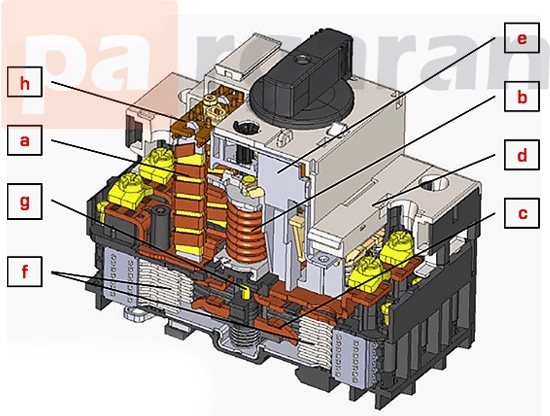
a. Thermal overload release b. Electromagnetic overcurrent release c. Main contact system d. Auxiliary switch position e. Switch latch f. Arc chamber (deionization plates) g. Armature plunger h. Differential travel slide
MPCB Switch
Function and Protection of the MPCB Switch
Overload Protection
Typically, a bi-metallic overload relay is used for motor protection, which is referred to as thermal magnetic circuit breaker. MPCB protects against overload based on this principle.
Where two different T metallic strips expand and contract based on their properties due to increasing current. If the contact opens, the circuit is cut off, protecting us from damage caused by excessive load...