


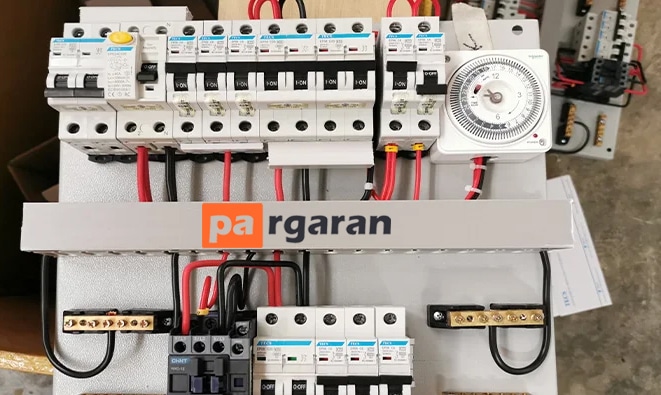
Today, MCCBs are used in all electrical devices at home or workplace. In response to the question of what an MCCB is, it should be noted that these switches are used to cut off power when the current passing through devices exceeds their rated capacity.
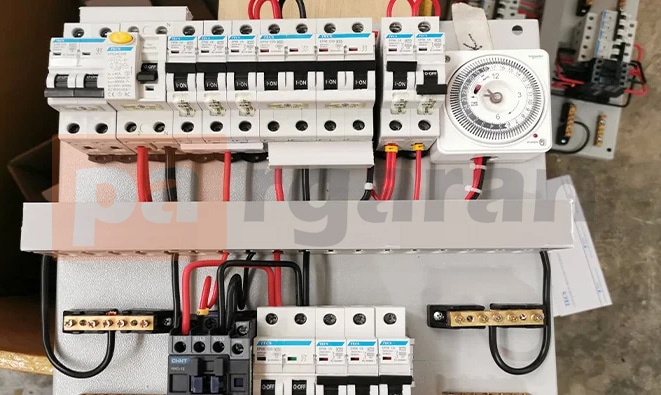
Electricity has become one of the most important aspects of modern life, and people's dependence on it is increasing day by day. Therefore, taking intelligent actions to save electricity has become essential. Thus, electrical devices and current flow control are fundamental actions that must be taken. With exceptional current flow and short circuits, the risk of severe damage to the circuit is increasing every day. To prevent faulty situations, LVS (Low Voltage Switch) is used to mitigate damage. Among these devices, MCCB can be mentioned.
What is an MCCB?
MCCB stands for Molded Case Circuit Breaker. MCCBs are used in applications where adjustable tripping is required. They are fundamentally used for high current applications and have a manual switch for circuit interruption.
They are primarily used for low and high breaking capacity needs, mainly in industrial settings. The electrical device mentioned here is produced as an electrical protection device and is used to protect the electrical circuit against excessive current, which is the cause of overload or short circuit situations.
MCCBs contain two settings; one for overheating and the other for overcurrent. They have a bi-metal contact that expands and contracts with temperature changes. Under normal operating conditions, the bi-metal contact allows current to flow freely through the circuit.
However, if the current exceeds a predetermined upper limit, the bi-metal contact heats up and expands until it opens. For this reason, the circuit is disconnected from the main source and protects the equipment from damage.
What is the exact function of an MCCB?
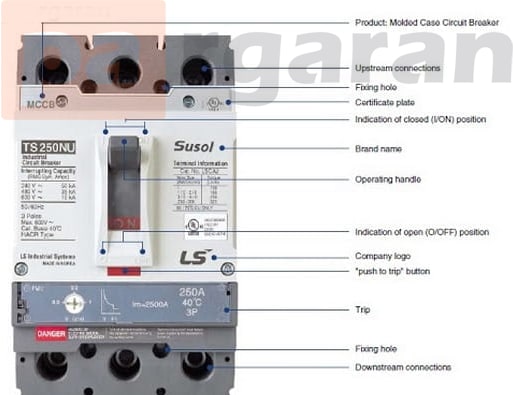
MCCBs and power circuit interrupting devices often make use of thermal and magnetic breakers.
Devices including this breaker will be highly efficient due to heat and magnetism when the current passing through the device is intense.
Thermal relays do not have the ability to quickly disconnect if the device overheats due to high current flow; this is because it takes time for the relay to heat up. However, magnetic relays require no elapsed time and will disconnect rapidly in emergency cases.
Advanced switches are referred to as relays because the switch cannot disconnect and reconnect from a distance, whereas in relays, this can occur.
Specifications of MCCB
When it comes to electrical protection, Miniature Circuit Breakers (MCBs) and Molded Case Circuit Breakers (MCCBs) are two common devices. While both devices have the same purpose of protecting electrical circuits against overload and short circuits, significant differences exist between the two.
The difference between MCBs and MCCBs lies in their current-carrying capacity and their tripping characteristics. MCBs are designed for low current applications while MCCBs are suitable for high current applications.
In this section, we will dive deeper into the specifications of MCCBs and examine their features, construction, and applications. Here are some key specifications of MCCBs that should be noted:
1. Current Rating
MCCBs are designed to handle higher currents than MCBs, typically ranging from 10A to 2500A. The current rating is one of the most important specifications to consider when selecting an MCCB, as it determines how much current the breaker can interrupt without sustaining damage.
2. Breaking Capacity
The breaking capacity of an MCCB refers to its ability to interrupt current during fault conditions. This breaking capacity is specified in kA, indicating the maximum current that the MCCB can safely interrupt without damaging its internal components.
3. Tripping Features
MCCBs are designed with adjustable tripping features that allow customization of the device's response to overloads and short circuits. Depending on the type of overloads being protected against, the tripping features of the MCCB can be thermal or magnetic.
4. Construction
MCCBs are typically constructed with a molded case that protects against environmental factors such as dust and moisture. The internal components of the MCCB are housed in a thermoset or thermoplastic material that provides mechanical strength and insulation.
5. Accessories
MCCBs can be customized with a wide range of accessories suitable for specific applications. These accessories may include auxiliary switches, shunt trips, undervoltage releases, and more.
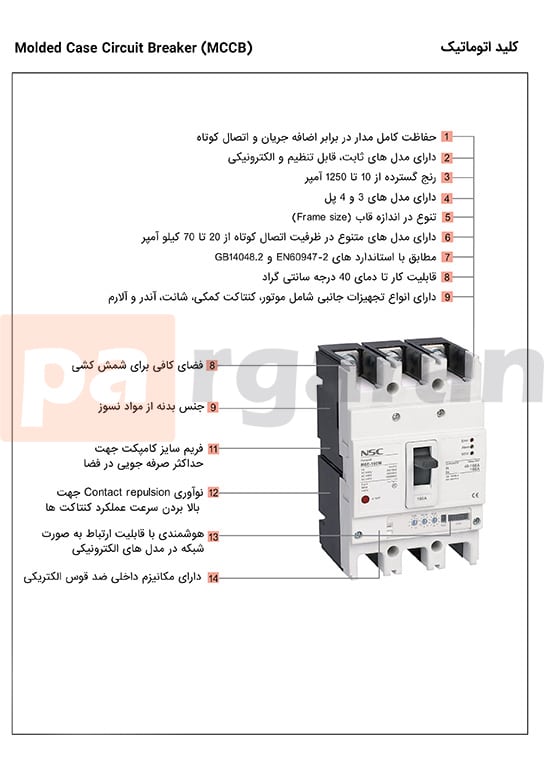
Components of a Molded Case Circuit Breaker in MCCB
Molded Case Circuit Breakers (MCCBs) are essential devices used to protect electrical circuits from overloads and short circuits. They are widely utilized in residential, commercial, and industrial environments due to their reliability, durability, and flexibility.
MCCBs are comprised of several components that work together to ensure proper circuit protection. In this section, we will examine the key components of an MCCB and their functions. Here are some essential components of MCCBs to keep in mind:
1. Frame
The frame of an MCCB is the outer covering that houses all internal components. This frame is typically made of plastic or metal and provides mechanical strength and protection against environmental factors such as dust and moisture.
2. Operating Mechanism
The operating mechanism of an MCCB is responsible for opening and closing the circuit breaker. It usually includes a handle or lever for manual operation of the device, as well as a mechanism for automatically shutting down the breaker in case of overload or short circuit.
3. Trip Unit
The trip unit is the heart of the MCCB, responsible for detecting and interrupting the current flow during an overload or short circuit. Depending on the type of overload being protected against, the trip unit can be thermal or magnetic. The trip unit is generally adjustable, allowing for customization of the device's tripping characteristics.
4. Contacts
The contacts of an MCCB are responsible for making and breaking the electrical connection in the circuit. The contacts are usually made from highly conductive materials such as copper or silver and are designed to withstand high current and voltage without damage.
5. Arc Extinguishing System
During the interruption of an electrical circuit, an arc is formed between the contacts of the breaker. The arc extinguishing system of an MCCB is responsible for rapidly extinguishing the arc to prevent damage to the device and surrounding equipment. The arc extinguishing system can be magnetic or thermal depending on the type of breaker.
6. Accessories
MCCBs can be customized with a wide range of accessories suitable for specific applications. These accessories may include auxiliary switches, shunt trips, undervoltage releases, and more.
Benefits of MCCB
Molded Case Circuit Breakers (MCCBs) are widely used in various electrical applications due to the numerous advantages they offer over other types of circuit protection devices. MCCBs provide reliable and durable protection against overload and short circuits and offer a range of customization options for specific applications.
Furthermore, MCCBs possess several key advantages over other circuit protection devices, such as Miniature Circuit Breakers (MCBs) and fuses. Some of these advantages of MCCBs include higher current ratings, adjustable trip features, and improved safety characteristics.
In this section, we will delve into many of the benefits of MCCBs and why they are the preferred choice for many electrical applications. Whether you are a homeowner, electrician, or professional in the industry, understanding the advantages of MCCBs is essential for selecting the right circuit protection device for your needs.
1. Thermal Overload Protection
Molded Case Circuit Breakers (MCCBs) offer numerous advantages over other circuit protection devices, one of which is thermal overload protection. Thermal overload protection is one of the essential features of MCCBs as it prevents excessive heating of electrical equipment and wiring due to overcurrent.
Thermal overload protection is achieved through the use of a bi-metallic strip or a heating element in the MCCB's trip unit. The bi-metallic strip or heating element is designed to heat up when current flows through it, causing it to bend or deflect. This action occurs when the current passing through the MCCB exceeds a certain level, commonly referred to as the "thermal trip rating."
MCCB Switch
The thermal trip rating can often be adjusted in most MCCBs to match specific applications. This adjustment allows the user to customize the tripping characteristics of the MCCB and ensure that an appropriate level of protection is provided.


