Knife Gate Valve | Knife Gate Valve
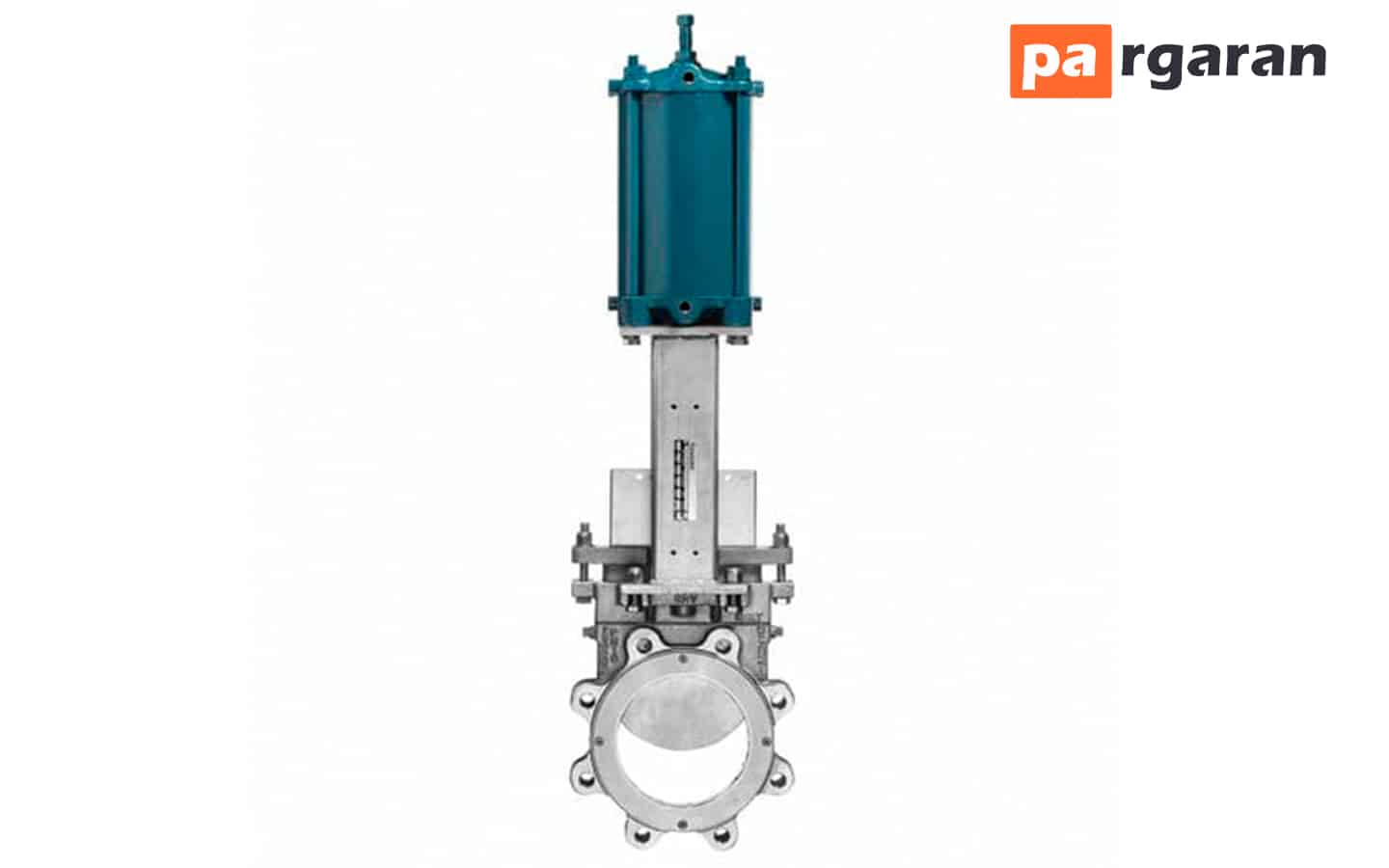
Knife gate valve is used with a linear movement of the blocking element to stop or restart the flow. It is mainly utilized in the pulp and paper industry. The element of these valves features a sharp edge for cutting pulp and sealing purposes. The stainless steel knife gate valve has various types determined by the shape of the blocking element, material, actuator, and type of connection, as mentioned in the figure below.
Types of Knife Gate Valves Based on Actuator
- Manual
- Pneumatic

The stem driving the disc is connected to a manual wheel that, when turned, moves the stem and causes the disc to shift in the flow path.

In piping systems that require more pressure and speed to close or open the flow path, a pneumatic actuator is used.
Types of Knife Gate Valves Based on Connection
- Flanged
- Log
- Wafer

Connects to the piping lines with two flanges.

Connected to the pipe flanges with bolts and nuts. Typically installed at the ends of lines.

Placed between the pipe flanges and connected to the line flanges with bolts and nuts. It has fewer holes compared to the log type.
A specific type of stainless steel knife gate valve, known as a rotary knife gate valve, is used for heavy materials and large fluid displacements.
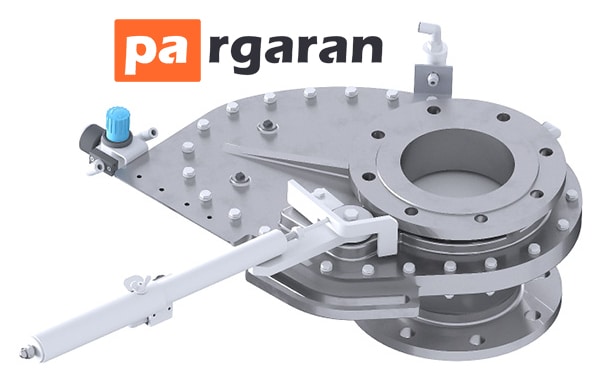
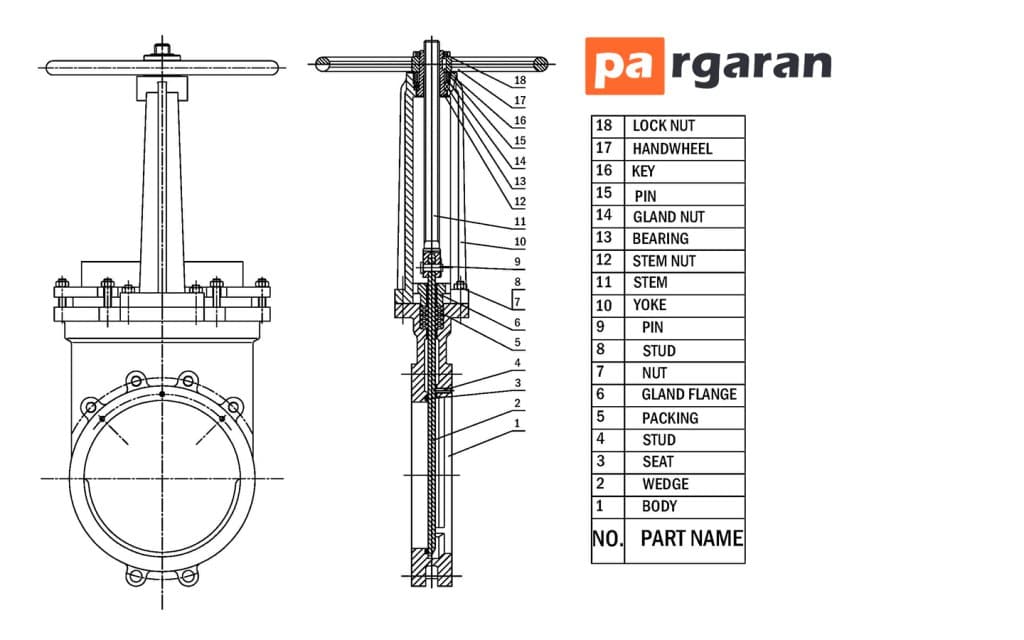
Knife gate valves can consist of various materials and components based on type and application location. In the figure below, the components of a knife gate valve are displayed.
Advantages (Strengths) and Disadvantages (Weaknesses) of Knife Gate Valves
- Suitable for viscous fluids, sludge, and slurries
- Lack of flow control
- Easy activation
- Low pressure limitations
- Cost-effective
- Inappropriate for applications with hygienic conditions