


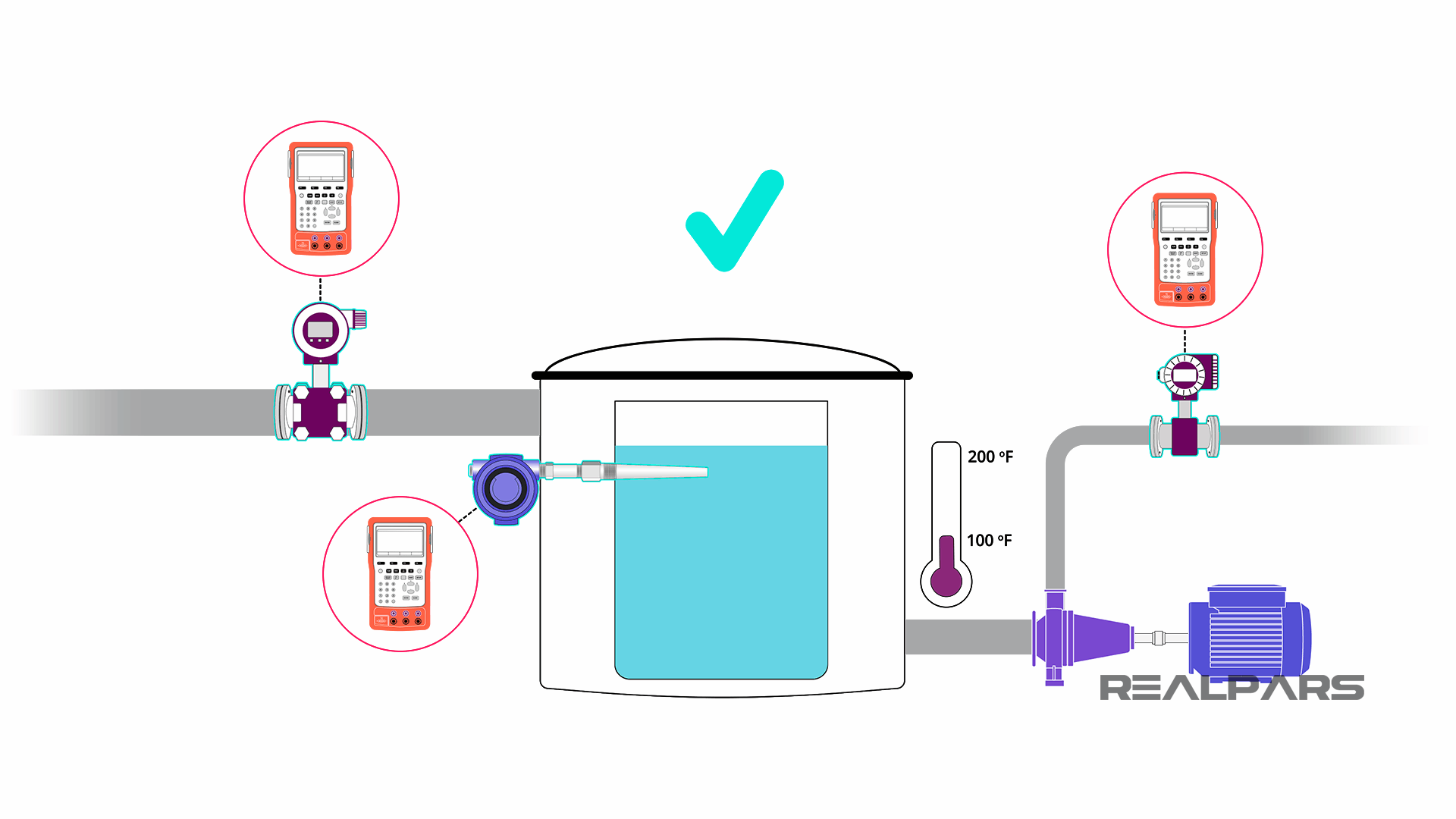
Learn how to use tool calibrators in the process control industry for calibration and troubleshooting.
In this article, we will discuss tool calibrators and show you how they can be utilized in the process control industry for calibration and troubleshooting.
So, what is calibration and what is a tool calibrator?
When Do We Calibrate Tools?
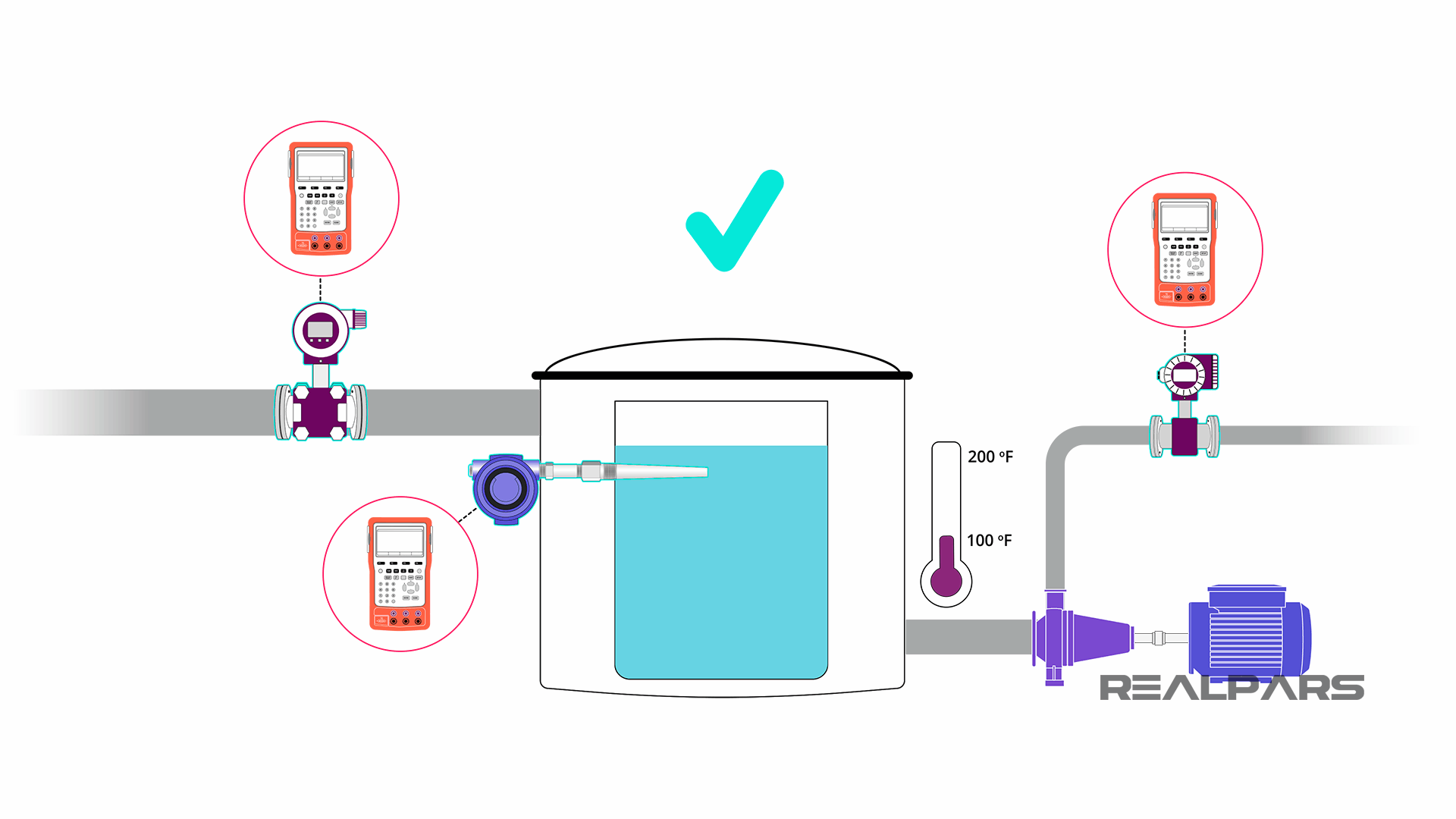
If the measured quantity is not accurately indicated by the measuring instrument, the measuring tool likely needs calibration.
We can substitute the quantity being measured with a tool calibrator.
Calibration can be performed by comparing the readings on an instrument with values provided by the tool calibrator.
Calibration of instruments is a set of adjustments made to an instrument to ensure that the tool readings accurately reflect the quantity being measured.
Why Calibrate Tools?
Tools need calibration for various reasons.
- Equipment deteriorates over time.
- Whenever maintenance is performed on a tool, it must be calibrated.
- Often the range of a tool changes, thereby necessitating calibration.
- If faults are detected and repaired as a result of troubleshooting, it is likely that any tool involved in the troubleshooting process needs calibration.
Types of Tool Calibrators
Various tools are used in process control, so there must also be different types of calibrators.
Let's take a look at some different types of tool calibrators.
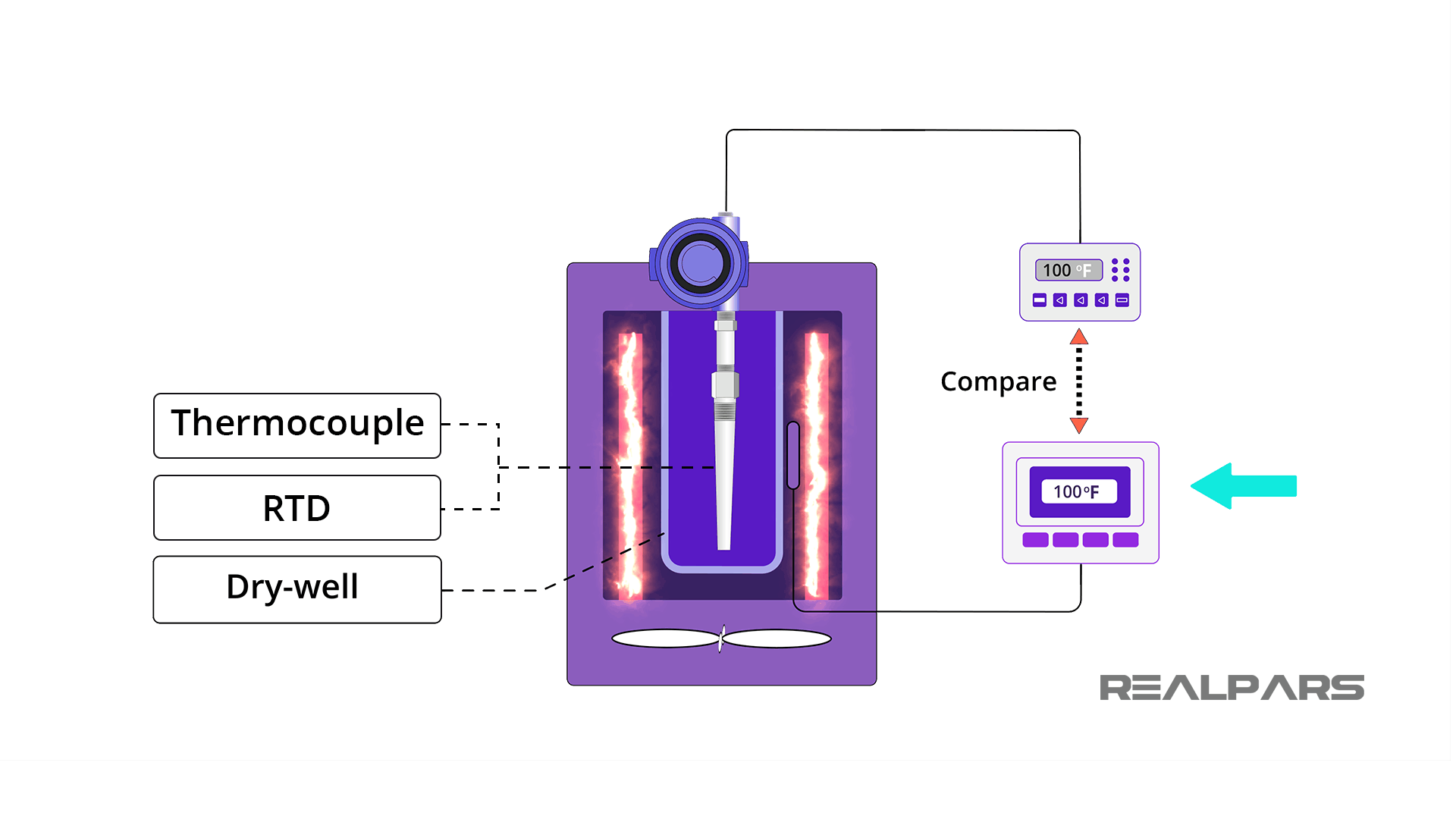
1) Block (Dry Well)
Block or dry well calibrators are used to calibrate temperature probes such as RTDs and thermocouples.
The temperature sensor is placed in the dry well where the calibrator heats a metal block and maintains it at a precise temperature.
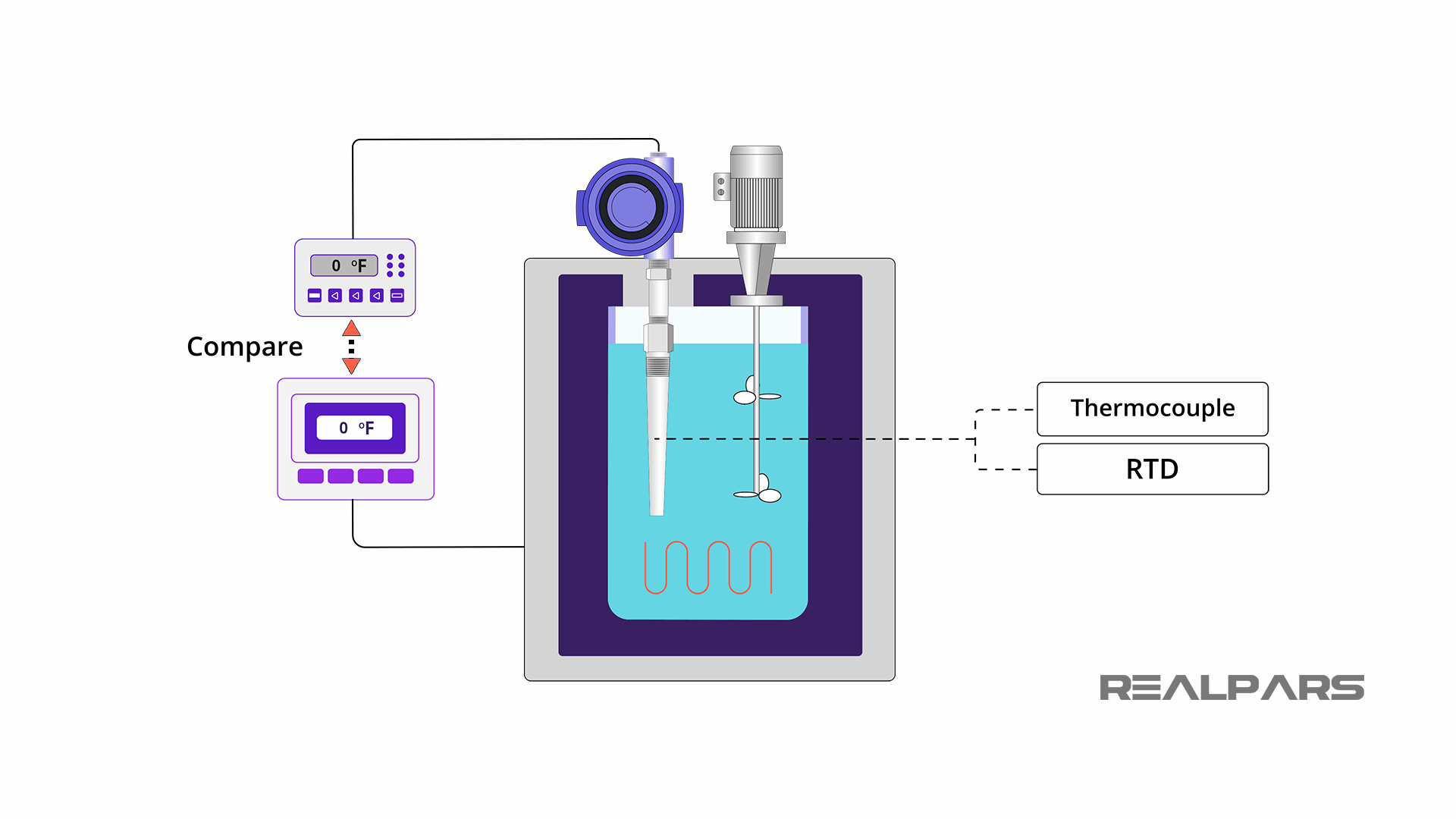
2) Liquid Bath
A liquid bath calibrator is similar to a dry well calibrator because the temperature sensor is placed inside it.
The significant difference is that the sensor is immersed in a liquid that is heated and maintained at a precise temperature.
3) Pneumatic
Pneumatic calibrators provide a set pressure as needed for calibrating, testing, or troubleshooting pressure instruments.
3-a) Dead Weight Tester (DWT)
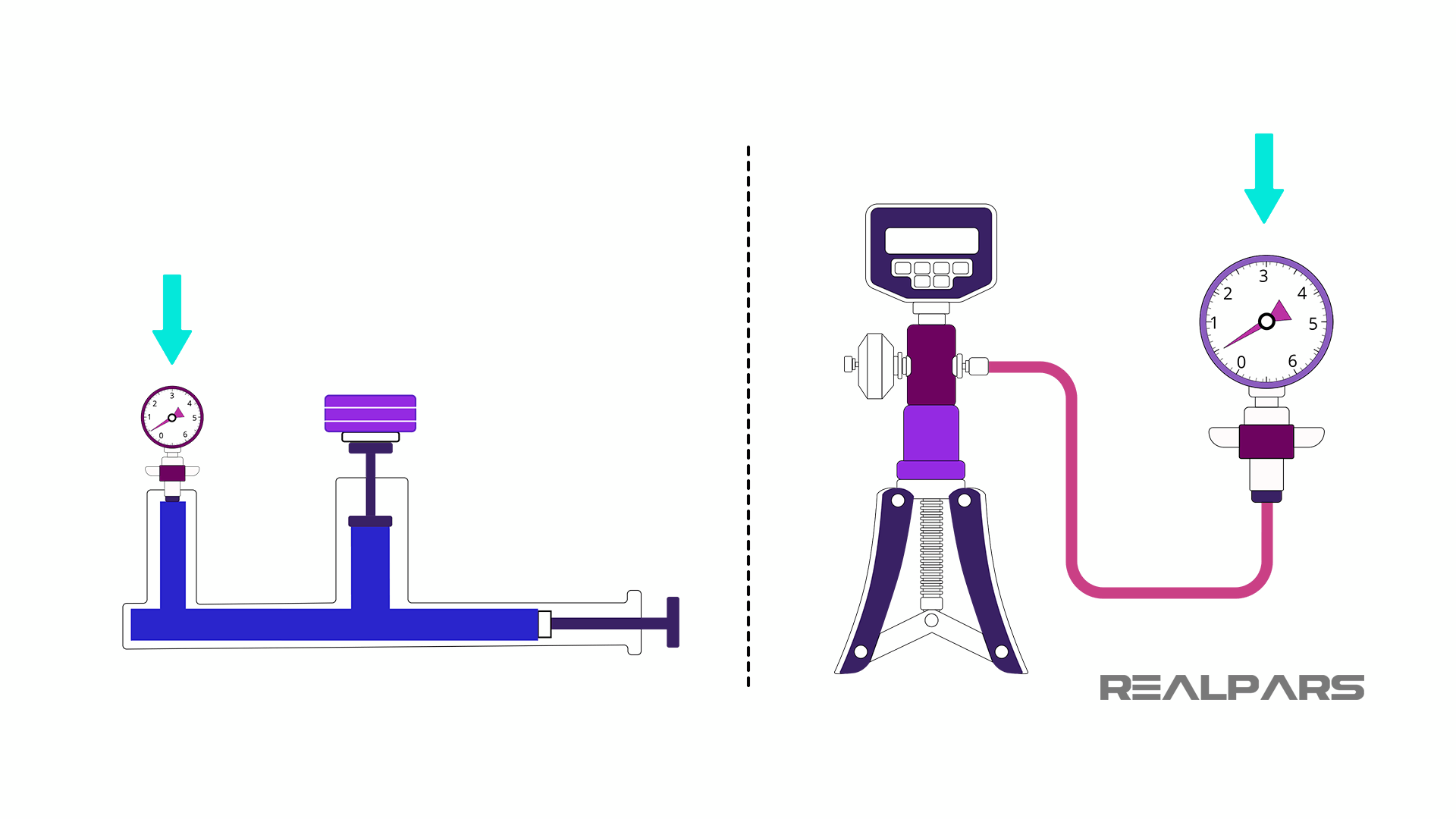
One of the oldest and most accurate pneumatic calibrators is the Dead Weight Tester (DWT).
A DWT is likely permanently installed in the tool shop.
The DWT has several dead weights that are calibrated precisely in pressure units.
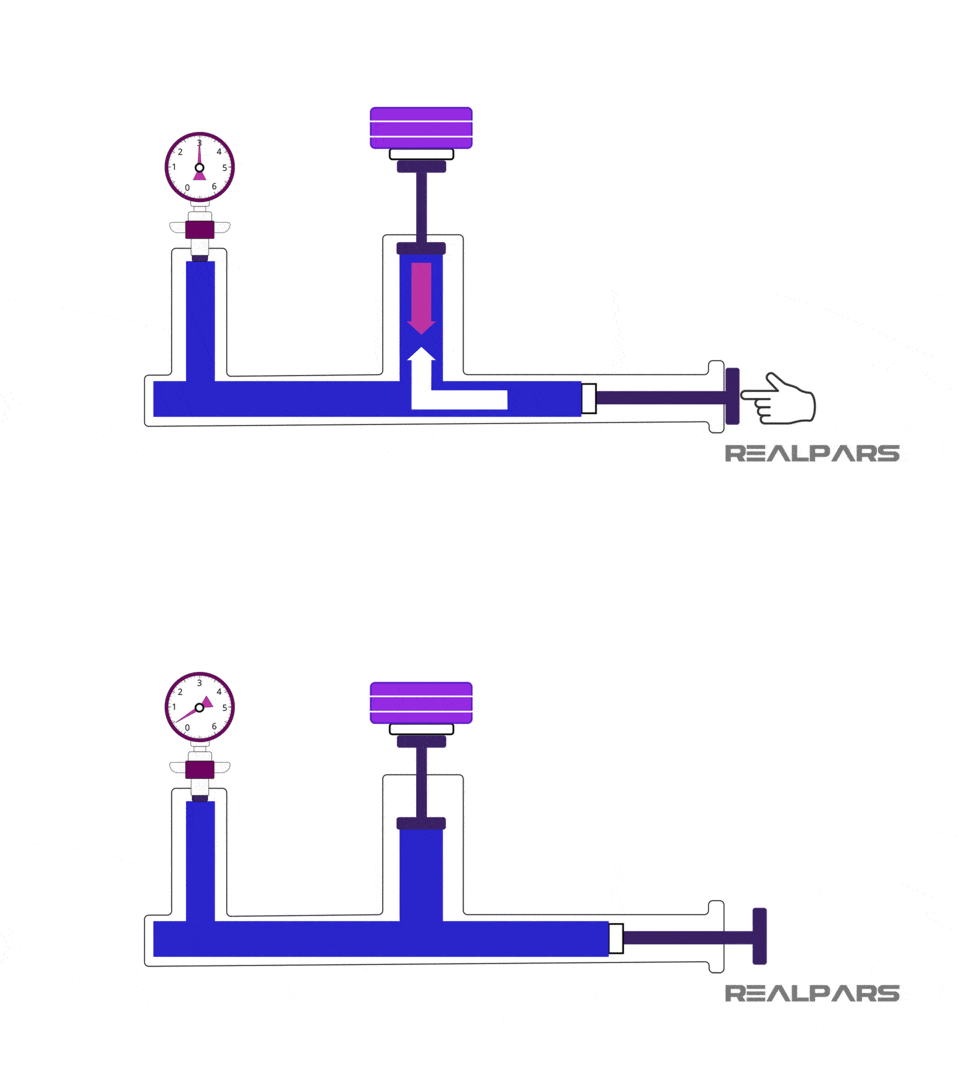
A DWT reaches the floating condition when the upward force generated by a hand pump equals and opposes the downward pressure of the dead weight on top of the piston.
When the piston is floating, the instrument under test can be calibrated to show pressure on the dead weight.
3-b) Aspirator
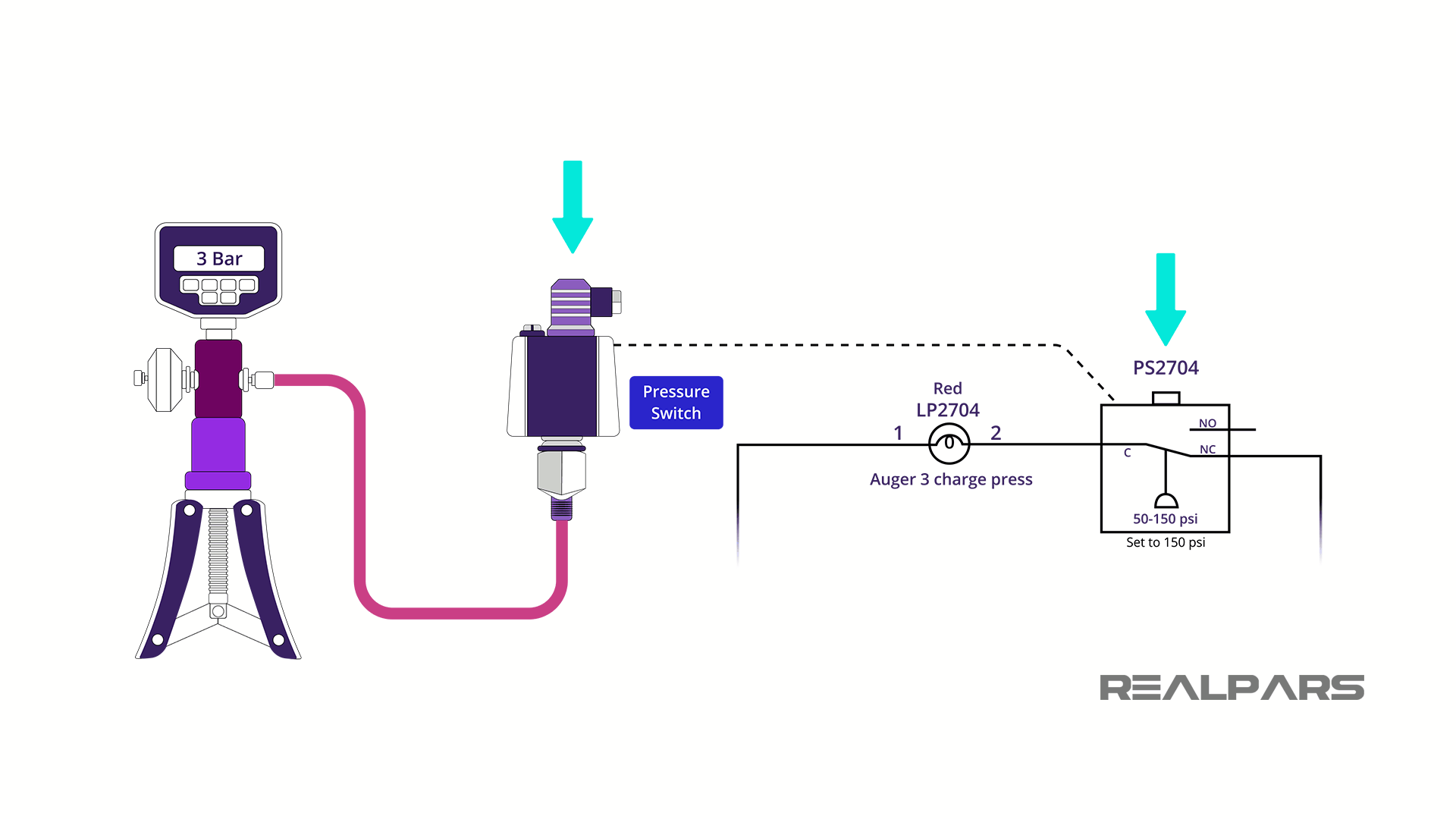
Another type of pneumatic calibrator is the manual aspirator.
A scissor-like handle adjusts the output pressure, and a digital gauge displays the pressure readout.
Manual aspirators are particularly useful for field testing and calibrating devices like pressure switches.
4) Signal Reference Calibrators
As the name implies, signal reference calibrators can generate various electrical signals. There are different types of signal reference calibrators for producing electrical outputs such as voltage, current, resistance, frequency, and more.
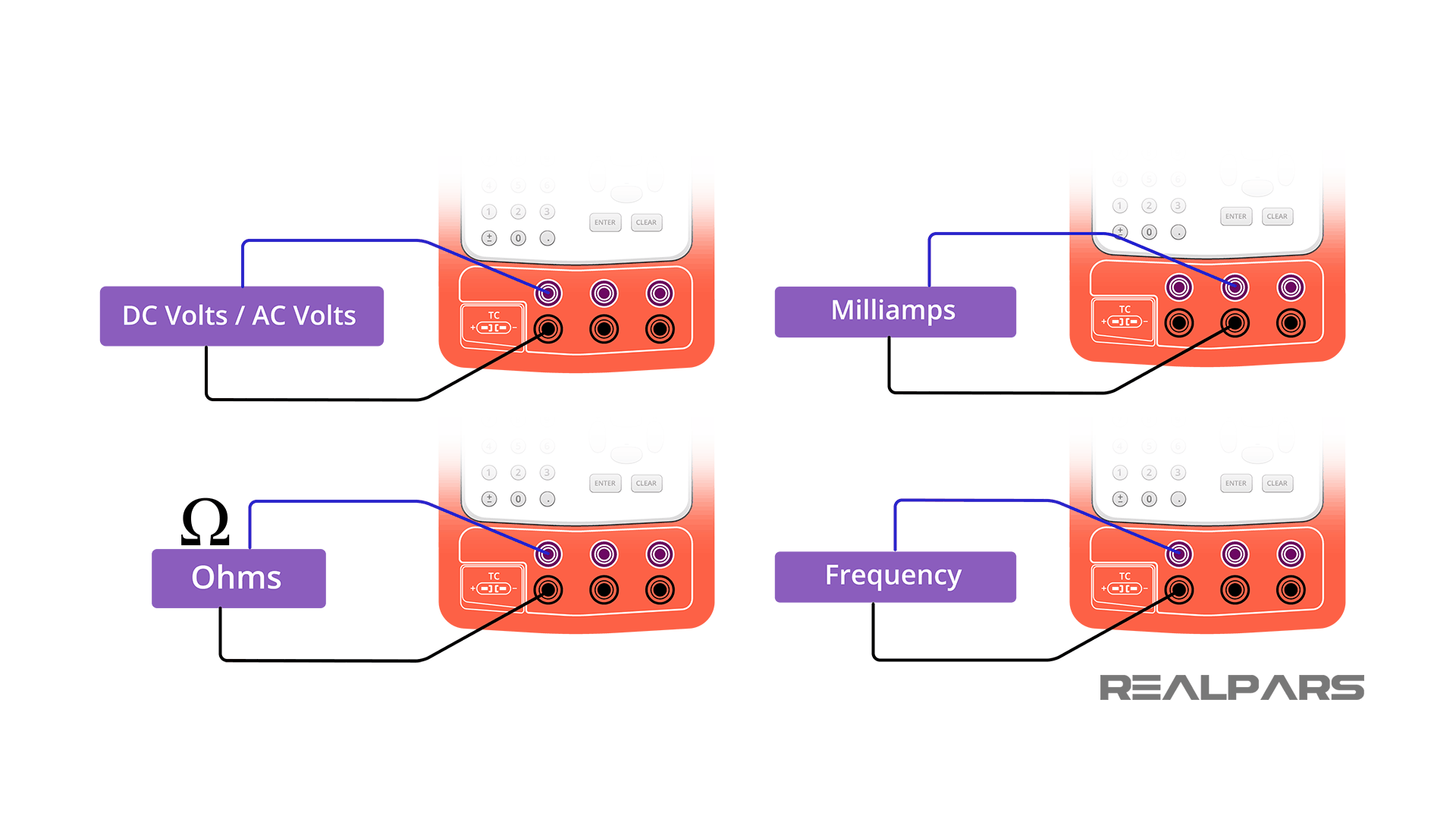
Many signal reference calibrators are also capable of simulating thermocouples and RTDs.
This type of calibrator, often referred to as a simulator, can accurately reproduce the sensor's output and display that output in variable units.
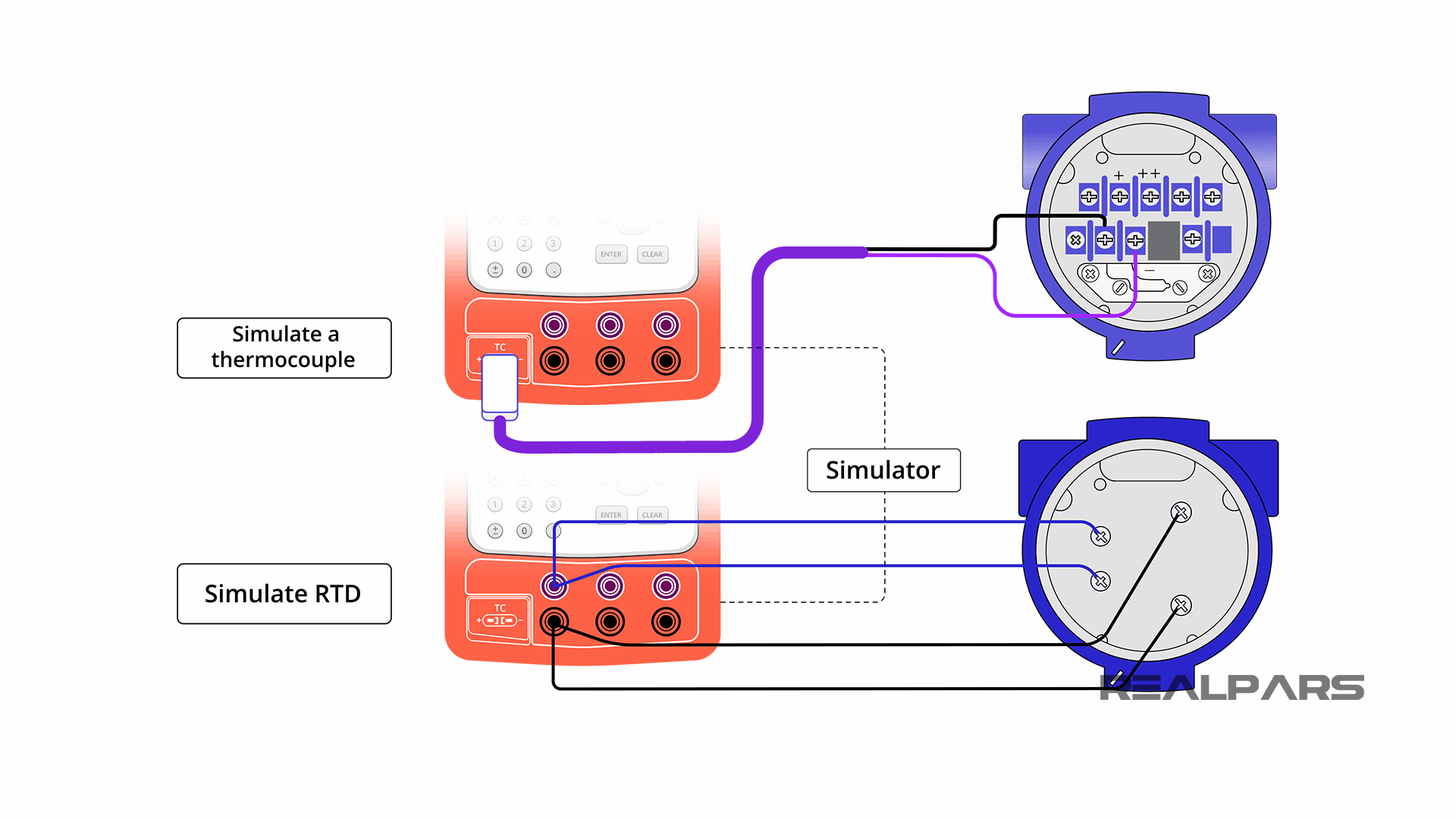
For example, a calibrator can generate the required resistance of 212 ohms corresponding to a PT100 RTD at a temperature of 300 degrees Celsius.
And many signal reference calibrators perform similar measurement functions as a digital multimeter for increased versatility.
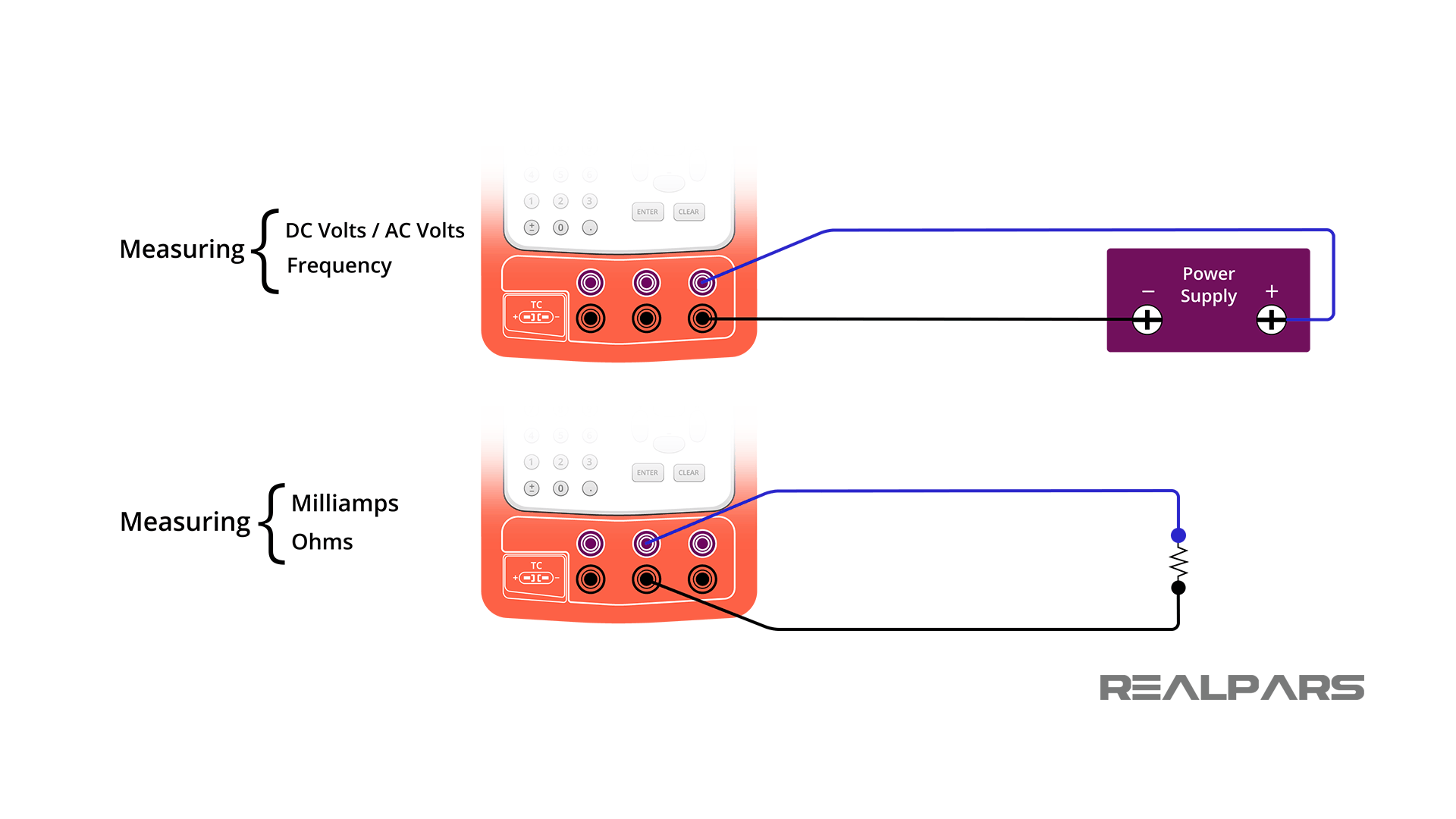
These multifunction calibrators are very useful.
For instance, a thermocouple transmitter can be calibrated using the thermocouple simulation function of the calibrator across its entire temperature range.
The user selects the type of thermocouple on a calibrator and inputs the required simulation temperature.
The transmitter's current output in mA is displayed by the measuring function of the calibrator.
As a troubleshooting tool, the multifunction calibrator is very valuable.
With a few quick measurements, a Field Tech can diagnose whether a fault has been induced by the sensor or the transmitter.



