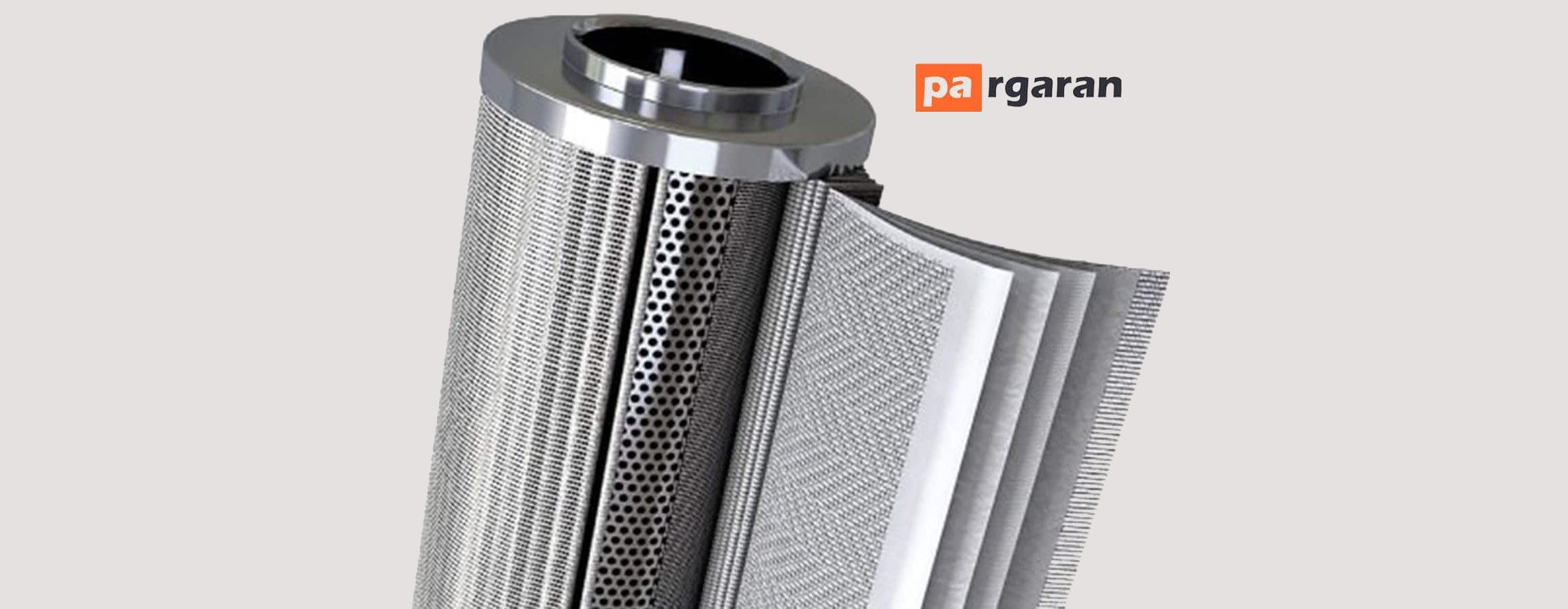
Hydraulic Filters | Hydraulic Filter are machined components that have a significant impact on the precise operation of hydraulic systems. The introduction of foreign particles and oil sediments into the hydraulic system can lead to the malfunctioning of valves, cylinders, and other parts, ultimately resulting in the failure of the hydraulic system.
Modern hydraulic systems feature multiple filters at various points. A hydraulic filter can provide high-quality oxygen for hydraulic machines. Due to their sensitivity, hydraulic systems generally have the responsibility of supplying pressure.
The purpose of these hydraulic filters is to separate and remove foreign particles other than oil that may enter this system. Furthermore, these contaminants can be gas, liquid, or solid.
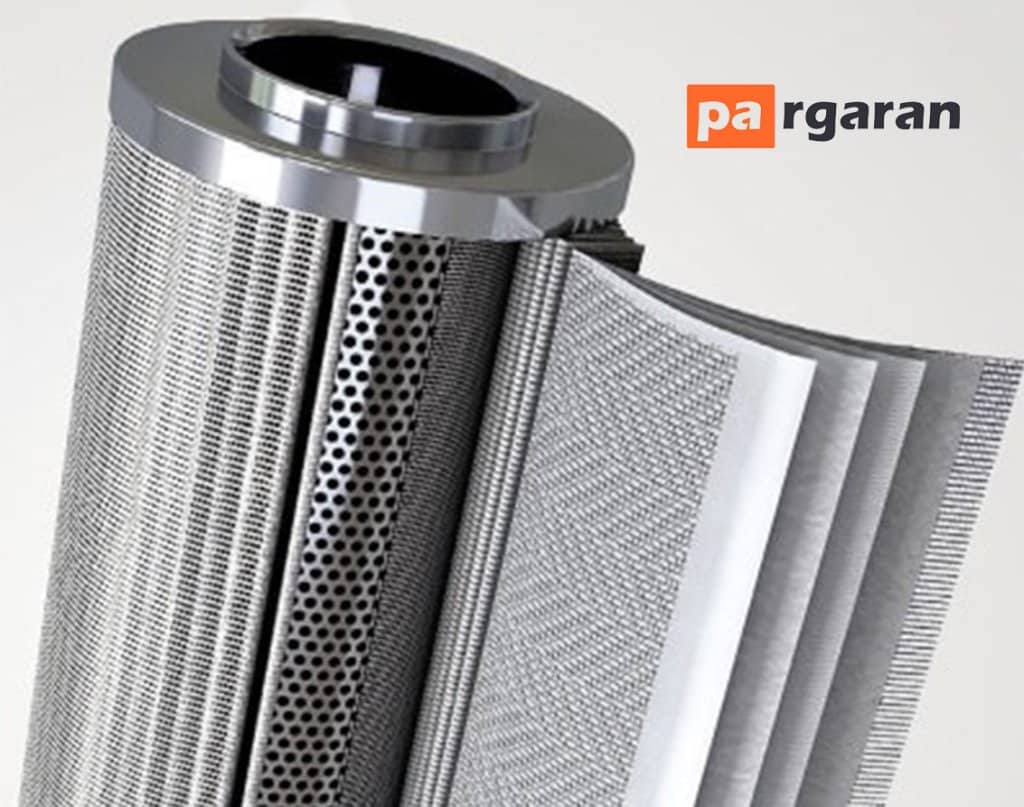
The method of servicing filters and the instructions during repairs in the hydraulic system, such as opening the filter, checking its technical faults, cleaning the entire housing assembly, occasionally replacing the filtering element, and reinstalling it, are essential and obvious tasks.
In modern factories and industrial centers, hydraulic filters are equipped with warning systems that alert the control room or PLC with audio signals (horns or alarms) or visual signals (lighting up a lamp) in case of foreign particles present in the filter.
Types of Hydraulic Filters | Hydraulic Filter
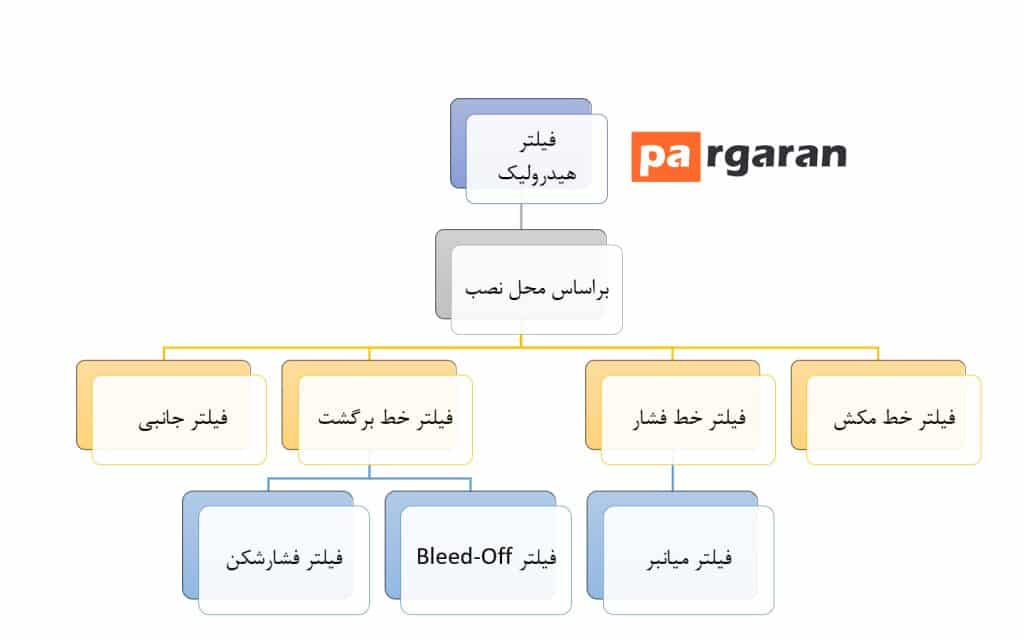
Examining the different types of hydraulic filters based on their location or installation in circuits and pressure bearing capabilities, the filters used in the fluid paths in these circuits are divided into suction filters, pressure filters, return filters, or side filters based on their role and position.
The hydraulic filter ensures the cleanliness of the oil and the health of the hydraulic system. By paying careful attention to the maintenance of hydraulic components, we notice that a large number of O-rings are used for sealing valves.
When compatible oil is used with the type of O-ring, the seals work effectively for an extended period. The only weakness of hydraulic valves and pumps in terms of durability is oil contamination.
The presence of excess particles causes corrosion and rupturing of O-rings and packings. In such cases, either the oil does not reach the consumer, or the pressing process is halted. The only way to ensure protection of circuit components is to place a filter in the upstream circuit of the system components, particularly in parts that are very sensitive to fluid contamination.
Suction Filter
The suction filter, installed at the pump inlet of the hydraulic system, is designed under standard conditions to prevent the entry of extra particles into the pump. Due to the phenomenon of cavitation in hydraulic pumps, the mesh size of the suction filter is chosen to be approximately 150 microns or larger. Hence, it is also referred to as a suction strainer.
The suction filter is placed between the tank and the pump and filters the incoming oil to the pump. To prevent cavitation, the pressure drop upstream of the pump should be very low, ideally 21-/BAR. For this reason, suction lines usually contain 140-micron suction filters with a bypass valve to prevent pressure drop during filter blockage or if the filter orifices are clogged, allowing oil to flow without filtration operations. Consequently, the pressure drop across these filters is very low.
Sometimes, mesh suction strainers are used that have self-cleaning capabilities. Note that the suction filter is different from a suction strainer. A suction strainer, without a bypass valve, prevents larger particles and air bubbles from entering the pump and is located at the beginning of the line.
Light and inexpensive pressed bowls are considered for the housing of suction filters due to the low pressure in the suction line. In some designs, the suction filter is installed in the fluid reservoir.
The suction filter with a mesh is different from the one in the tank. The mesh rating is significantly coarser and is positioned at the beginning of the line in the tank. The strainer prevents larger particles and air bubbles from entering the pump. The strainer also does not have a bypass valve.
In some hydraulic systems, a supplementary pump is used to feed fluid to the main hydraulic pump. Similarly, in some cases, between the supplementary pump and the main pump, a high-rate hydraulic filter (suction filter) is employed (for example, a very fine mesh).
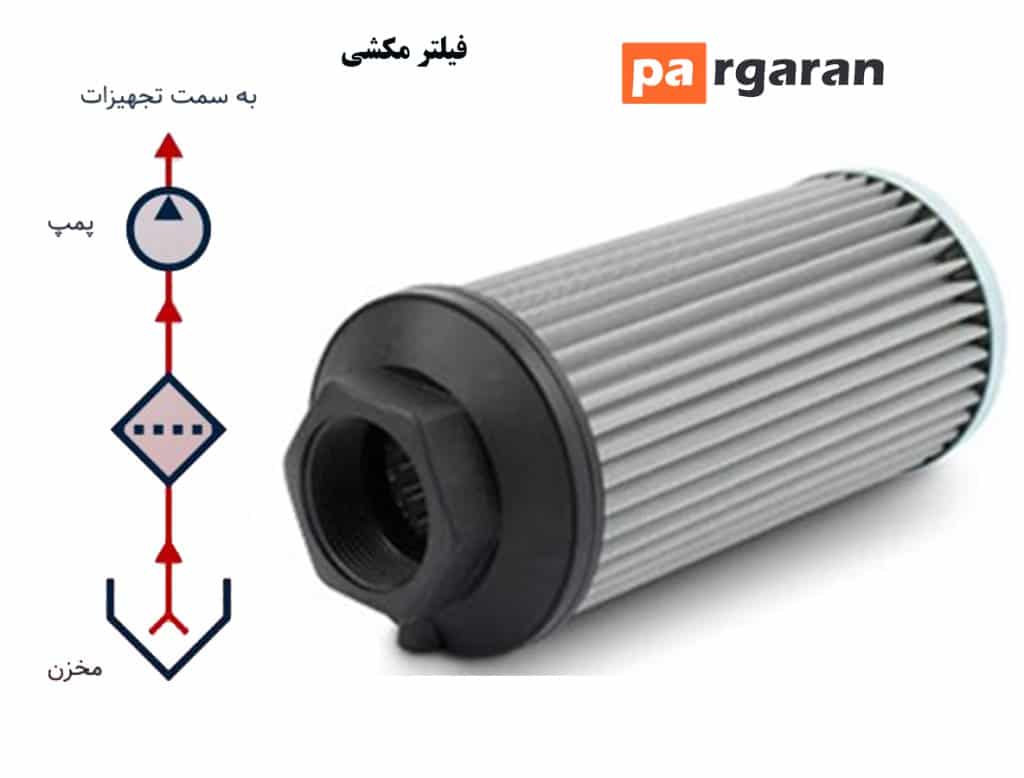
- The role of suction filters is to protect the pump from oil contamination.
- They are installed before the pump inlet.
- To prevent cavitation in the pump, elements with a lower filtration surface are used in these filters.
- These filters cannot function as the main protection against contamination.
- Some pump and hydraulic equipment manufacturers do not recommend their use.
- Usually, mesh strainers that are cleanable are used in the suction line.
- The use of filters in the suction line is particularly essential in circuits where pump protection is crucial. This filter does not significantly affect other components.
Pressure Filter
If the filter is placed before the pressure relief valve and after the pump, it is considered a pressure hydraulic filter, and all the pump's output flow is filtered, protecting the pressure relief valve and other system components.
If the hydraulic filter is placed after the pressure relief valve, it is exposed to fluctuations and changes in fluid flow and hydraulic shock and is therefore vulnerable. When using sensitive components such as proportional or servo hydraulic valves, a high-cleanliness pressure filter is recommended according to the manufacturer's instructions. The allowable pressure level in typical industrial applications is up to 420 bar.
Typically, pressure filters are used to ensure oil cleanliness at the NAS 4-7 level. The mesh size of these filters ranges from 4 to 12 microns. It is important to note that the screen size of the filter alone cannot be a suitable criterion for selection. The cleanliness level is not determined solely based on the mesh size of the filter. These filters can be installed linearly or as a block in the hydraulic circuit.
These filters feature a thick casing designed to withstand high pressure and capture produced particles at the front of the pump in the oil flow path, thus they have a higher cost compared to other types.
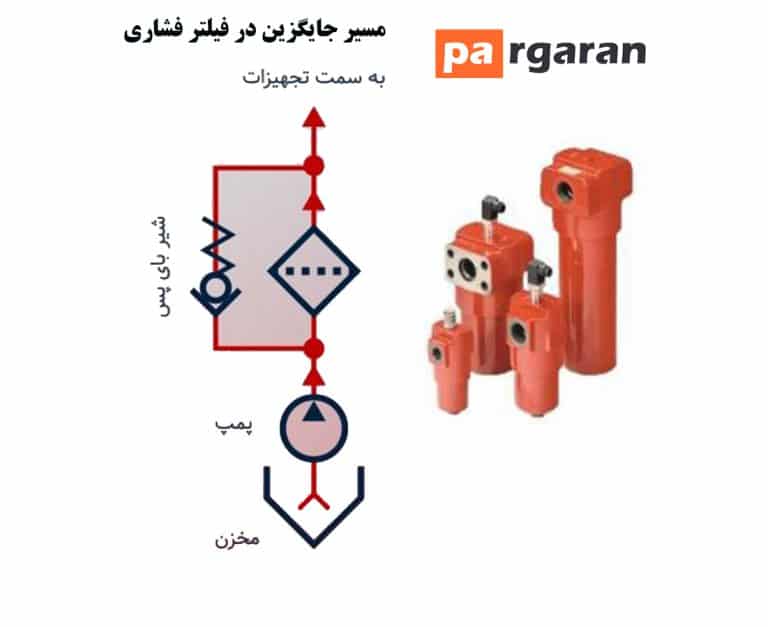
- Pressure lines or pressure filters are installed shortly after the pump and along the oil path.
- In terms of pressure tolerance, the design is based on the specific flow rate of the fluid at the pressure line.
- They typically play a vital role in protecting equipment that is directly located after the pump in the oil line (such as servo valves).
- In fact, depending on their position, they serve as the overall system's protection against contaminants generated by the pump.
- These filters possess a high level of pressure tolerance in the system and filtration.
- It may be necessary to install additional filters in the circuit corresponding to the same component, depending on the required filtration level for each of the system components.
- They are usually used for filtering finer particles with lower micron rating.
Bypass Filter
In very large systems where the cost of filtering all fluid flow is significant, partial flow division is utilized. In this method, part of the circuit flow passes through it and is ultimately cleaned. This method is not suitable for sensitive components as the potential for contamination in the fluid is not zero.
In this type of bypass, known as pressure line hydraulic filter, part of the fluid flow directly goes to the bypass system in the circuit. As the filter gets dirty, the bypass flow in the circuit increases.