Several different technologies are used for level switches, and some of them are also utilized for level sensors. The simplest, most reliable, and cost-effective method of measuring solid levels available is the tilting level switch technology.
Several applications, including those involving grains, cereals, animal feed, powders, and various bulk solids, are suitable for mechanical tilt level switches (such as pellets, stones, minerals, sawdust, etc.).
Tilting level switches are sensors with electrical contact output. Applications include large hoppers, trippers, stackers, conveyors, and crushers.
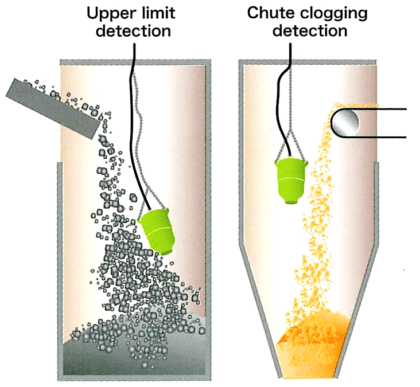
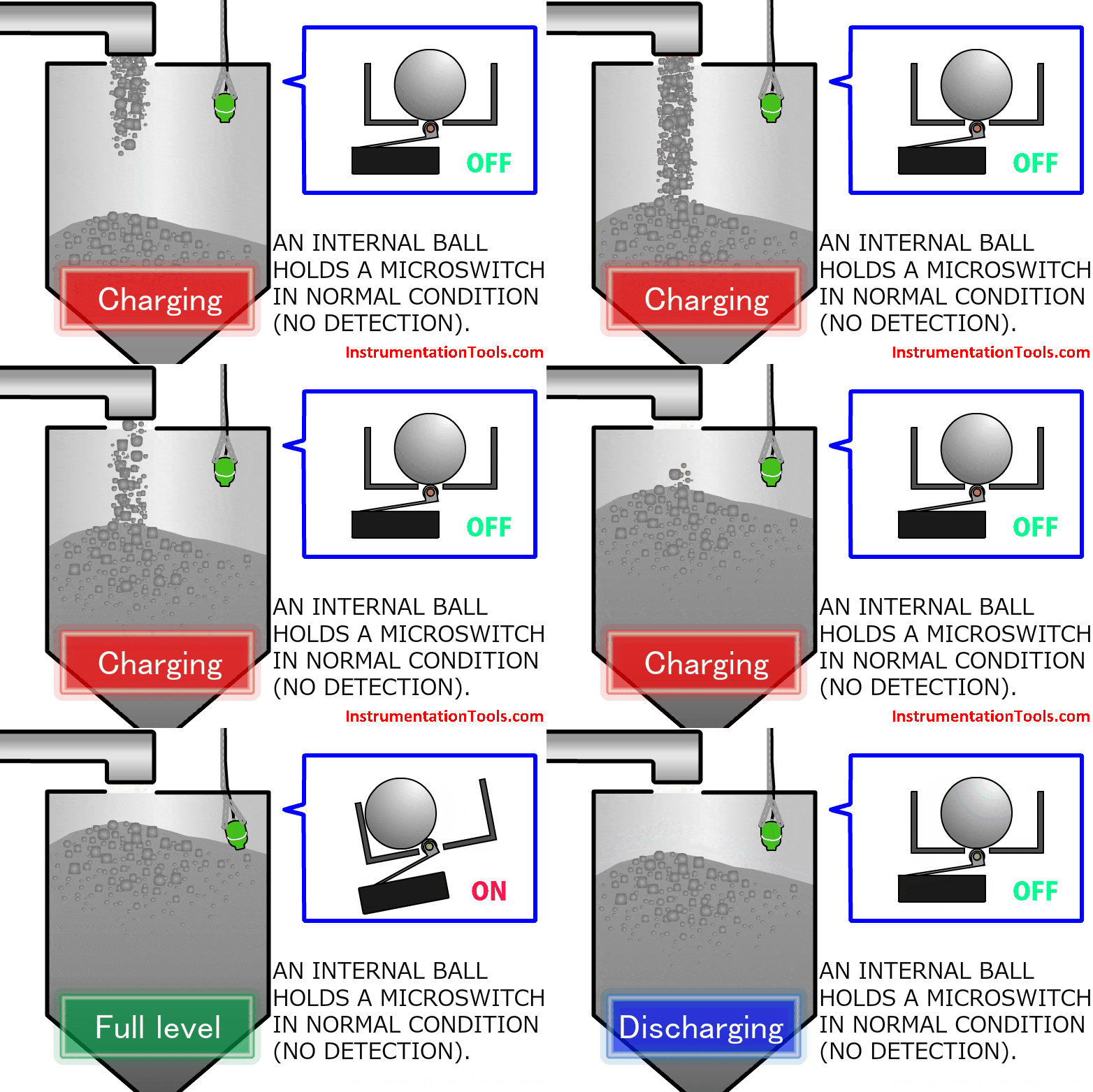
This type of switch is designed to hang in the tank with a stainless steel chain. When the switch tilts more than 20 degrees due to an increase in stored material, the internal identifying ball moves toward the limit switch.
The output contact of the limit switch changes, and this change in contact is utilized for identifying the level position. It is widely used for detecting the upper limit of hoppers/silos, detecting connected chutes, and so on.
Applications:
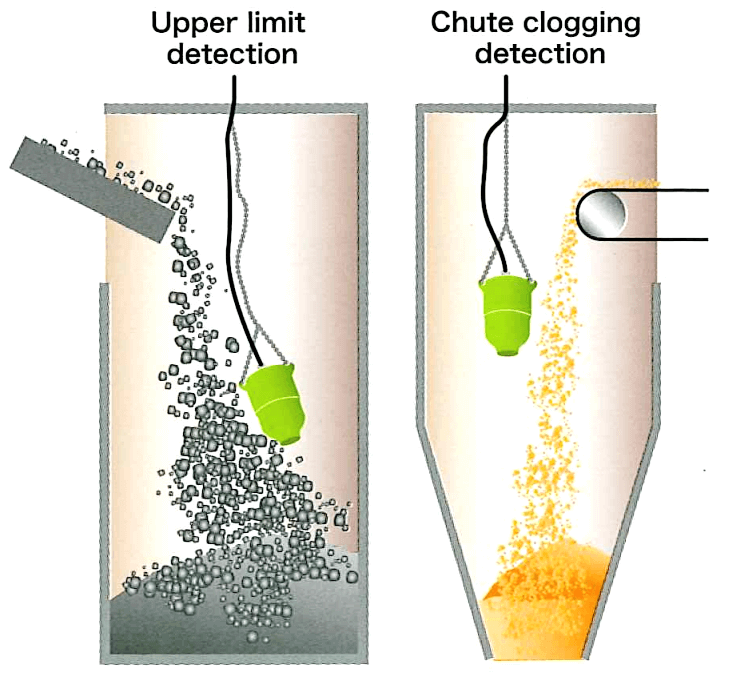
Application of the Tilting Level Switch
For detecting bulk dry materials, tilting level switches are among the most cost-effective and hassle-free point level controls available. To prevent overfilling of bins or to regulate levels in open piles, the units can be used as high-level indicators.
They can also determine if the conveyor is loaded or underloaded. Each tilt switch has a threaded hole where extension actuators can be attached to improve sensor repeatability and protect the tilt switch from direct contact with coarse materials.
Advantages of the Tilting Level Switch
- This technique is very beneficial for open storage applications where fixed sensor installation is impossible.
- They are also excellent for large particle materials.
- High-level detection of components, grains, or granules in silos, tanks, and bins.
- Installed on a conveyor or above a bin as an option for long rotation.
- Capable of working with solids and powders.
- Easy installation
- Requires less maintenance.
Disadvantages of the Tilting Level Switch
- Unlike other types of level measuring devices, the tilt level switch is not affected even when the device is completely covered in dust.
- They are mechanical, subject to wear, effective only for heavy items, and are application specific.
For any questions and comments, please contact Pargaran.
For more information, click here.