


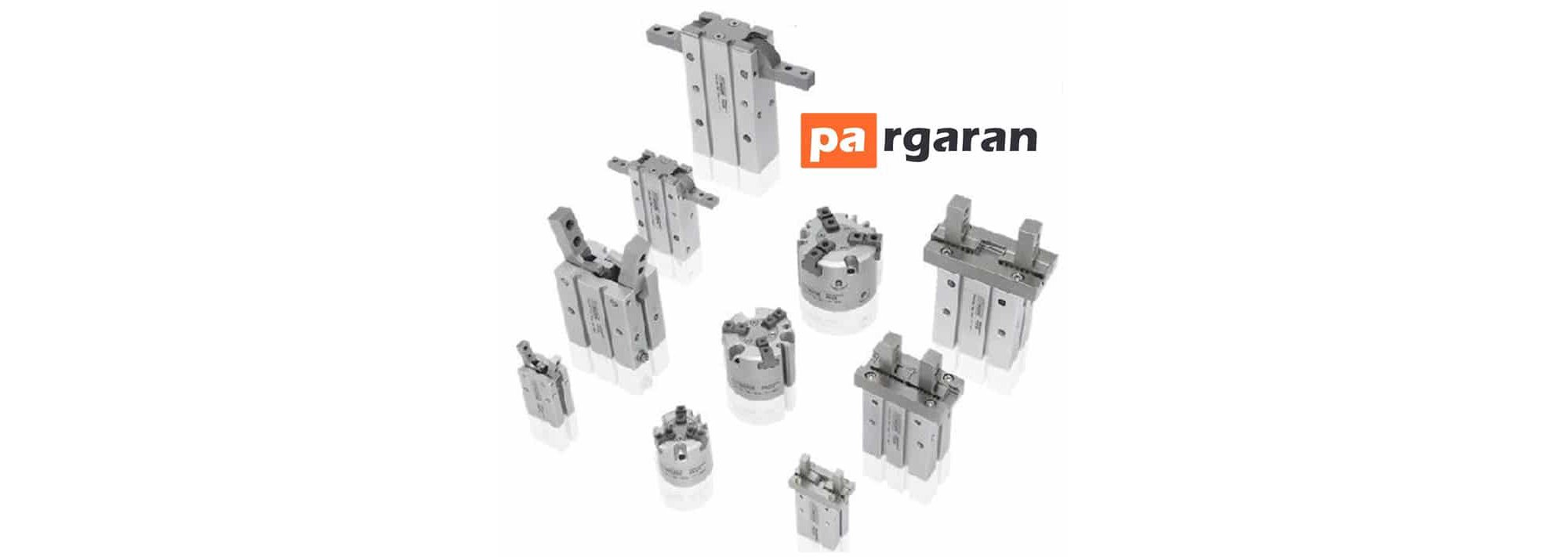
Gripper or claw | Gripper are types of jacks used for moving or holding parts. Finger jacks are required to have tools constructed for them due to lacking built-in tools. In certain situations, sensors can be installed to detect the position of the jack.
This allows for the detection of the open or close position of the gripper jaws and sends signal commands to the processor of the device for control. With a wide range of pneumatic grippers, selecting the right gripper for manual operation becomes easy.
Some of them, such as angled handles, parallel, and three-jaw grippers, are available in a wide variety of options, pressure ranges, and gripping forces. The strong grip in machine tools to micro grippers in electronics ensures a perfect fit for any application. The "jaws" of the gripper are advanced custom tools designed to hold the target.

Pneumatic Gripper | Pneumatic Finger Jack
Pneumatic gripper or pneumatic claws are a type of pneumatic actuator for grippers. In pneumatic systems, grippers serve the role of clamps, holders, or tongs, and this is why they are referred to as pneumatic fingers. For instance, they are used in the arms of surgical mask manufacturing machines.
They typically consist of a cylinder and two claws connected by a lever. Pneumatic fingers can perform tasks more powerfully than human fingers.
When due to environmental conditions or the amount of force needed to hold a piece or tool, we cannot use our hands, these types of jacks are utilized. The internal structure of the gripper consists of one or more pneumatic cylinders. Depending on how many jaws a gripper has, the number of these actuators inside the gripper varies.
However, at least one linear cylinder is involved in the structure of the gripper. These pneumatic cylinders transfer the force of the cylinder to the gripper jaws through specific connections and mechanisms that convert the linear movement of the cylinder.
Pneumatic Gripper | Pneumatic Finger Jack
In harsh environmental conditions, such as acidic environments, high temperatures, limited space, or high required force where human activity is not feasible, we employ grippers. Depending on their applications, they exist in various shapes and forms, with the most common types being pneumatic grippers available in radial and linear models.
Of course, each of them has at least two jaws. Given the specific shape of pneumatic grippers, they are capable of installing various mechanical fittings on the jaws, which are generally referred to as fittings. It is worth noting that this should not be confused with connectors related to connections.
The core of all fittings is metal. However, due to different shapes and their purposes, they can be grooved, polished, or have surfaces made from various materials. In industry, a range of movements is possible through the combination of gripper and cylinder. Grippers have two channels for the entry and exit of pressurized air.
It is also essential to pay attention to the air path during installation. This equipment can be activated from both sides, but the direction of movement and the opening and closing of the jaws depend on the air inlet and outlet respectively. The inlet and outlet of the air are controlled by directional control valves or pneumatic valves.
Difference Between Internal and External Grippers
-
External
This is the most common and simplest method used for holding products. It has the shortest stroke length. When the jaws of the gripper close, the gripping force locks the target in place.
-
Internal
The geometry of the object or the need to reach the outside of the object may in some applications require it to remain in the center. In these situations, the gripper’s opening power will be controlled by the body.
Types of Grippers Based on Functionality

-
Linear Motion Gripper
The cylinder inside the gripper is double-acting, allowing pressurized air to enter from both sides, and the jaws adjust automatically. As a result, the jaws move together. The ability to grip a piece from inside and outside with the linear motion of the gripper jaws is easy to install.
It is mainly used in cases where a piece, such as a disc, shaft, or plate, needs to be grasped with high, firm, and secure force for operations, ensuring a high safety factor in the work.
-
Rotary Gripper
This category is alternatively called rotary or radial grippers with limited angles. Similar to the previous category, the cylinder inside the gripper is double-acting, allowing pressurized air to enter from both sides, and the jaws adjust automatically. It also has the capability to install sensors on both sides.
Like linear grippers, they are very easy to install. These types of grippers can operate at any angle with adequate power. They are also capable of changing parts from inside and outside.
General Types of Grippers
Pneumatic grippers, like other pneumatic actuators, can have two types of functions: single-acting or double-acting, as they operate under a similar mechanism, and the gripper acts like a simple pneumatic jack with a piston and a cylinder and two ports.

-
Parallel Grippers
Parallel grippers are the most common type of grippers due to the aligned and parallel movement of their claws, which is why they are named as such. They are easier to work with and can accommodate dimensional differences.

-
Claw or Angular Gripper (90-180 Degrees)
Similar to the previous category of parallel grippers, it serves to change the desired object. The only difference between parallel pneumatic grippers and angular pneumatic grippers is the type of movement of their claws. The naming of “claw-type” comes from the fact that the closed position is parallel at °180 and opens to °180.
Parallel grippers are somewhat more expensive than equivalent angular grippers, but they are relatively more popular because they can be used to grasp a wide range of component sizes without adjusting the attached tool. Their ability to function as dual-purpose cylinders is another advantage of both angular and parallel pneumatic grippers.
This feature can be utilized either inside or outside the part. Single-acting models with spring return are also available. Modifications in springs are made to activate the grippers so that they can leverage more force in smaller spaces.

-
Multi-Jaw Gripper (Three Jaw)
The 2-jawed parallel gripper and 2-jawed angular gripper are the most common styles of pneumatic grippers. Angular grippers need more space when the jaws are radially moved away from the object. Three-jaw grippers and clamps are also available for more precise handling needs.


