The gearbox functions as a speed reducer. Compared to conventional gears, it offers advantages such as a high reduction ratio and a compact installation position.
What is a Gear?
Gears are among the most commonly used mechanical components and are extensively used in mechanical gearboxes. From small gears for clocks to large gears for ship turbines, they can reliably transmit power.
Function of Gears:
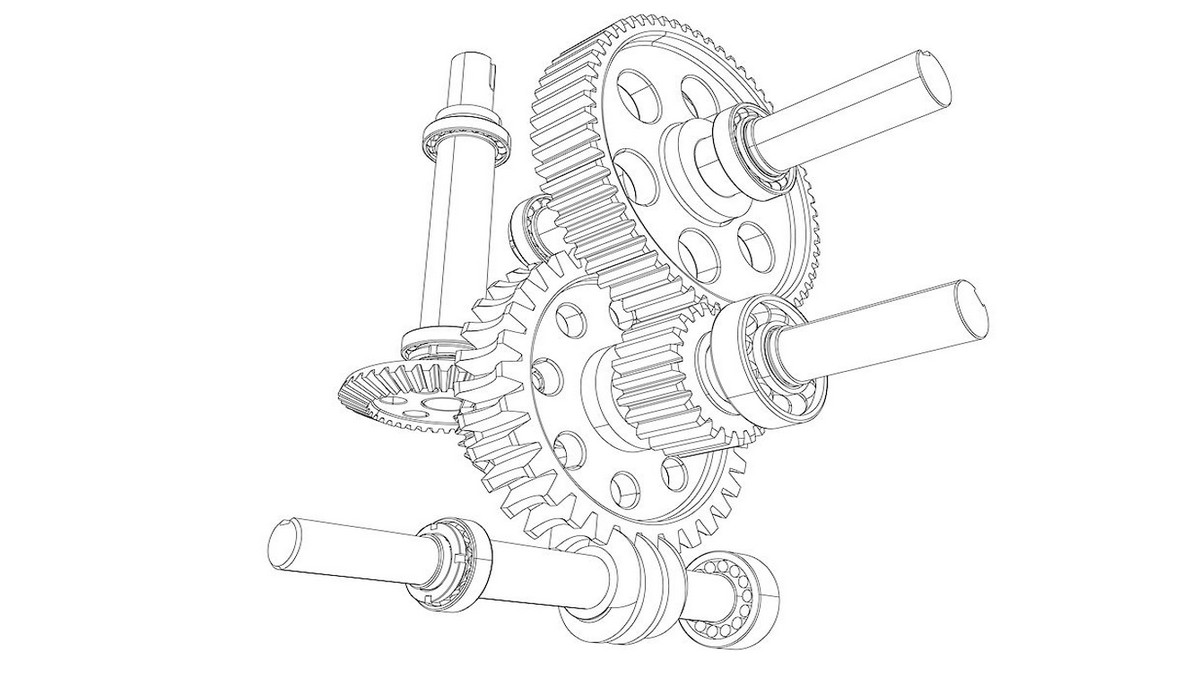
By selecting a combination of different tooth counts, a desired and correct speed ratio can be obtained. By increasing or decreasing the number of combinations of gears, the position of the reciprocal relationship between rotating shafts can be freely changed. It can be used to transmit power between different shafts such as parallel shafts, intersecting shafts, and stepped shafts.
What is a Gearbox?
A gearbox is a type of speed-changing device that realizes the effect of speed modification through the meshing of large and small gears, which has extensive applications in changing the speed of industrial machines.
The large gear is mounted on a low-speed shaft in the gearbox, while the small gear is mounted on a high-speed shaft. Through meshing and transmission between the gears, the process of acceleration or deceleration can be completed.
The gearbox bears the wind turbine's rotational force and the reactive force generated by the gear transmission, and must have sufficient strength to withstand force and torque, prevent deformation, and ensure quality transmission.
The design of the gearbox housing should comply with the requirements for power transmission arrangement, processing conditions, assembly, and easy inspection and maintenance. With the continuous and rapid advancement of the gearbox industry, various industries and companies have adopted gearboxes and developed and grown. It is an important mechanical component that is widely used in wind turbines.
Its primary function is to transfer the power produced by the wind turbine to the generator and achieve the desired speed. Typically, the rotor speed of a wind turbine is very low, which is significantly different from the rotational speed required by the generator to produce electricity.
Considering the principles of modular design, the gearbox largely reduces the variety of components and is suitable for mass production and flexible selection.
Spiral bevel gears and reduction helical gears are all made from high-quality alloy steel, quenched and tempered, with a tooth surface hardness of 60±2hrc and tooth surface grinding accuracy reaching grades 5-6.
What Does a Gearbox Do?
Acceleration and deceleration are often referred to as speed-changing gearboxes. Change the direction of power transmission, such as using two gears to transfer power vertically to another rotating shaft.
Torque Modification: Under similar power conditions, as the speed of the gear increases, the torque on the shaft decreases and vice versa. Clutch Functionality: The objective of separating the motor from the load can be achieved by disengaging the two main meshed gears. This includes applications like brakes, etc. Power Distribution: For instance, from a single motor, several secondary shafts can be driven through the main gearbox shaft to achieve load handling from one motor.
Features
1. A Wide Range of Gearbox Products
The gearbox generally uses an outline design, but in special cases, its design can be modified according to user requirements, allowing it to be tailored to specific industry needs. In its design, parallel shafts, vertical shafts, general boxes, and various components can be adjusted based on user requirements.
2. Stable Gearbox Performance.
The performance of the gearbox is stable and reliable, with high power transmission. The outer box structure of the gearbox can be made from sound-absorbing materials to reduce the noise generated during the gearbox's operation.
The structure of the gearbox housing and a large fan can effectively reduce the operating temperature of the gearbox. During the usage of the gearbox, timely cleaning of the gearbox main body is essential.
The cleaning and maintenance device for the gearbox utilizes the main oil supply and drainage system of the gearbox, along with filtered lubricant oil for cleaning without modifying any hardware components of the gearbox or adding cleaning agents, ensuring the safe operation of the gearbox and extending its lifespan.
3. The Gearbox is Fully Functional.
In addition to speed reduction, it also modifies the direction of transmission and torque transmission. For example, once the gearbox adopts two segment gears, power can be transferred vertically to another rotating axis to effect the direction of transfer.
While the fundamental principle of torque transfer in the gearbox is that under the same power conditions, as the gearing speed increases, the torque on the shaft decreases, and vice versa.
The gearbox can achieve clutch functionality during its operation. If two main meshed gears are separated, the connection between the main drive and working machine can be cut off, achieving the effect of power and load separation. Additionally, the gearbox can complete power distribution by moving the active shafts through a single drive axis.
What is the Gearbox Transmission Stage?
The gearbox extends from the input end to the output end, and the gear formed after a pair of gear meshes is called single-stage gear transmission, which consists of 1 transmission stage.
A gear train formed by two sets of single-stage gears has 2 transmission stages. Comparatively speaking, there can be 3, 4, and 5 transmission stages.
However, as the number of stages increases to a certain point, the reduction in inertia equivalent to the total becomes less evident. Considering the coherent structure, the precision of transmission, and economics, the number of stages should not be excessive.
Applications of Gearbox:
Most commonly found in:
- Printing and packaging machinery
- 3D garage equipment
- Environmental protection machinery
- Transfer equipment, chemical equipment
- Mining metallurgy equipment
- Steel electrical equipment
- Construction machinery
- Sugar industry
- Wind power generation
- Escalator drive systems
- Shipbuilding
- Light industry field
- Paper industry