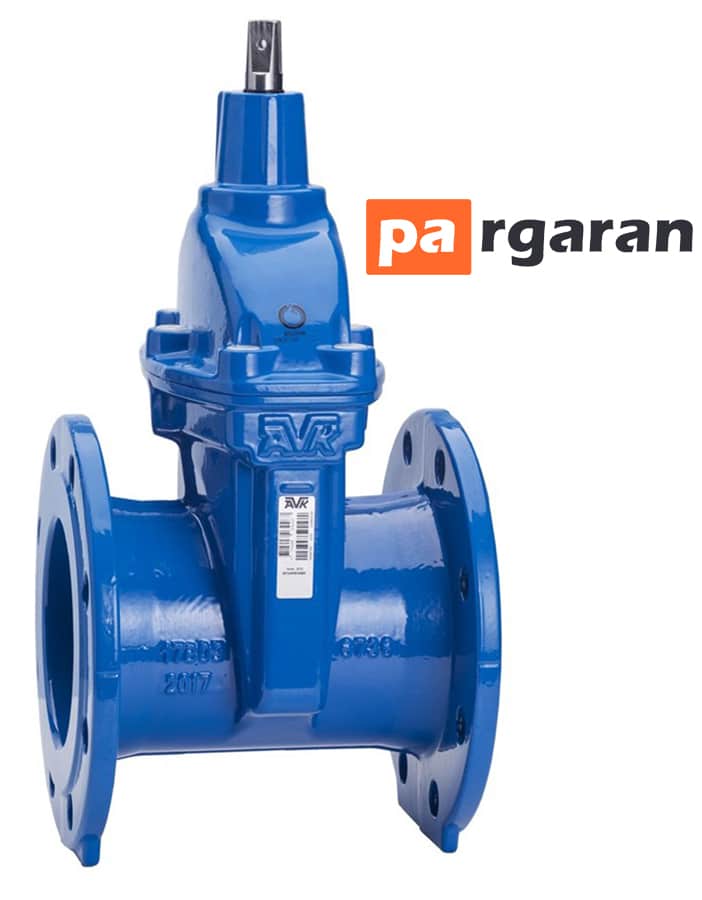
A gate valve, also known as a sliding valve, operates in a linear manner and is used to permit or stop fluid flow in piping systems.
The disk of this valve has two positions: fully open or fully closed. The sliding valve utilizes a sliding disk (gate) or wedge as the blocking element.
It is called a gate valve because it uses a gate or wedge-shaped disk to control the flow of fluids. The gate or wedge is placed in the path of the fluid flow and can be raised or lowered to control the flow rate.
Gate valves come in various designs and sizes, but they all share a similar basic structure. The body of the valve contains the fluid flow path and is connected to two flanges that facilitate its connection to other piping components.
The gate or wedge is connected to a stem that passes through the valve bonnet, allowing it to be raised or lowered by turning a handwheel or using a motorized actuator. When the gate is fully lowered, it blocks the fluid flow through the valve. When the gate is fully raised, the fluid can flow freely through the valve.
Gate valves are usually applied in scenarios where a tight shutoff is required. Since the gate or wedge completely blocks the fluid flow path when the valve is closed, gate valves provide a more reliable seal compared to other types of valves.
In situations requiring high flow rates, such as in large-scale industrial processes or water distribution systems, these valves are used.
Gate Valve
There are various types of gate valves, including parallel gate valves, wedge gate valves, and expanding gate valves. Parallel gate valves use a flat gate that moves between two parallel seats.
Wedge gate valves use a wedge-shaped gate that is angled to fit snugly between two inclined seats. Expanding gate valves utilize a gate that slightly expands when raised, creating a tight seal against the seats.
In summary, gate valves are an important type of valve used in piping systems for controlling fluid flow. These valves provide reliable blockage and high flow rates, making them a popular choice in many industrial applications.

Sliding valves are classified based on different criteria, including the type of disk, the body cover connection, and the stem movement mechanism.

Advantages (Strengths) and Disadvantages (Weaknesses) of Gate Valves
| Weakness | Strength |
| Low-pressure limitations | Good sealing |
| No flow control | Low pressure drop in fluid flow |
| Slowness in opening and closing | Bidirectional |
| Noise and vibration if not fully opened | Suitable for high temperature and pressure |
| Difficulty accessing internal components for repair or replacement | Usable for various fluids with high viscosity |
| Disk and seat erosion potential | Low cost |
Gate valves are made of various materials based on application and have fixed and variable components. The schematic of the components of this valve can be seen in the image below:

I hope you are satisfied with reading the article (What are Valves or Industrial Fittings?).
For any questions or suggestions, please contact the Pargarān group here.