Filter Regulator | What is a Filter Regulator?
Filter Regulator | Filter Regulator is another essential component of industrial systems. When air exits the compressor, it is warm, dirty, and often humid, which can damage downstream equipment such as valves and reduce its lifespan. Therefore, before using the air, it must be regulated, filtered, and controlled.
A regulator is used to control the speed and accuracy of the flow of liquids and air, while the external air filter cleans the air coming from the compressor. What happens is that the filter cleans solid particles (dust, dirt, rust) from the air lines, captures them under pressure, and separates liquids (water, oil) from the compressed air. Filters are installed in the upstream air lines of regulators, lubricators, directional control valves, and pneumatic devices such as cylinders and air motors.
Moisture in the air accumulates at the bottom of the compressor during the compression process. However, some of it is still transferred by air to the equipment. To prevent damage to the equipment, filters are used. Moisture is absorbed manually (in the drain section) and automatically. Regulated air is the filtered air that reaches the appropriate pressure and is ultimately transferred to the equipment. This process is carried out by the regulator (filter regulator).
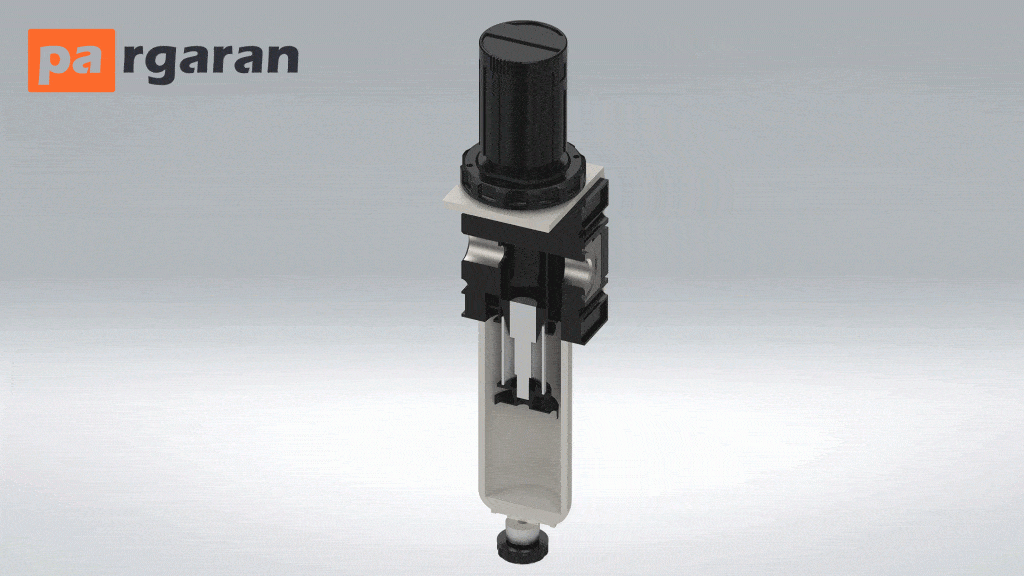
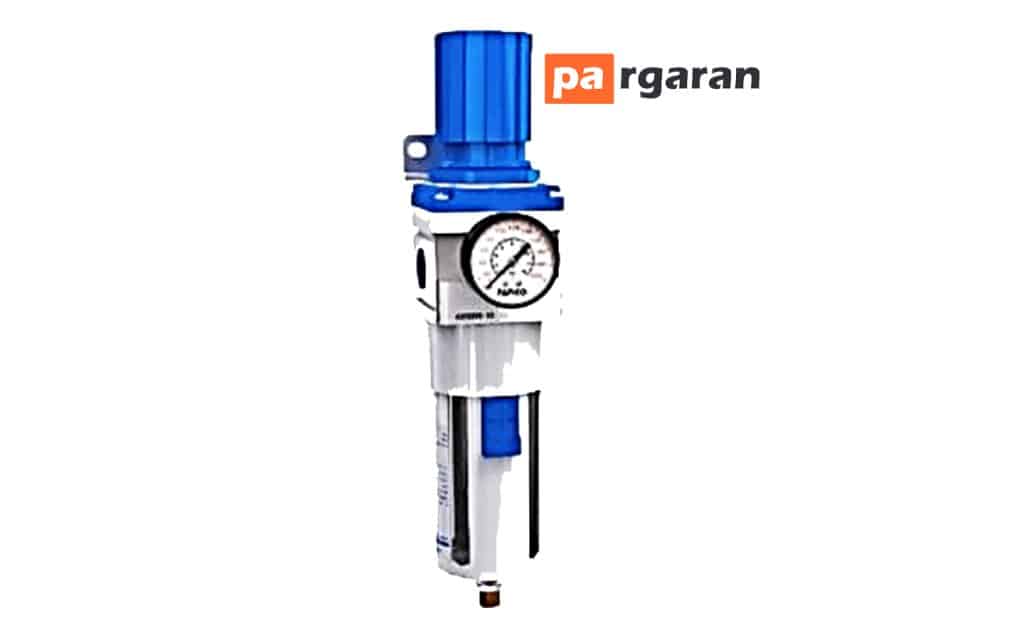
Main Components of Filter Regulator | Filter Regulator
-
Regulator
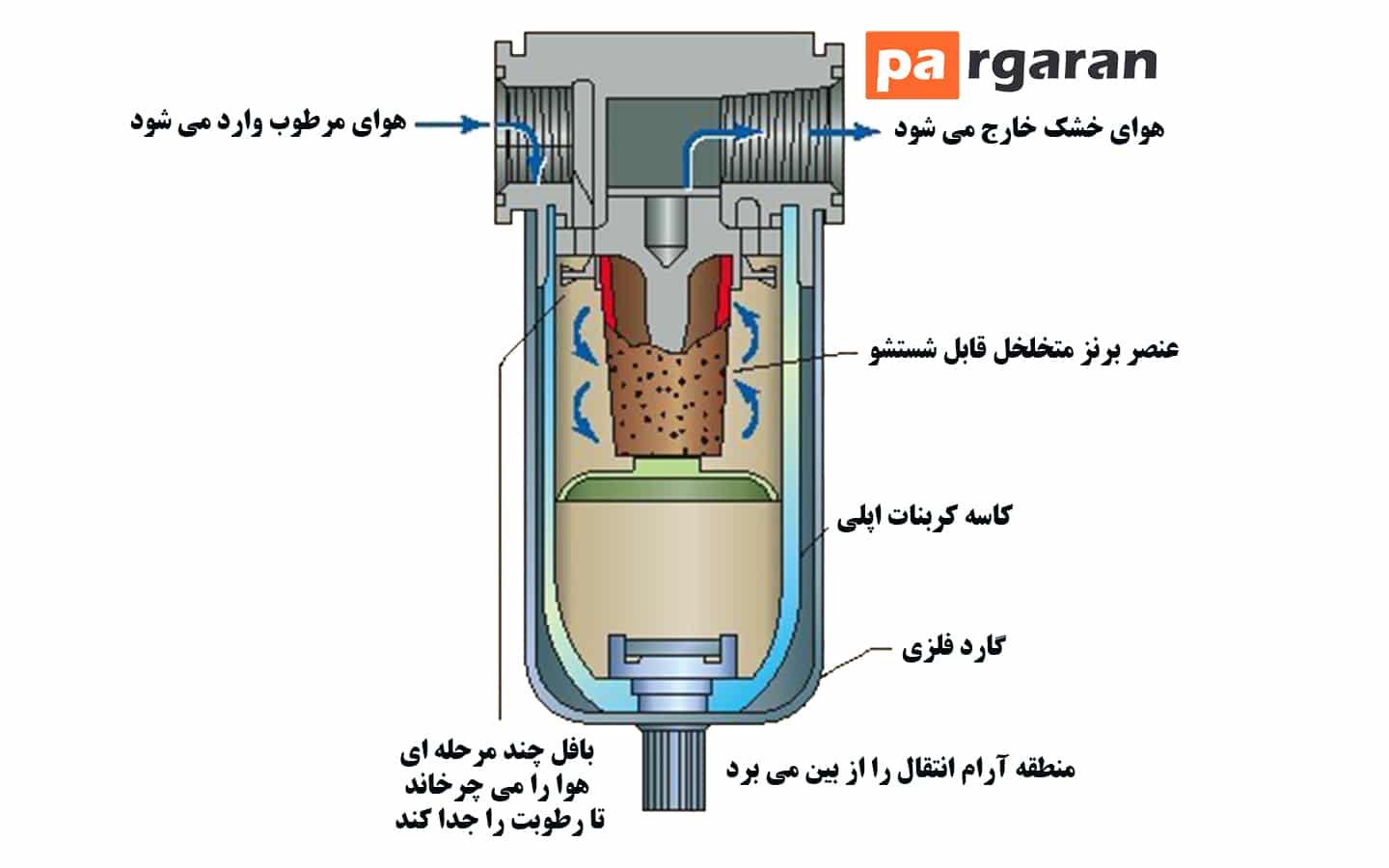
It regulates the incoming air along with a pressure gauge to view the inlet air pressure.
-
Filter
Made of fibers (felt) or brass and has pores of 5 microns in size. This part is responsible for capturing moisture from the air and retains separated moisture from the incoming air in the moisture collection chamber.
-
Output Port
The moisture is separated from the incoming air, which is essentially the functionality of the air regulators.
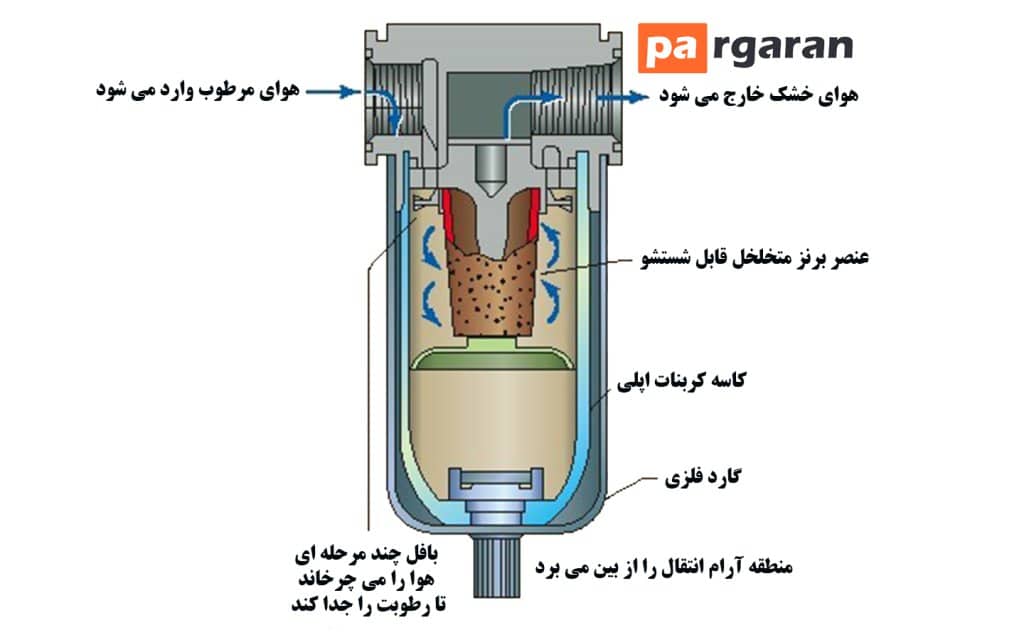
Functionality of Filter Regulator | Filter Regulator
The filter regulator is positioned at the beginning of the system to prevent pressure fluctuations. The operation of the filter regulator is such that air enters the air regulator. The air pressure can be adjusted from 0 to 10 bars by the regulator. The incoming air flows through the part of the filter where the pore size is 5 microns. The moisture from the incoming air is separated by the filter. As a result, dry air is produced that reaches the output of the filter regulator. Finally, it is transferred to the pneumatic system.
Filter Regulator Specifications
- The micron rating of the filter ranges from 0.01 microns to 40 microns.
- Typically, filtering elements with a micron rating of 20 to 40 are used, and in felt filters, a 20-micron stone is used.
Standard Conditions for Optimal Filter Regulator Performance
The filter regulator can be used within temperatures ranging from -5 to 40 degrees Celsius with air fluid pressure from 0 to 10 bars. If the incoming air gets contaminated with oil or grease, the filter will become oily and will no longer be able to absorb moisture.
Standard Sizes of Filter Regulator
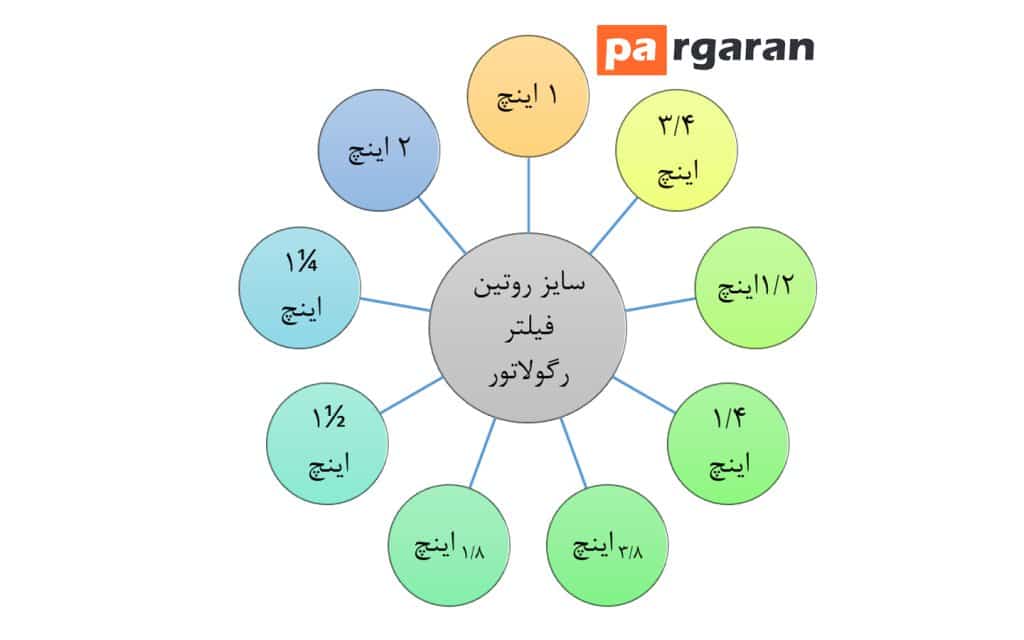
In the first line, the filter and regulator is a single piece. However, in the second line, it is in two pieces as the components are larger.
Damages from Not Using a Filter Regulator | Filter Regulator
- The air causes the O-rings and packings in cylinders and pneumatic shafts to deteriorate, leading to damage to this equipment.
- The moisture in the air creates water pockets, uneven paint surfaces, and various problems in the paint industry. This issue also occurs in other industries such as machinery, food, pharmaceuticals, hygiene, construction, petrochemical industries, and more.
I hope you enjoyed reading the article (Filter Regulator | Filter Regulator).
For any questions or suggestions, please contact the Pargaran team.