We have compiled a list of the most common questions about domestic water pumps that customers and manufacturers ask us.
How does a water pump work?
Since the dawn of our civilization, humans have needed to transfer water from one point to another. Before electricity, this was done with hand pumps and manual labor.
Since the invention of electricity, we have utilized water pumps. Generally, a pump uses a motor (energy) and an impeller to move water through the discharge outlet.
Due to the pathways of the impeller and diffuser, water exits the discharge opening at a higher velocity. It can then be transferred through piping or hoses to your home or garden.
The impeller is a fixed component like the blades of a fan. Various sizes of impellers exist in domestic pumps, along with different pipe sizes and the number of pump impellers.
These factors alter the flow rate and pressure in your pump. Then you have an electric motor.
In constant speed pumps, which make up about 95% of our sales, your motor runs at 2900 revolutions per minute.
This constant speed means that when you change the specifications of the impeller, you need to determine how much larger motor you need to ensure you can run the motor at 2900 RPM.
That is why we have varying power consumption in water pumps.
How many types of water pumps are there?
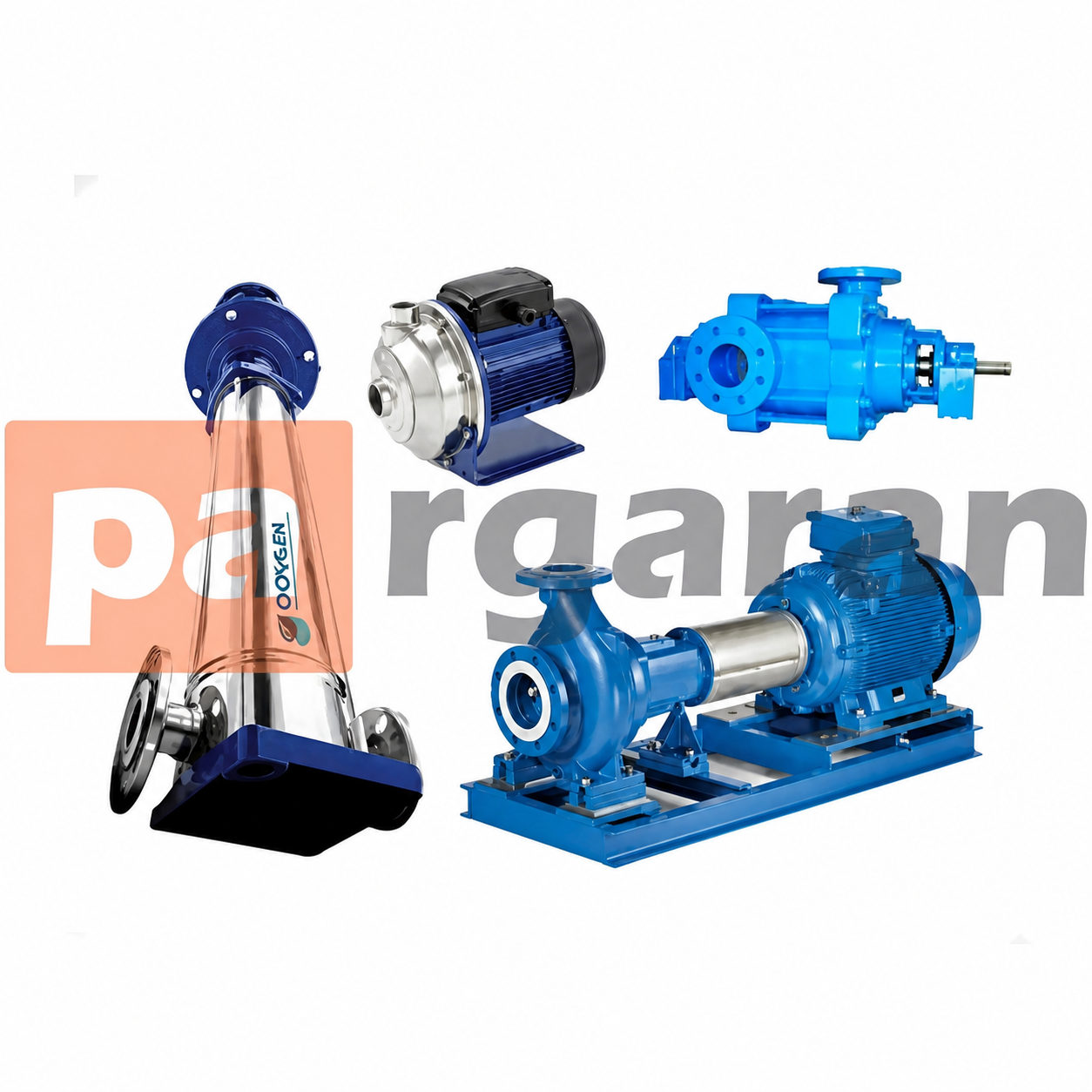
There are two main types of water pumps: domestic and agricultural. These two types are further subdivided into categories such as water pumps, irrigation pumps, centrifugal pumps, submersible pumps, etc.
We use domestic pumps to draw water for our household needs. Their purpose is to supply water to our homes. These types are not very powerful, as we don't need much strength to supply our home with water.
On the other hand, agricultural pumps are very powerful. They draw water from the main source for irrigating rural areas. The primary application of these types is to irrigate farmland.
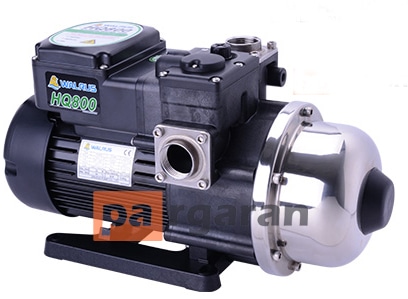
I can tell you that there must be over twenty different types of pumps. Most people don't realize that they use pumps daily without their knowledge.
There are pumps in cars for the radiator, fuel injection pumps, in your refrigerator and air conditioning.
Most people think of water pumps as traditional garden pumps used for watering their gardens or domestic water pumps for their homes.
ASC water tanks also carry submersible water pumps used for domestic purposes.
These are submersible pressure pumps with internal controllers to run a home. Additionally, we carry a range of submersible drainage and sewage pumps for domestic, commercial, and industrial applications.
There are also internal switching pumps known as Tank-2-Mains switches. These main switch pumps use water from a water tank to feed your home.
When the tank runs empty, the pump automatically switches to the main water source to ensure that your home always has water.
Different manufacturers have their specialized tools for switching between the tank and main water source, and there are better systems than others.
This way you get price variations. In our opinion, floating systems are the best, but there are also more expensive systems.
Reviewing the Specifications of Domestic Water Pumps
After deciding on the type of pump you wish to purchase, you should check its specifications.
This section is just as important as your domestic water pump must be able to provide sufficient water flow with the required pressure.
Here are some specifications to look at and what they mean:
Discharge Rate - Also known as flow rate, this is measured in liters per minute (LPM). This is the amount of water that will be pumped in a given time.
The higher this value, the faster the pumping occurs. A range of 100-200 LPM is generally sufficient for a family.
Head Range - Head here refers to discharge head - the vertical distance you are pumping water. The head range should be within this distance for the water pump to effectively pump water. This is measured in meters (m).
Power - This is the amount of electricity the pump consumes while in use and can be measured in kilowatts (kW) and horsepower (HP).
This range is between 0.5-1.5 horsepower for most pumps. Some, like internal circulation pumps, require 0.16 horsepower.
This will vary depending on other pump specifications. However, generally, as the amount of pumped water and the head range increase, the power also increases.
Where can I use a water pressure pump?
The pressure pump can be used to flush toilets in the home and pump to gardens and for irrigation via a sprinkler or hose.
Many pumps are used for livestock irrigation by pumping water to gravity-fed tanks or directly to water tanks from reservoirs, dams, and rivers.
Pressure pumps are also commonly used to boost mains water pressure for areas where mains water pressure is low. In this case, the water pump connects directly to the main water source and then feeds into your residential home.
Which type of water pump is better for domestic and building use?
The pressure pump is the most popular pump used for domestic applications. They come with an automatic pressure controller, which means the pump turns on and off as needed.
All our pressure pump systems also have dry run protection. This safeguards the pump when the tank or water source runs dry. It automatically shuts off your water pump to prevent the motor from continuously burning out.
In variable speed pumps, unlike fixed speed pumps, the motor can adjust its RPM.
For example, a variable speed pump rated at 1.5 kilowatts might use only 0.2 kilowatts for flushing a toilet and 0.45 kilowatts for running a shower.
As more taps and showers are turned on simultaneously, the motor speed....