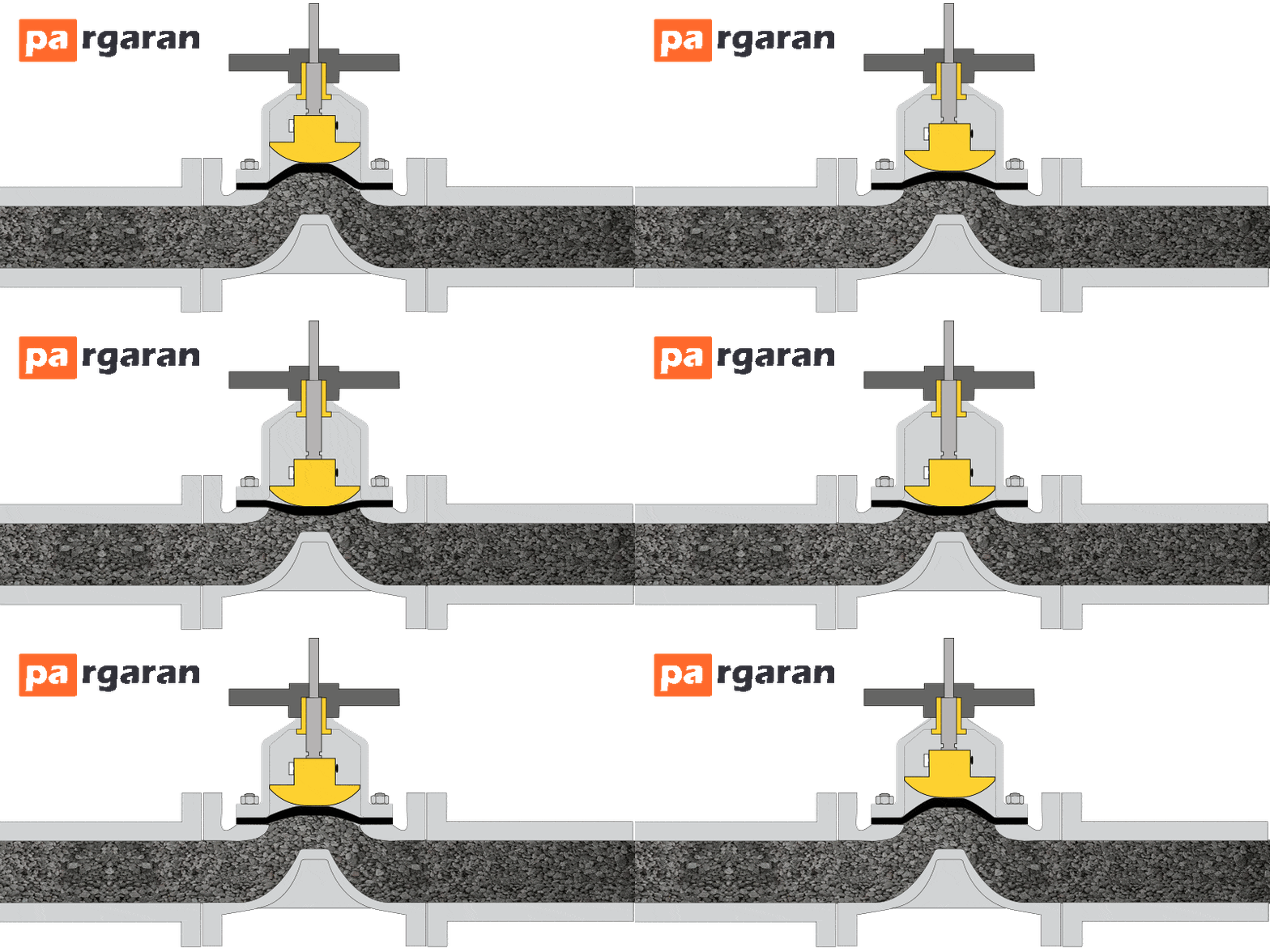
A diaphragm valve | Diaphragm Valve | is used for starting and stopping the flow of fluid with linear motion, utilizing a flexible disk (diaphragm) and a raised surface at the bottom of the valve as a seat for blocking the flow.
The actuator of a diaphragm valve can be manual or automatic; this means that various types of actuators can be used for this valve. In this valve, a flexible cover is positioned between the blocking element and the fluid flow. This cover allows the passage of corrosive fluids, containing solid particles, and abrasive materials without damaging the barrier (disk).
Among the most common materials used for the cover are perfluoroalkoxy and glass lining.
Diaphragm valves are categorized based on the structure of the seat and actuator as follows:

The components of a diaphragm valve may vary based on type; generally, this valve consists of components similar to the image below:

Diaphragm Valve Based on Seat Structure:
1. Weir or Saddle Type (Projection Type - Non-Alignment)

The seat is designed as a raised surface cast from the internal body of the valve. The diaphragm bends under the pressure of the blocking element towards this raised surface, sealing the path of the fluid. This design reduces damage to the diaphragm when it bends significantly due to high pressure from the blocking element.
Additionally, this design alters the discharge velocity and prevents fluid deposition on the internal surface of the valve. Diaphragm valves with a raised interior are used in the piping of gases, liquids, and corrosive fluids.
2. Straight Type (Flat - Aligned)

The seat and the internal body surface in this type of valve are entirely flat and straight, utilizing higher flexibility rubber and a wedge-shaped diaphragm design.
Flat diaphragm valves are used for high temperature and pressure fluids and have a very low sedimentation rate. Depending on the internal diameter of the valve body for fluid flow, these valves are designed in two types: Full bore and Reduced bore.
Strengths and Weaknesses of Diaphragm Valves
|
Weaknesses |
Strengths |
|
Limited operational pressure (approximately 21 bar) |
Complete flow blockage without leakage |
|
Limited operational temperature (from -50 to 204 degrees Celsius) |
Easy maintenance |
|
Mandatory use of a corrosion-resistant body |
No interference in repair operations with system performance |
|
Risk of complete system blockage (in the Weir type) |