Cylinder, in a reciprocating engine, is the space within which the piston moves. Its inner surface consists of a thin metallic lining or a surface coating applied to the engine block.
A piston is held within each cylinder by several metallic piston rings that also create seals for cohesion and lubrication.
The piston rings do not actually touch its walls; instead, they ride on a thin layer of lubricating oil. Cylinders were originally made from cast iron and later from cast steel.
Cylinder casting can have other features such as valve ports and mounting bases.
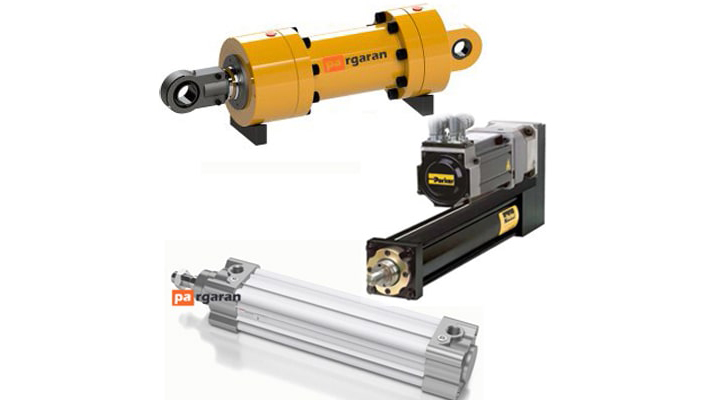
Cylinders are among the most important actuators, which are classified into three categories according to the type of source used for linear (reciprocating) or rotary motion: hydraulic jacks, pneumatic jacks, and electromechanical jacks.
Types of Cylinders
Cylinders are categorized into three classes based on the type of energy supply: 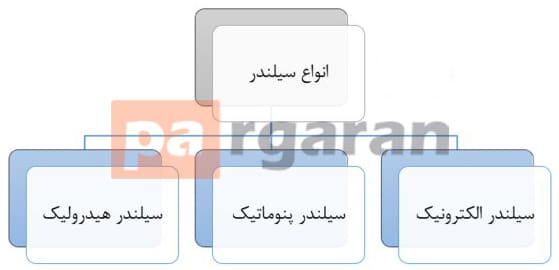
-
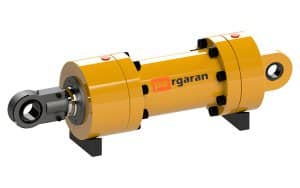
Hydraulic Cylinder
This device converts the stored energy of a hydraulic fluid into force in a straight line. It is commonly used to generate linear motion and force. Acting as an interface between hydraulic control and equipment, it is utilized in various industries such as chemical industries, tool manufacturing, assembly, and connecting.
-
Pneumatic Cylinder
It is essentially the most crucial part of a pneumatic system. Generally, it is a device that operates using air. It uses the force of compressed air to create linear and reciprocating motions. Given that air is more readily available as a fluid, its operation is simpler and causes less pollution than hydraulic oil, hence it is more widely used across various industries. A pneumatic cylinder consists of a body, piston, packing, and fittings. Of course, the path is chosen based on the load it carries and transfers. 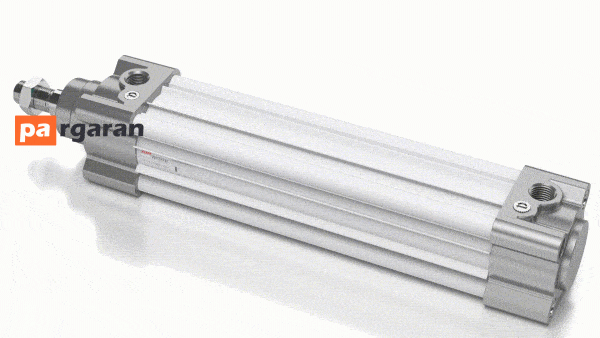
-
Electronic Cylinder
Electric cylinders are alternatives to pneumatic cylinders, gaining attention in various industries due to being relatively more economical and having advanced motion control. These cylinders are linear actuators designed as a modular system. 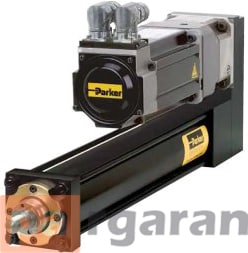
I hope you enjoyed reading the article (Cylinder | cylinder). If you have any questions or suggestions, please contact the Pargaran group.