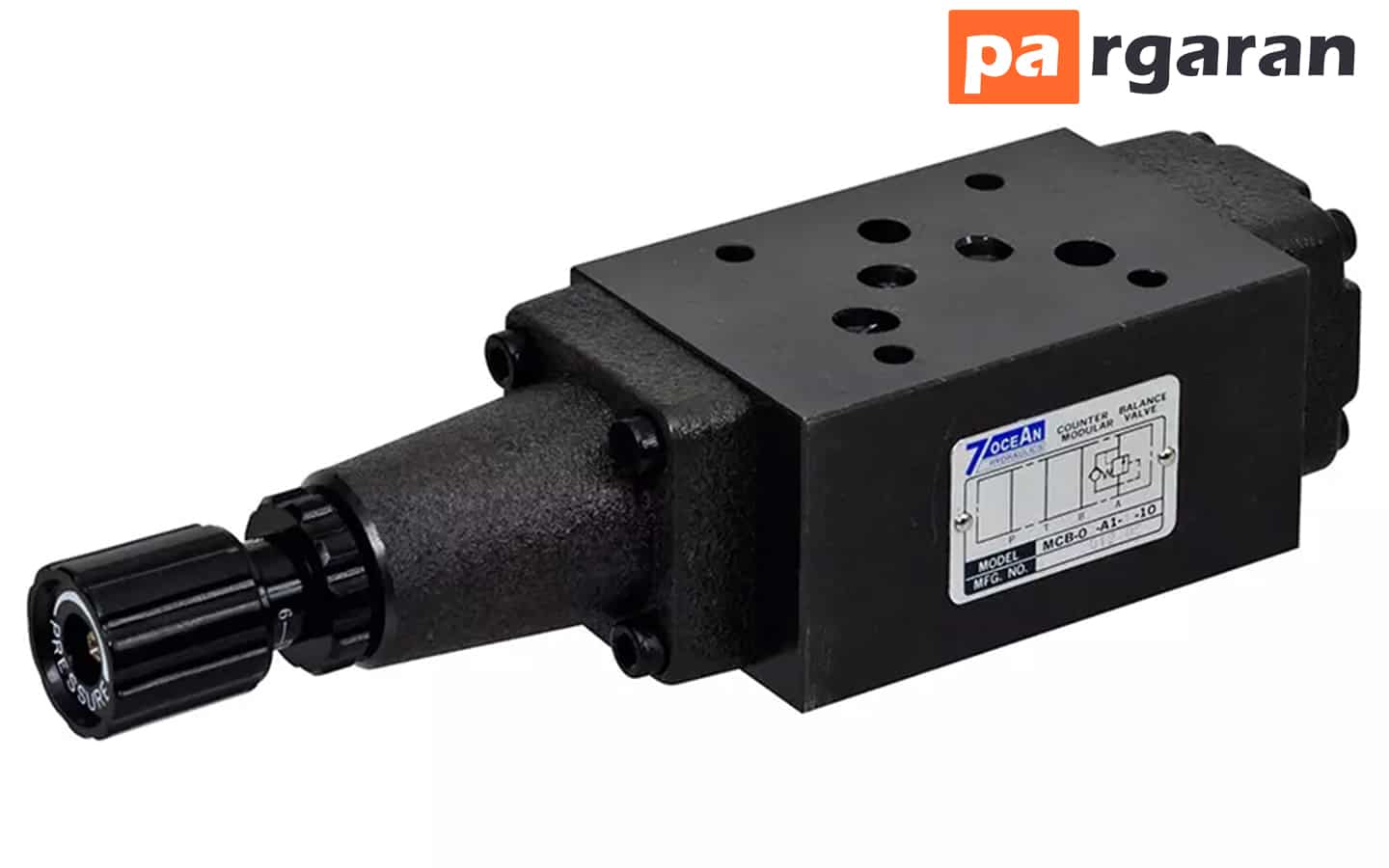
Counter Balance Valve | Balancing Valve | Balance Valve is used to keep the weight connected to the cylinder balanced. and to control motion in hydraulic press cylinders. The balance valve maintains balance and prevents self-movement of the weight by supplying the necessary pressure beneath the piston.
Additionally, to prevent the actuator from moving quickly and uncontrollably against a disruptive force (such as the weight of the press die), it generates force by creating pressure. The counterbalance is part of pressure control valves.
What is the purpose of a balance valve?
A hydraulic balance valve controls the actuator in hydraulic systems for excess or suspended loads. CBVs achieve this by creating return pressure in the return line to the actuator.
This valve manages pressure from shocks and loads: enhances load stability, prevents equipment damage, manages hose failure, stops runaway loads, controls induced pressure, and manages variable and high return pressure.
Compensating for high instability protects the system from hose bursting. With all these responsibilities, balance valves are crucial for safety. They manage pressures, flows, and elements in extreme environments to stabilize loads.
Low instability increases safety and efficiency in the hydraulic system. Anti-balance valves are used in systems that have uncontrolled movements due to excessive loads.
Since pilot-operated check valves cannot control loads, balance valves perform this function to prevent load drop.
How do anti-balance valves work?
Anti-balance valves are hydraulic devices that operate on this fundamental principle. Fluid can flow freely through a return valve to the actuator, and the reverse flow is blocked using a relief valve until a pre-set pressure is reached based on system pressure. The loading capability of this pressure allows fluid to flow in the opposite direction when the load exceeds system pressure, allowing the actuator to operate.
When pressure is lifted, the valve goes below this set amount, closes, and the load retains its position. The pre-determined pressure at the pilot port determines the direction of load movement. To lift the load, the valve allows free flow through the check valve, thus enabling the cylinder to extend.
When the fluid flows to the end of the cylinder rod, this pressure causes the valve to open. Thus, you can lower the load. If the load starts to runaway, this pressure drops and the balance valve adjusts to match the cylinder speed with the pump flow.
Operation of the balance valve
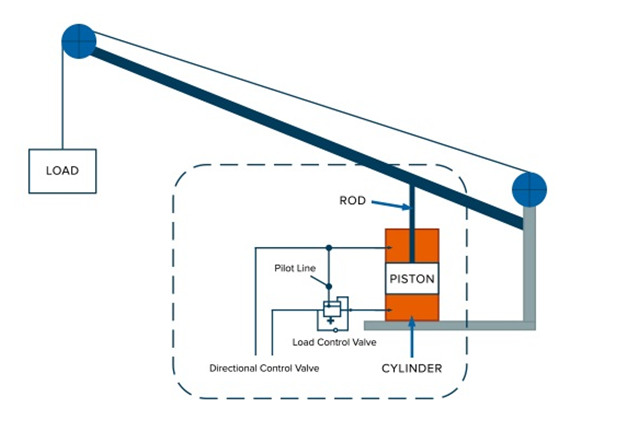 In this image, the lines are connected to the hydraulic cylinder, feeding hydraulic fluid to move the cylinder in extension or retraction. The incoming fluid to the lower end of the cylinder provides the force to move the piston to extend the rod and position the crane boom.
Fluid entering from above the piston retracts the piston and rod, lowering the crane boom. The hydraulic system lifts and lowers the crane boom to place the load where it is to be raised or lowered. If the hydraulic system fails, the boom descends and the load lands anywhere it rises, causing damage and injury to people and property.
According to the figure below, the balancing valve is controlled either with a direct command line (connected to the area below the piston) or indirectly (connected to the cylinder inlet).
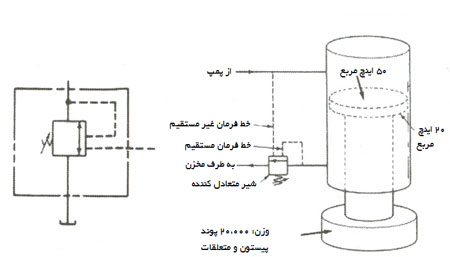
In direct command line mode, the piston moves only when the command line pressure exceeds the set pressure of the valve; it is worth noting that this is usually 10% higher than the required pressure to keep the weight balanced. Of course, this is provided that there is sufficient pressure above the piston generated by the circuit.
If the counterbalance valve is connected to an indirect command line, due to the disconnection of the command line from the system's normal pressure (due to the weight), it requires much lower set pressures.
Strengths and Weaknesses of Counter Balance Valve
Strengths of Counter Balance Valve |
Weaknesses of Counter Balance Valve |
|
Neutralizes excess acceleration of moving press equipment |
Reduces thrust force of stroke |
|
Part of useful force is used to overcome the set pressure of the counterbalance. |
|
|
Not suitable for systems where variable loads and forces are applied to the cylinder |
Where are Counter Balance Valves used?
Counterbalance valves are used in hydraulic systems that operate with excess (runaway) or suspended loads. They are designed to create return pressure in the actuator return line to prevent loss of control over the load.
If you have any questions or comments, please contact Pargaran.
For more information, click here.