Commercial lighting automation, smart commercial lighting controls, and digital lighting automation options are important when you, as a commercial property owner, understand the significance of excellent lighting throughout your building.
Installing high-quality commercial lighting fixtures, when done correctly, keeps your building safe and illuminated for guests and employees.
However, without utilizing lighting automation to prevent overuse of fixtures, you may waste electricity. In this article, we will cover key information about commercial lighting automation to help maintain the efficiency of your business.

About Commercial Lighting Automation
As every business owner knows, proper lighting can make or break a space. While initially selecting the right fixtures is key, the concept of lighting automation should also play a significant role in your design.
This is why manufacturers have continued to develop and enhance their automated timers or lighting automation systems with the latest technologies to meet the changing landscape of our society.
We have even adapted smart home automation over the years to provide homeowners with immediate access to turning lights on/off and other features of their smartphones.
Explicitly, lighting automation is here to stay, so if you are a business owner, you need to know how to utilize it to your advantage when it comes to commercial lighting fixtures with automation.
Here are a few tips you need to know:
1. Install Automatic Timers for Outdoor Commercial Lighting.
When searching for ways to operate commercial lighting automation for your location, the biggest benefit of using smart lighting for the exterior of your building is significant. In fact, the outdoors is where you should focus most of your efforts. But why is outdoor lighting automation so crucial?
To start, if you forget to turn on outdoor lights, such as building lights, parking lot lights, or road signs, it will negatively impact your business and make the location appear uninviting. It will also create safety and security concerns for employees and customers. On the other hand, without a building automation system to turn off the lights in the morning at sunrise, you will waste a significant amount on electricity costs for lighting you don’t even need. However, when you install sensors and timers for outdoor lighting, you can avoid worrying about both of these scenarios.
2. Install Automatic Timers Indoors.
While outdoor automatic timers are essential for managing utility costs and ensuring adequate lighting, indoor timers also provide significant assistance for commercial lighting.
Just like outdoor lighting, having automatic timers indoors can help you manage water and electric costs by turning off commercial lighting fixtures at specific times or in specific areas when not in use.
It also eliminates the need to rely on staff to turn off the lights, which is always a big advantage for maintenance staff closing a building with hundreds of commercial lighting instruments.
3. Consider Adding an Occupancy Sensor to Every Room.
Another important and beneficial option for automation related to commercial lighting fixtures is the occupancy sensor. But what is an occupancy sensor and how does it work?
This type of automation works with commercial lighting fixtures, such as high-bay fluorescent lights, turning them on/off based on whether a room or space is occupied.
A light with an occupancy sensor switch is especially beneficial for areas with inconsistent occupancy, such as storage rooms or back rooms. While you wouldn’t want to use these in customer areas, they can be valuable in helping to save water and electrical costs in your employee-only business sections.
4. Optimize Commercial Lighting with Dimmers.
As the name implies, dimmers are a good option when you want to reduce the brightness of commercial lighting fixtures without completely turning them off.
Dimmers are ideal for creating a cozier atmosphere in a given area or at a certain time of day while still wanting the option of full lighting for other situations. This type of equipment can be added to offices, conference rooms, or outdoor spaces.
Lighting for Machinery in Commercial Lighting Automation
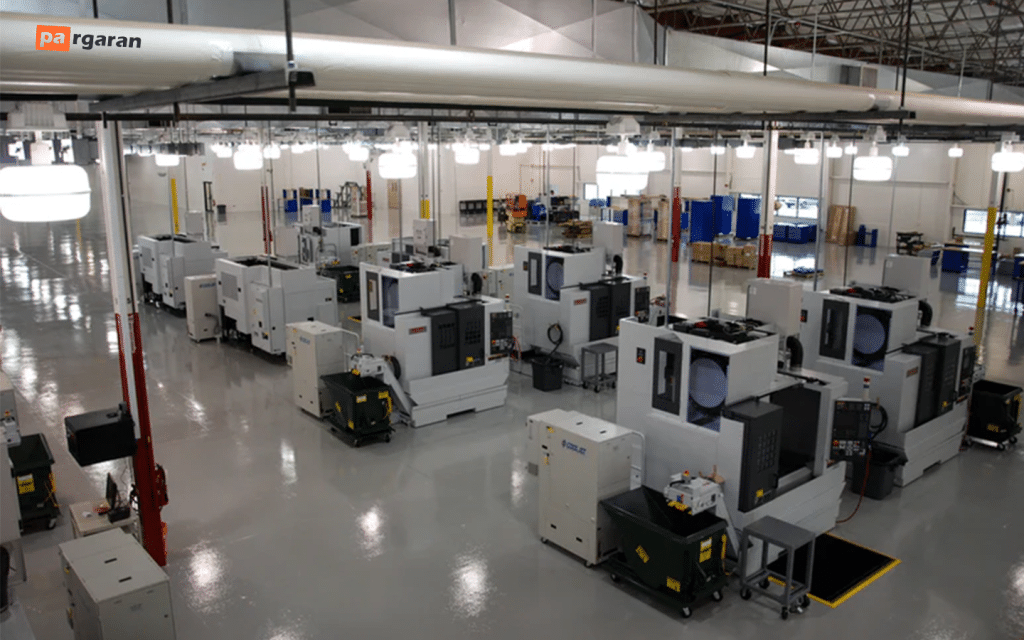
The importance of lighting when working on a task cannot be denied. Work requires lighting that helps with visibility without harsh shadows to perform the task correctly.
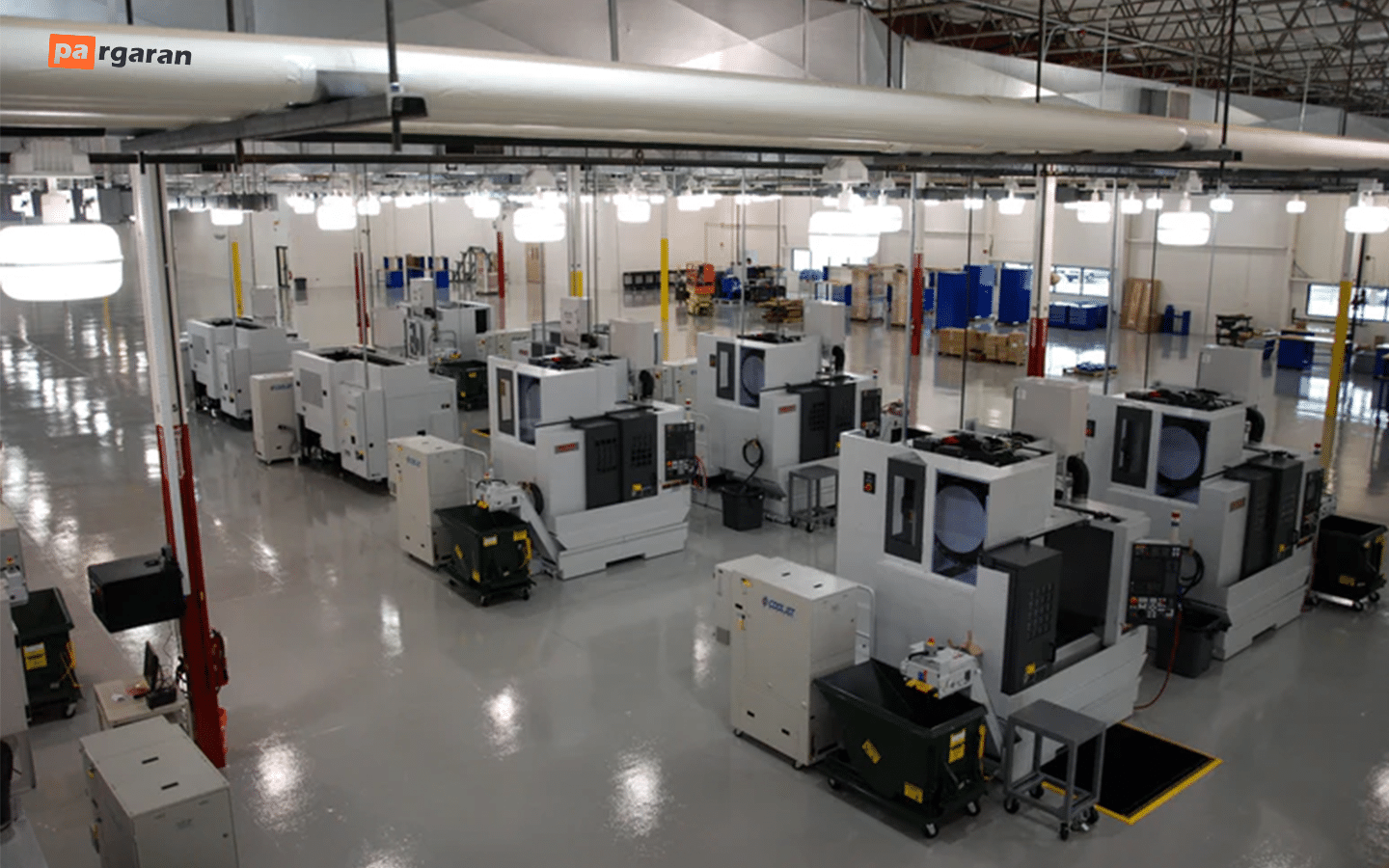
Whether in a large operation or a small local startup, there are a few pointers regarding the selection of a lighting plan for machinery workshops.
General Lighting
The first step is to assess general lighting needs. General lighting is illumination within a space that is not task-based or accent lighting.
When it comes to this type of lighting for machinery lighting applications, you first need to evaluate the space and natural light sources.
If your location has sufficient natural light resources, it helps reduce the need for artificial light. Even with good natural light, you still need several types of general lighting to account for changes in natural light, dark areas, and working at night.
One of the most common types of lighting for machinery lighting applications is ceiling fluorescents.
They have a long average lifespan of up to 30,000 hours in most models, providing clean, bright light in various lumen outputs. Depending on your preference and location, this lighting can be surface-mounted, recessed, or pendant.
You can even choose the slightly more expensive LED options that last even longer than fluorescents and do not present a warm-up time.
Another type of general lighting that is great for workshops is pathway lighting. This type of lighting is excellent for illuminating a specific area rather than providing overall light.
It is particularly helpful in areas where natural light is not strong enough. This lighting is also a good choice due to its versatility and adjustability. If you want to redirect light to where it shines later, this is easy to do without much hassle.
For spaces like shelves, drawers, and cabinets, under-cabinet lighting and rope lights are excellent choices. They provide great visibility for workshops.
If the bulb is blocked by a cabinet, adding overhead lighting to such areas may not provide the required illumination. You will receive only a small percentage of the available light, likely causing harsh shadows that further reduce visibility.
With rope lighting, you directly receive illumination in areas where you need it the most.
Task Lighting
Once you have identified your overall lighting setup, the next stage is task lighting. Spotlights are an excellent choice for illuminating large projects while smaller projects typically need less light.
Task lighting is all about improving visibility. For many shops, tasks that require better visibility are performed in specific locations, such as a workbench.
When selecting lighting for this area, what is important is how you position it. Generally, the closer the work light is to the work area, the better the visibility, which is why you should stick to the guidelines for the work surface whenever possible.
When it comes to your workshop lighting, you should certainly mix different lights together to achieve a balance and proper brightness.
Keep in mind...