How is the calibration of pyrometers performed?
A pyrometer is a non-contact device that intercepts and measures thermal radiation. This measurement is used to determine the temperature of most surfaces of an object.
The word pyrometer comes from the Greek word for fire, "πυρ" and meter meaning measurement. Pyrometers were originally designed to indicate a device capable of measuring the temperature of objects hotter than the radiation (i.e., objects that glow in the human eye).
Pyrometers are used to "read" radiant heat in the steel industry, ceramic production, and other applications that require high temperatures ranging from several hundred to thousands of degrees Celsius.
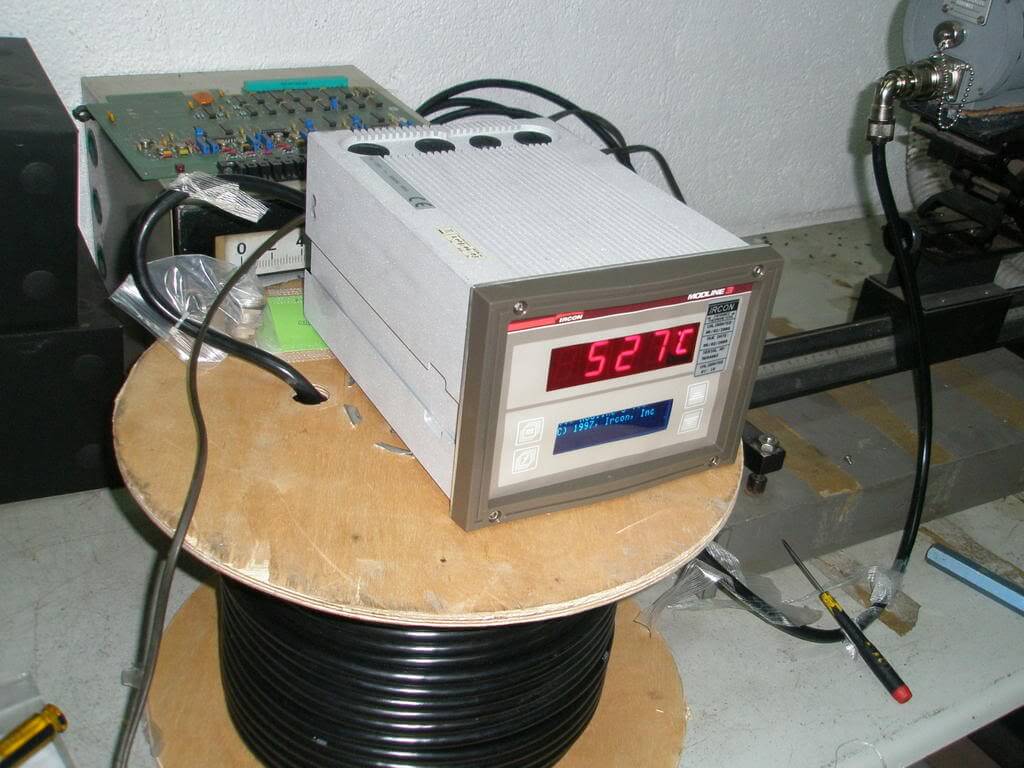
Most pyrometers come in a set of a sensor and a controller. The controller may have either an analog or digital readout.
Here, I have some pictures taken during the calibration of the pyrometer using a black body.
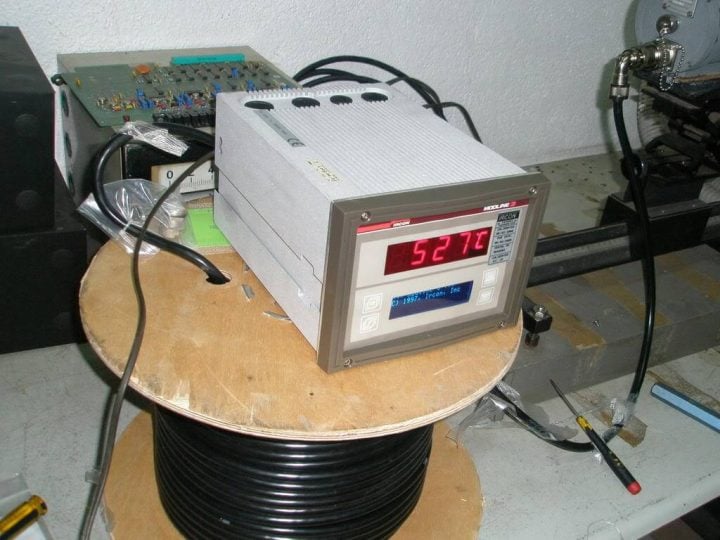
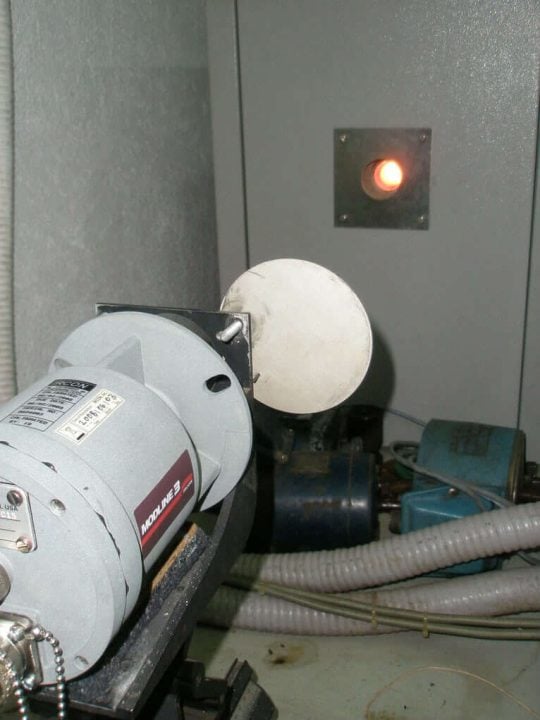
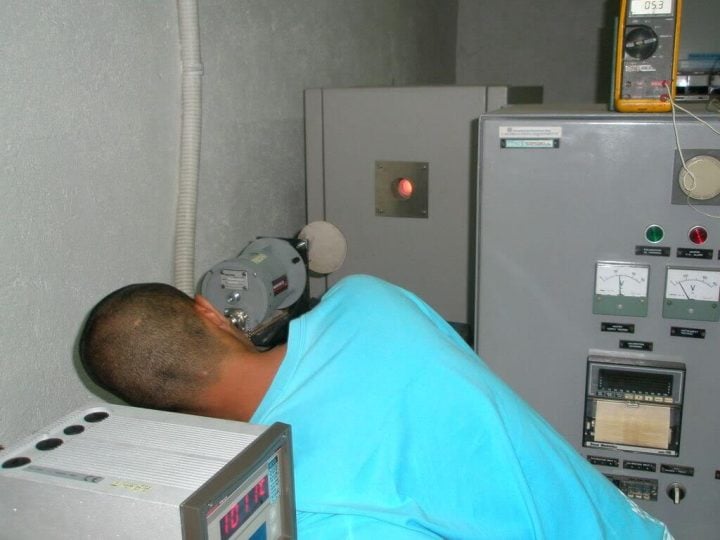
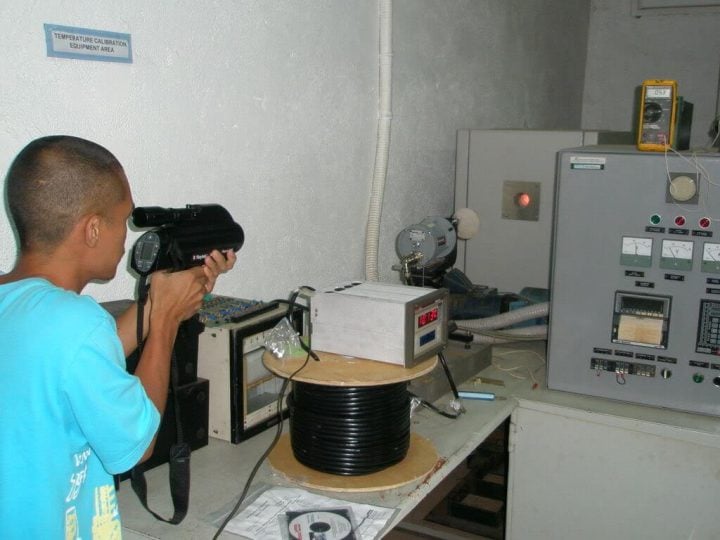
Below is a note about the black body furnace and the recommended standard method in the calibration of the "infrared thermometer" otherwise known as "pyrometer" used in rolling mills.
Any object at a temperature above absolute zero emits thermal energy. Measuring the temperature of an object using an optical pyrometer is based on the principle that thermal radiation from the object being measured is a function of its temperature. For each specific temperature and wavelength, the energy radiated by a surface corresponds directly to the spectral emissivity of the body.
Emissivity is a measure that relates the ability of a surface to absorb heat through radiative thermal energy, and different materials have different emissivities. The emissivity value of a material is a number in the range of 0 to 1.0, which is the ratio of the energy radiated from the surface of the body to the energy radiated by a perfect black body at the same temperature.
The main issue when using infrared thermometer sensors is that a real object does not behave like a perfect radiator.
By calibrating an infrared thermometer on a perfect radiator (black body source), the ability to measure the temperature of a real object is directly related to the emissivity of the object. An object with an emissivity of 0.8 only emits 80% of the energy of a black body, thus, unless the actual emissivity of an object is considered, the temperature indicated will be lower than the actual temperature of the object. Most radiometric thermometers provide emissivity adjustment.
The instrument manufacturer calibrates the infrared thermometer (pyrometer) by aiming at the black body source, which is specifically designed to test and calibrate infrared thermometers. Black body sources resemble a furnace with an aperture for viewing the surface or a cavity that is heated and controlled to the selected temperature.
Essentially, there are two types of infrared pyrometer calibration sources:
Hot black body and cavity black body source. However, let’s focus on the cavity black body type since this source is available to the author.
The cavity black body source includes a closed hole in a cylinder or sphere where the temperature of the cavity is controlled by a temperature controller using a thermocouple probe. The cavity black body source typically has a greater emissivity than the hot black body source. The emissivity of a cavity black body source is usually 0.98 or higher, making them ideal for precise calibration tasks.
When using the black body calibration source for pyrometers, certain fundamental rules should be followed:
- The infrared thermometer should be perpendicular to the target area of the black body unit. If aimed at an angle, the reflected infrared radiation energy can disrupt calibration accuracy.
The field of view of the thermometer at the selected distance should be smaller than the target area of the black body unit. - Do not place the infrared thermometer too close to the black body area, especially at high temperatures. The radiant heat from the black body can not only disrupt calibration accuracy but can potentially damage the unit under test.
Always aim the infrared thermometer at the center of the area of interest. - When changing the temperature set point in the black body unit, ensure that the device is fully stabilized at the new temperature setting before performing any calibration tests. Generally, raising the temperature takes less time than cooling it down.
- Do not disconnect the black body calibration source while it is hot. Usually, the fans that are in use for removing heat exist even when the power switch is turned off. Allow the internal fan to continue running until the unit cools down.
Users should be guided about the operational conditions suggested. These factors, along with proper maintenance, ensure safe and satisfactory operation of the furnace.
Safety while working with a furnace is very important. Follow safety procedures when working around the furnace. Controllers are used to maintain a constant temperature (the operator sets the required temperature, once the temperature is achieved, it is maintained until the next intervention by the operator) or to control the temperature according to a simple schedule (the operator sets the rate of temperature increase).
Safety Steps in Pyrometer Calibration
- Setup and install the pyrometer sensor and controller. Once the black body furnace is properly prepared for operation. Operational recommendations: manual intervention in case of batch calibration for automatic mode, refer to the manual for the controller’s ramp function.
2. Turn on the black body furnace to heat to 400 degrees Celsius at a rate of 3 degrees Celsius per minute. Hold at 400 degrees Celsius for two hours or more (preferably overnight). Allow the furnace to warm up to stabilize at the 400-degree Celsius set point.
3. While the furnace is rising in temperature, perform an initial observation on the controller before turning on the power, check if the analog meter needle indicates zero or not. If not, gently turn the adjustment screw with a small screwdriver as needed to zero the left side of the scale indicator.
4. The operator should follow a predicted heating curve for the duration of heating at the desired temperature for calibration. Allow the furnace to heat until each REF. # set point and stabilizes at this set point.
Step value = preset amount for changing the temperature.
Ramp = predetermined rate of change to the next selected value.
Increase using the numeric keypad (increase and decrease).
5. Turn on the controller and allow 20 minutes of heating time.
6. Cover the objective lens with a solid matte object...