Ball Valve | What is a Ball Valve?
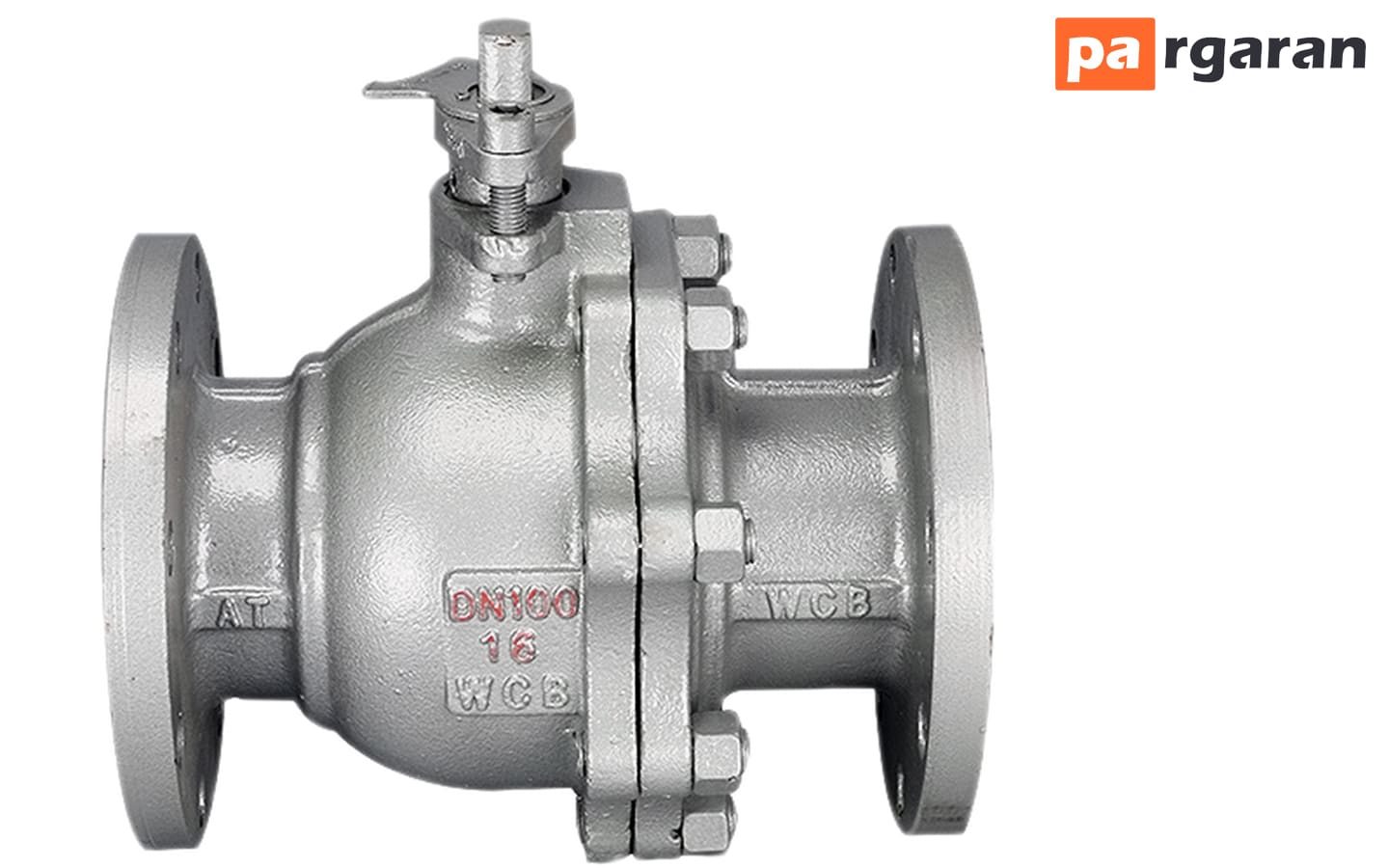
A Ball Valve is a type of rotary valve that uses a spherical element (ball-shaped) to control the flow of fluid. Most ball valves operate quickly with a 90-degree turn of the handle.
The main difference between ball valves and other valves is that in other valves, the role of opening and closing the flow path is performed by a blocking element (disc or gate), while in a ball valve, the fluid passage acts as the blocking element, controlling the flow of fluid by a 90-degree rotation.
In large ball valves, a significant force is required to open and close the blocking element; therefore, pneumatic actuators and gearboxes are used to operate large ball valves.
The fluid passing through these valves can be liquid, gas, corrosive, and acidic, depending on the diverse designs and materials used in the design of these valves, in a wide range of temperatures and pressures. These valves are also known as gas valves and ON/OFF Valves.
Ball valves are produced in various types based on their application type and location, featuring various variable and fixed components. The components of a simple ball valve are illustrated as follows.
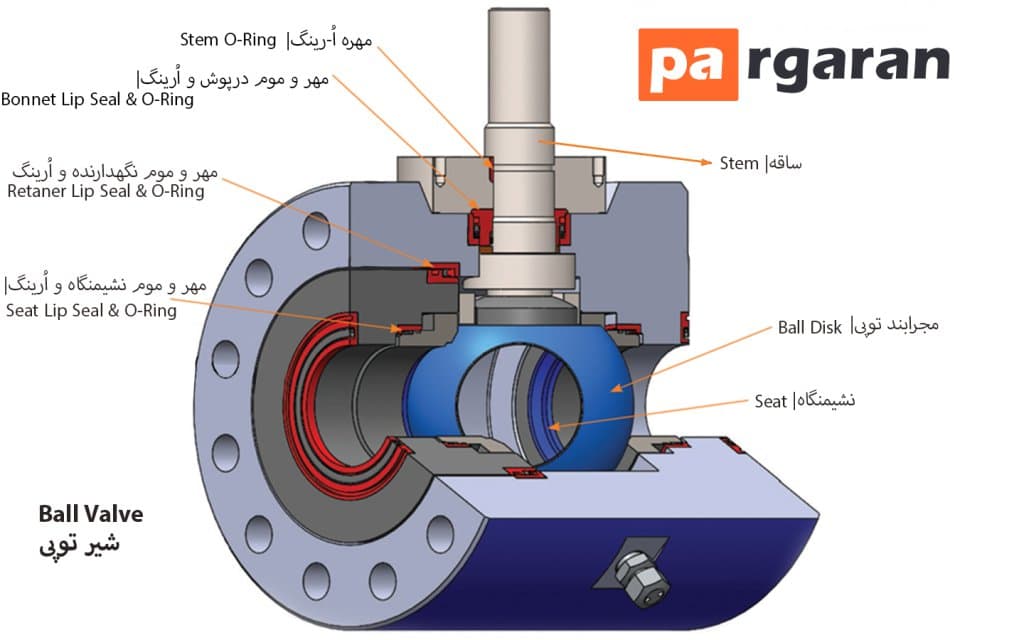
There are different types of ball valves that are categorized based on their construction design, valve port size, actuator, and material as follows:

In addition to the above factors, when selecting and purchasing ball valves, consideration must be given to the type of connection, pressure and temperature range, and other specialized factors such as the size of the blocking element or ball disc, defined standards, etc.
Types of Ball Valves Based on Design
Welded Body

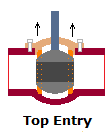
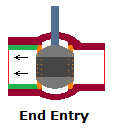 The blocking element is connected to the seat from the end or bottom of the pipe. Ball valves with bottom entry have threaded and flanged connections.
These valves can be used in various industries, including oil and gas extraction, water treatment, and slurry. Ball valves with bottom entry can range from small valves to large ones handling high fluid pressures.
Floating


In this model, the spherical blocking element is completely floating in the fluid and is only connected at the top to the seat; therefore, it is only used for low working pressures.
Trunnion


Ball Valves Based on Valve Port Size
Full-bore


Ball Valves Based on Material
Bronze The applications of this material are diverse and can be combined with various alloys like aluminum. Bronze ball valves can be used in various industries, including seawater transfer lines, flanged connections, and more.
Stainless Steel
 In environments where the fluid is corrosive or where the pressure and temperature of the fluid are high, stainless steel is used. Stainless steel comes in various types, with the most commonly used being type 304 (8/18) and type 316 (10/18). In high-temperature applications...