


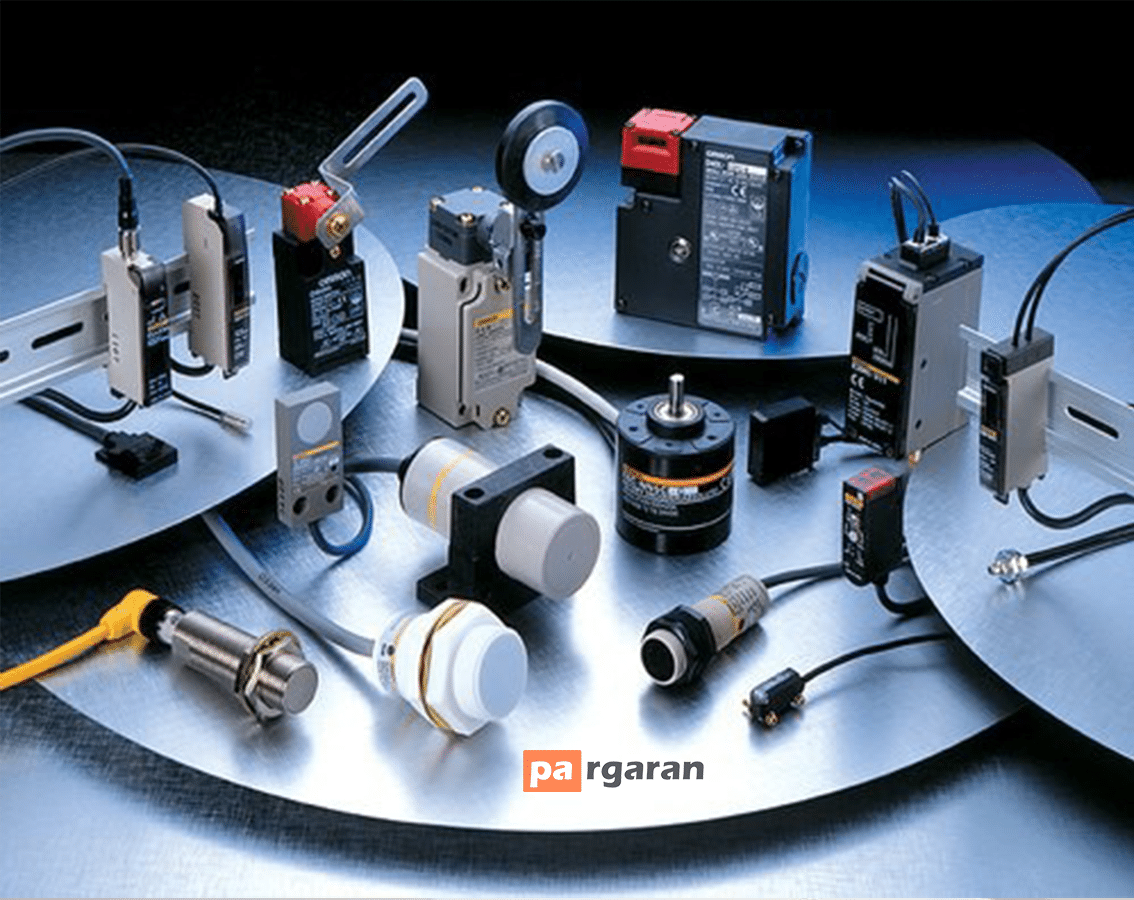
Top Types of Industrial Sensors and Their Applications in Automation
Industrial sensors are the neural terminals of the smart industry, providing solutions for data collection and information gathering in this field.
Today, factories use a wide range of industrial sensors, each uniquely designed for specific applications, collecting valuable data to support the foundational construction of intelligent industrial systems.
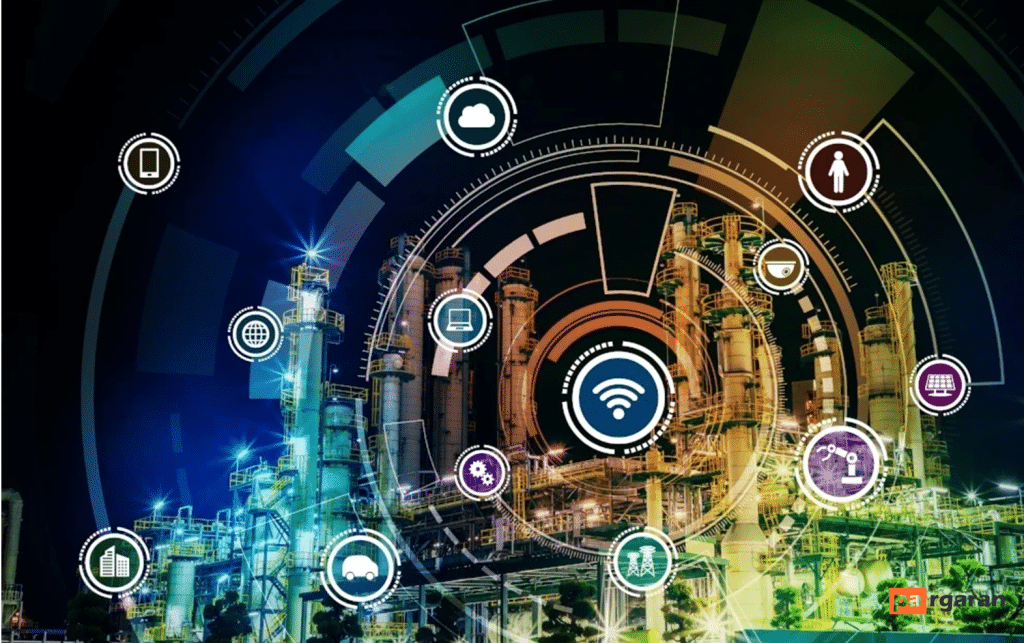
At the same time, with the rapid growth of smart manufacturing, Industry 4.0, and the Internet of Things (IoT), application needs continue to rise.
Smart sensors collecting primary data are rapidly evolving and upgrading to lead the intelligent revolution of industrial internet terminals.
The new era of industrial sensors or Industry 4.0 sensors is advancing, which varies from factory automation and industrial process measurement, from wired or wireless connections and microcontrollers to cloud servers.
Top Types of Industrial Sensors and Their Applications in Automation
Industrial Sensors
Sensors / trackers / transducers are all electronic or electrical devices. These distinct electronic sensitive materials identify, measure, and sense changes in position, temperature, displacement, electric current, and many other factors in industrial equipment.
Essentially, a physical quantity is measured by a sensor, producing a corresponding electrical signal on the physical quantity.
Sensors are considered the most fundamental components for data acquisition and measuring tools in the current operational state of factories. Several sensors, transducers, and trackers are available for detecting the physical presence of chemicals, metals, levels, flames, gas, or leaks.
Some are designed to detect motion or proximity or sense tangible features. In addition, several technologies are used to achieve these goals.
Including: inductive, capacitive, magnetic resistance, ultrasonic, and photoelectric sensors.
Industrial sensors are devices that react to physical quantities such as magnetism, motion, sound, heat, light, pressure, and so on.
They are then converted into electrical signals, and the output signals can be magnetic, electrical, mechanical, etc.
The most unique aspect of industrial measurement is the type of applications and environments in which they are used.
These sensors must perform in challenging conditions, including harsh and inaccessible environments with vibrations, high humidity, high temperatures, etc.
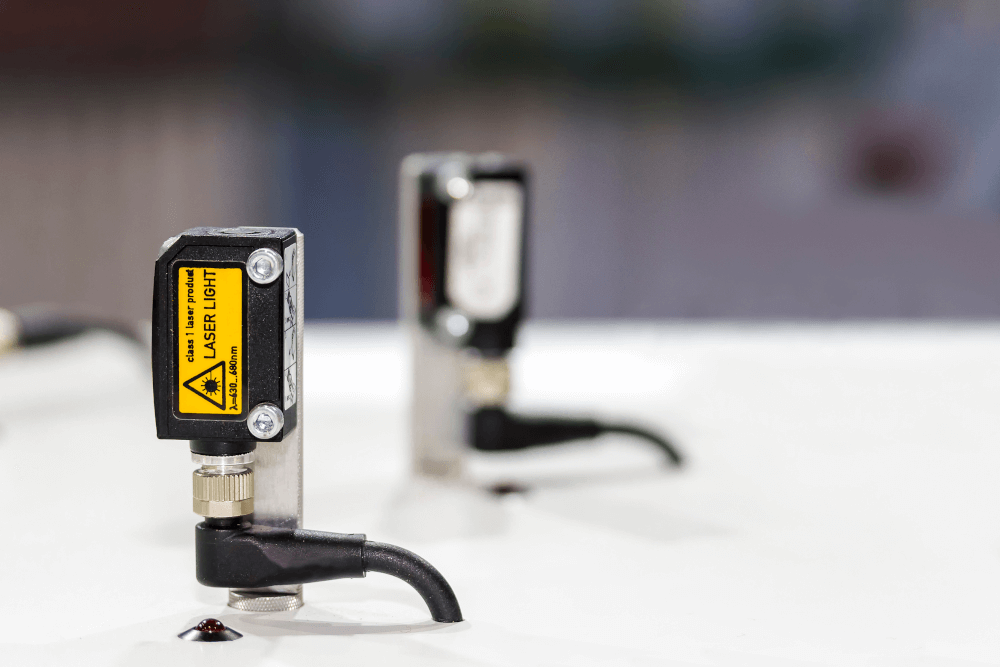
Smart Sensors Used in the Industrial Sector
Sensors play a central role in industrial automation in smart and automated manufacturing. Machines can process, measure, identify, and analyze various positions, heights, appearances, lengths, and displacements in production areas.
Almost every process or environmental condition requires some form of industrial sensors. These sensors allow individuals to process, monitor, and review a wide range of changes occurring in an industrial production site, such as security, pressure, height, motion, external factors, temperature, and many others.
These smart sensors integrate operating systems, signal conditioning, and MEMS technology to meet the accessible and cost-effective needs of industrial design engineers, significantly reducing their development burden.
How to Choose Industrial Sensors
Before selecting an industrial sensor, there are several factors to consider. These include:
- Response time
- Size
- Cost
- Ruggedness
- Range
- Repeatability
- Stability, durability
- Ease of integration
- Temperature range
- Power consumption
- Humidity effects
Types of Industrial Sensors and Their Applications
Factories are looking for ways to maximize their efficiency and performance. Currently, they are also driven to minimize negative impacts on the surrounding environment.
The best way to implement this is through the systems and sensors used in industrial automation. With that said, here are the top types of industrial sensors and their applications:
Temperature Sensors
Temperature is a physical parameter that is commonly measured in industrial productions, and many types of sensors can be used for measurement. A temperature sensor collects data related to temperature from the environment and converts it into specific values.
They measure thermal aspects of solids, liquids, and gases in many process industries, forming both specific and general uses.
Humidity and temperature sensors, along with digital temperature sensors, are among the most common industrial sensors in industrial automation. The second sampling card has a standard RS-232 or 485 communication interface and a 10-digit dual-channel approximate successive A/D converter.
It implements a filtering technique that combines a recursive averaging software filter with circuit hardware filtering to reduce external interference in sampling, with good stability, strong durability, high full-scale accuracy, and fast response.
The humidity and temperature sensor combines both humidity and temperature measurements. The humidity and temperature probes are used as temperature measurement components to collect humidity and temperature signals.
After circuit processing, they are converted into voltage or current signals that are linearly correlated with humidity and temperature. It can also be passed directly through the main control chip.
There are several other types of temperature sensors that you may encounter, such as thermistors, thermocouples, radiation thermometers, optical thermometers, IR temperature sensors, and resistive temperature detectors (RTD). Temperature sensors are also used in refrigerators, computers, medical equipment, vehicles, electric motors, cooking appliances, and more.


Applications of Temperature Sensors
Food industries, metallurgy, medical industries, pharmaceutical industries, dyeing industries, petrochemical industries, hydropower plants, printing, and many other industries utilize temperature sensors for various applications.
Industrial Level Sensors
Another common type of industrial sensor is the level sensor, a device used to measure, monitor, and maintain fluid levels and sometimes solids in a container, tank, or vessel as part of a system or process. This device helps determine the liquid flow level in an open or closed system.
Once detected, level sensors begin to convert this sensed data into electrical signals. Fluid level measurement may be categorized into continuous measurement or point level measurement. Continuous level measurement accurately measures fluid levels. However, the obtained measurement results are correct.
Conversely, point level sensors determine whether fluid levels are high or low. Level sensors can be classified into hydrostatic, laser, float, optical, ultrasonic, capacitive, resistive, and electromagnetic sensors.
You can find various types of level sensors in industrial control process systems and settings. This selection depends on the type of solid or liquid being monitored, accessibility to the solid or fluid, and its properties. They appear in consumer-recognizable products and are used in several other applications beyond industrial facilities.


Applications of Level Sensors
Liquid level and point level measurement are crucial in various industries, including food and beverage, automotive, environmental monitoring, and many process industries.


