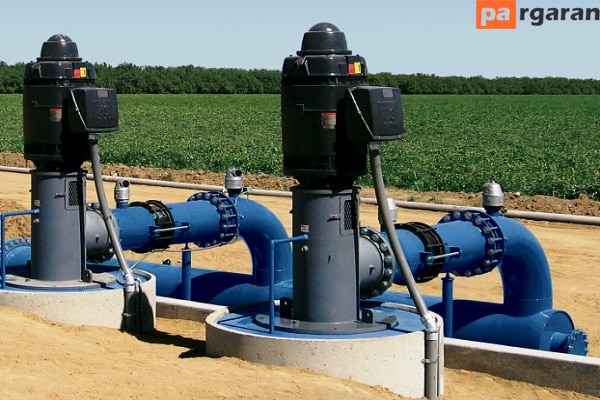
An agricultural water pump is a device used for transferring water for the purpose of irrigating farms and agricultural environments. The operation of these pumps is based on hydraulic and mechanical principles.
These pumps can be powered by an electric, diesel, or gasoline motor. When the motor is activated, an internal mechanism, referred to as a piston or a float mechanism, collects water from a reservoir or well and transports it through an outlet pipe to the desired location for irrigation.
In the functioning of agricultural water pumps, the entry of water into the pump occurs through a specific mechanism known as a cycloid or impeller. Then, with the activation of the motor and the creation of pressure, the water is directed towards the pump outlet and reaches the desired location.
In general, agricultural water pumps contribute to the irrigation of farms by generating pressure and creating flow, playing a significant role in agricultural production.
What is a Water Motor (Water Pump Motor)?
A water pump motor, colloquially known as a water motor, is a device for transferring and pumping water and, as the name indicates, consists of two parts: the pump and the motor. It is worth mentioning that it is sometimes referred to as an agricultural water motor. These two components are connected via a chassis to facilitate easier mobility.
During use, the water pump is positioned above the water level, transferring water upwards through a hose or pipe. Water pumps have the capacity to pump fluid from a well or dam and are mainly used in the northern regions of the country.
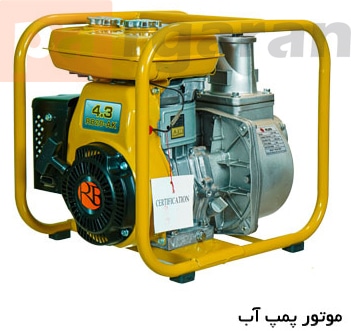
Agricultural Water Pump
High-pressure irrigation systems are widely used in agricultural lands in Iran, requiring high-pressure water that can be provided by water pumps.
For pressure irrigation systems, such as drip and sprinkler irrigation, the water pressure needs to exceed the environmental pressure. Some people utilize ponds, for which a submersible pump is required to drain the pond, while others rely on elevated tanks that necessitate a pump to fill. Furthermore, using a well requires a submersible pump. In any case, the presence of a pump is evident and essential.
In drip irrigation, filtration is essential as it purifies the water; adequate water pressure is necessary for optimal filtration, which is why three horsepower pumps or higher are utilized.
For large farms and lands, three-phase pumps are used, while single-phase pumps are adequate for smaller sizes. The chosen pump for agricultural land must be based on the required flow rate; if the pump's flow rate exceeds the land's requirement, the pump could be damaged.
To calculate the flow rate for each land, the number of sprinklers is multiplied by the consumption rate of each sprinkler. For example, if a field has 500 three-liter-per-hour sprinklers, the water consumption will be 1500 liters per hour, thus a pump capable of 1500 liters per hour must be selected.
How to Select a Water Pump
When selecting a water pump for agricultural irrigation applications, the water source, distribution system, and irrigation equipment are all important factors that must be considered. The available water source helps determine the required pumping flow rate, total suction head, and total dynamic head needed for the selected water pump, but this is not where it ends.
Whether the water source is from a surface pool or a well, the water source cannot be changed. Instead, the type of irrigation system, the distance from the water source, and the plumbing system need to be considered to accurately determine the flow rate and total dynamic head requirements from your agricultural irrigation water pump.
What is the Best Water Pump for Irrigation?
With the increase in irrigation and mechanization of this industry, questions like what is the best water pump for irrigation and which pump is better for irrigation have arisen.
Farmers and ranchers use agricultural water for crop cultivation in two main ways: dryland agriculture and irrigated agriculture. Dryland agriculture relies on the natural application of water to the soil through direct rainfall. While relying on rainfall is unlikely to lead to food contamination, a decline in rainfall may result in water shortages. Conversely, artificial water may increase the likelihood of contamination. Irrigation is the artificial application of water to land through various pipes, pumps, and spraying systems.
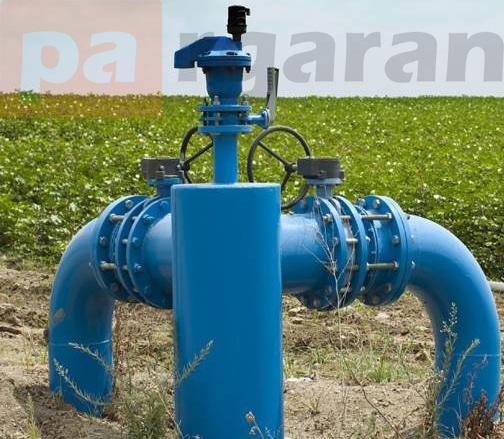
Irrigation is often used in areas with irregular rainfall or predicted dry spells or droughts. Various types of irrigation systems exist through which water is evenly distributed across the land. Water for irrigation can be sourced from springs or wells, surface waters, rivers, groundwater, lakes, or reservoirs, or even from other sources such as treated wastewater or desalinated water.
Thus, it is essential for farmers to protect their agricultural water sources to minimize the risk of contamination. Like any extraction of groundwater, irrigation water consumers must be cautious not to withdraw groundwater faster than it can be replenished.
Many various irrigation systems depend on how water is distributed across agricultural lands. Some common types of irrigation system frameworks include:
- Surface irrigation
- Localized irrigation
- Drip irrigation
- Sprinkler irrigation
- Center pivot irrigation
- Lateral move irrigation
- Sub-irrigation
- Manual irrigation
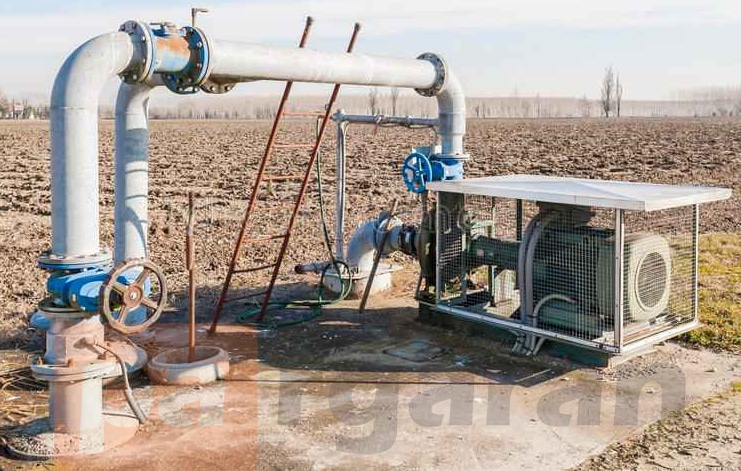
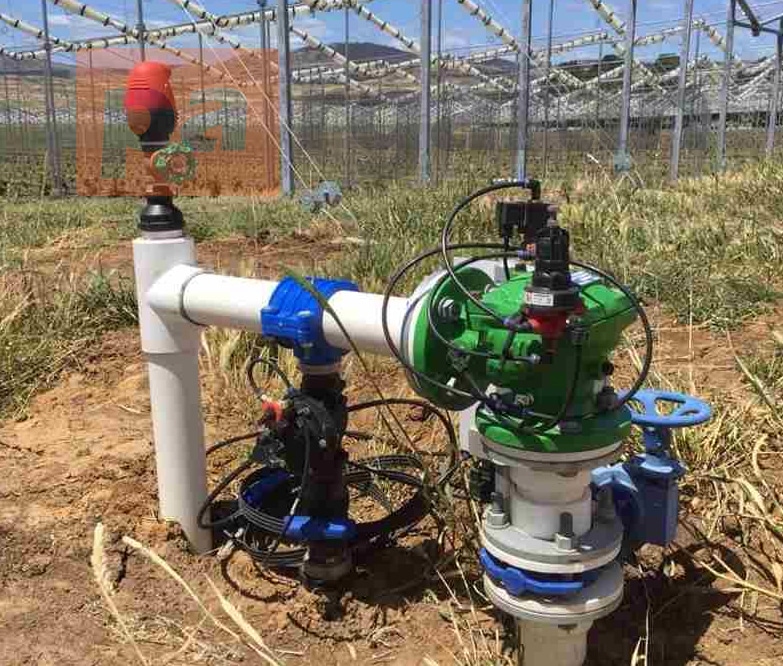
Common Types of Water Pumps for Agricultural Irrigation Systems
There are two main types of water pumps that are classified based on how they create pressure differences in the pump system.
These types are: 1) Positive displacement pumps - creating a differential pressure by changing the space (volume) within the pumping system.
Using components like pistons, closed chambers, and valves, the pressure on the inlet side is reduced, drawing water into the pump. Pressure is then increased and the water is transferred towards the pump’s outlet. 2) Centrifugal water pumps – utilize rotating blades called impellers to convert rotational energy into water flow for transferring water in the pump system.
A common characteristic of these pumps is that they require energy to operate, which can be supplied by fuel or electricity; alternatively, with some effort, you can manually move the pump components using a lever. With the many types of pumps available, determining which one is best for your farm can be challenging.
When choosing a pump, you should consider your budget, farm size, water source, and the amounts of water and power required. Your water source plays a significant role in the pump’s suitability. If you have surface water sources such as rivers, lakes, ponds, reservoirs, or even shallow wells with water levels between 0 to 7 meters (0 to 23 feet), a surface pump will work for you.
Centrifugal Water Pumps
The primary duty of a centrifugal water pump...