Four advances in pneumatic automation energize:
Modular production offers a solution that reduces overall costs and production time for new lines.
Smart sensor networks that are optimized, the electrical and pneumatic architecture of adjustable devices, and IIoT are trends that have the most significant impact.
Four technology trends have strengthened the importance of pneumatics in automated systems. These advancements breathe new life into this inexpensive power source and are evolving pneumatics for services in the 21st century. The four automation advancements are:
First Advancements in Pneumatic Automation: Intelligence Opens the Door to Greater Efficiency
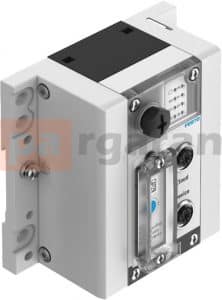
One of today's issues with pneumatics is the difficulty in gathering device information. However, now, with the use of cost-effective smart sensor networks such as IO-Link, data collection from pneumatic devices is possible. Reliable data acquisition enhances control information and ensures better overall performance.
In addition, a new category of valves—smart valve packs—features integrated microsensors for pressure and flow. The data from these microsensors provides new opportunities in adaptive control that were simply not feasible before the digital revolution. The use of smart devices will continue to support pneumatic solutions.
Core Benefits Ensure the Longevity of Pneumatic Power
Compressed air systems are more cost-effective compared to electrical systems, and their installation, commissioning, and maintenance are also straightforward. Pneumatics offer a higher force density per shape factor compared to electric actuators.
Pneumatic actuators operate at high speeds and are the chosen solution for harsh environments where dust, dirt, moisture, washing, or explosive particles or gases are present. All these factors make pneumatics suitable for automated systems.
Second Advancement in Pneumatic Automation: Modular Construction and Device Reconfiguration Reduce the Cost of New Production Lines
Shorter product life cycles due to significant capital costs and resources required for determining, purchasing, and installing production lines for each new product impose cost pressure on manufacturers. Modular production offers a solution that reduces overall costs and production time for new lines.
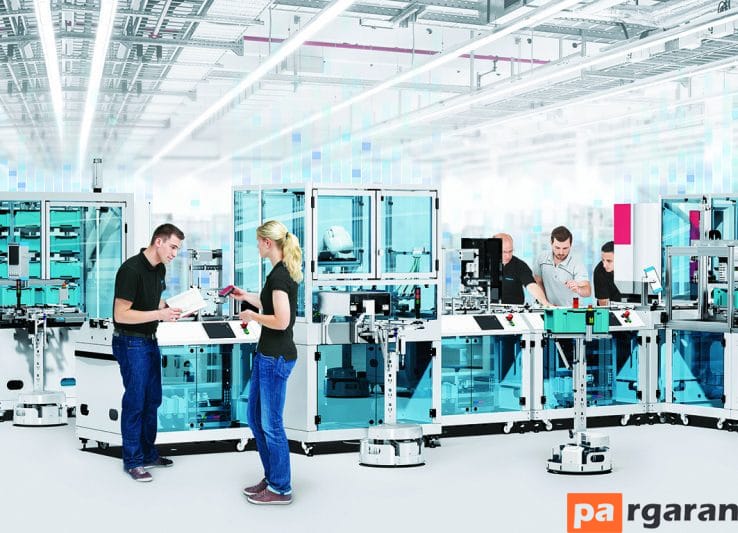
In modular production, each module in the system is dedicated to performing one or two simple production steps. For example, driving screws, inserting parts, or applying adhesives. With a relatively simple and cost-effective arrangement of modules in an integrated line, the product is produced one step at a time.
Smart conveyors enable modular production by routing workpieces to the appropriate module for a required step. When a line is decommissioned, the modules and conveyors can be reconfigured and reused, enhancing the original investment and reducing lead time. Modular construction is one of the foundational concepts of Industry 4.0.
Smart pneumatic valve packs have also contributed to efficiency in modular production. Smart valve packs modify their functionality through downloadable software.
For instance, a smart valve pack can change its functionality via software from a 2-2 valve for a robotic vacuum gripper to a 3-2 valve for a mechanical gripper using the same valve pack hardware. Alternatively, the same valve pack can be reconfigured to control the speed of a cylinder or to reduce energy consumption during the extension and retraction phases of actuator motion. Each module becomes more flexible with reconfigurable devices like smart valve packs.
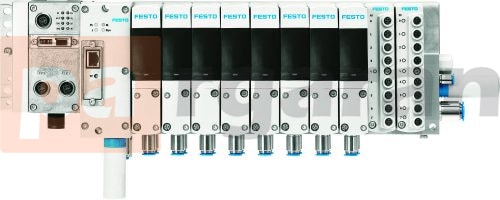
Third Advancement in Automation: Smart Valve Packs Change Functionality Through Downloadable Software.
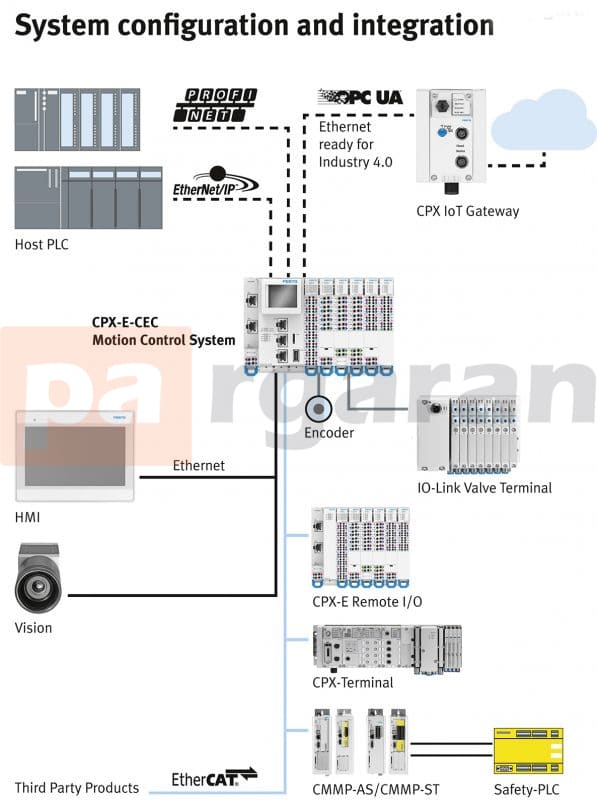
Suppliers have invested in the development of controllers and other hardware and software that seamlessly integrate pneumatics and electricity into a high-performance motion architecture. These systems feature the latest advancements in Remote I/O that not only assist in driving deeper information to devices but also bring pneumatic performance closer by allowing valve terminals to respond more quickly to actuators.
Remote I/O also makes installation and troubleshooting easier and requires less time. Electric/pneumatic motion systems are nothing new. What is new is the use of the latest control, communication, and motion technologies in the overall control architecture.
IIoT Gateways are Essential for Realizing the Benefits of Smart Systems
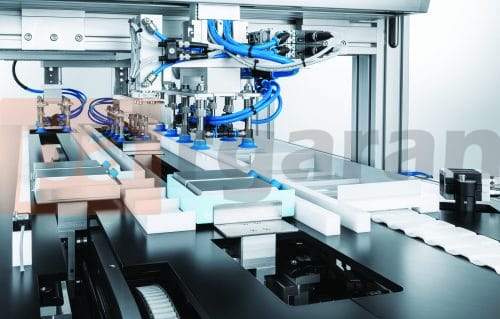
Fourth Advancement: Smart Conveyors Enable Modular Production by Routing Workpieces to the Appropriate Module for a Required Step.
Smart sensor networks; high-performance, integrated electrical/pneumatic control architectures; and modular production are building blocks of IIoT. Advanced IIoT gateways link these three pieces of technology together, providing a secure interface for cloud computing.
When an IIoT gateway is added to a system and a dashboard is created, authorized personnel can access operational information for use in predictive maintenance, faster troubleshooting, process optimization, and energy reduction.
With cloud computing, the organization becomes fully integrated, responsive, and more efficient. Depth process data provided by smart sensors can reduce the occurrence of unexpected machine downtimes. As AI costs decrease, adaptability to the environment facilitated by cloud analytics becomes even quicker.
The cornerstone of these IIoT-based systems will be machines that combine the advantages of electric and pneumatic motion within a smart, integrated architecture.
For any questions or comments, please contact the Pargaran team.
For more information, click here.