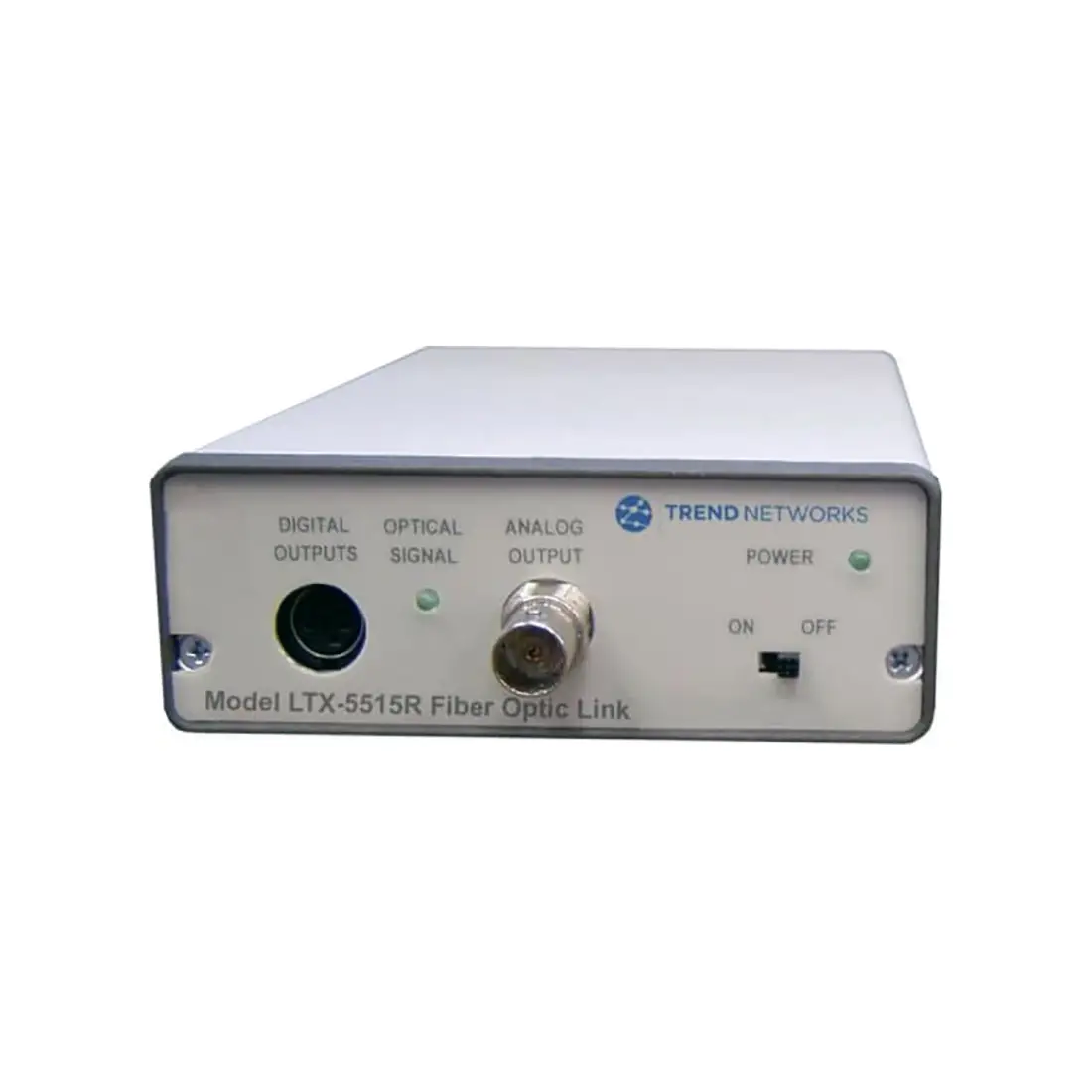
The LTX5515-R-1310 fiber link receiver from Trend is a critical and advanced component in telecommunications and industrial systems, designed to convert optical signals into electrical signals.
This product supports both analog and digital protocols, enabling high-speed data transmission without degradation over single-mode fiber optics.
Utilizing a 1310 nanometer wavelength allows this device to operate efficiently over long distances with minimal signal loss, making it ideal for large and sensitive infrastructure projects.
Key Features of the Trend LTX5515-R-1310 Fiber Link Receiver
- Support for simultaneous analog and digital data transmission
- Designed for single-mode fiber optics with a wavelength of 1310 nanometers
- High sensitivity and low error rate in signal reception
- Fully compatible with industrial and telecommunications standards
- Stable performance in various industrial environmental conditions
Technical Specifications
| Feature | Value |
|---|---|
| Brand | Trend / Trend Networks |
| Model | LTX5515-R-1310 |
| Fiber Type | Single-mode |
| Operating Wavelength | 1310 nanometers |
| Signal Type | Analog / Digital |
| Component Type | Receiver |
Frequently Asked Questions
Is this receiver suitable for transmitting digital data?
Yes, the LTX5515-R-1310 model is specifically designed to support both analog and digital signals, making it suitable for various telecommunications applications.
What distinguishes the Trend LTX5515-R-1310 fiber link receiver from other Trend receivers?
This model is specifically optimized for single-mode applications and a 1310 nanometer wavelength, allowing for longer and more stable transmission distances compared to multi-mode models.
What are the primary applications of this product in which industries?
This receiver is primarily used in telecommunications, industrial networks, monitoring systems, and infrastructure projects that require high-quality data transmission.
Conclusion
The LTX5515-R-1310 fiber link receiver from Trend is a reliable and efficient choice for engineers and network professionals seeking stability and quality in the transmission of analog and digital data.
With its precise technical specifications and compliance with current standards, this product can play a significant role in enhancing communication infrastructure.