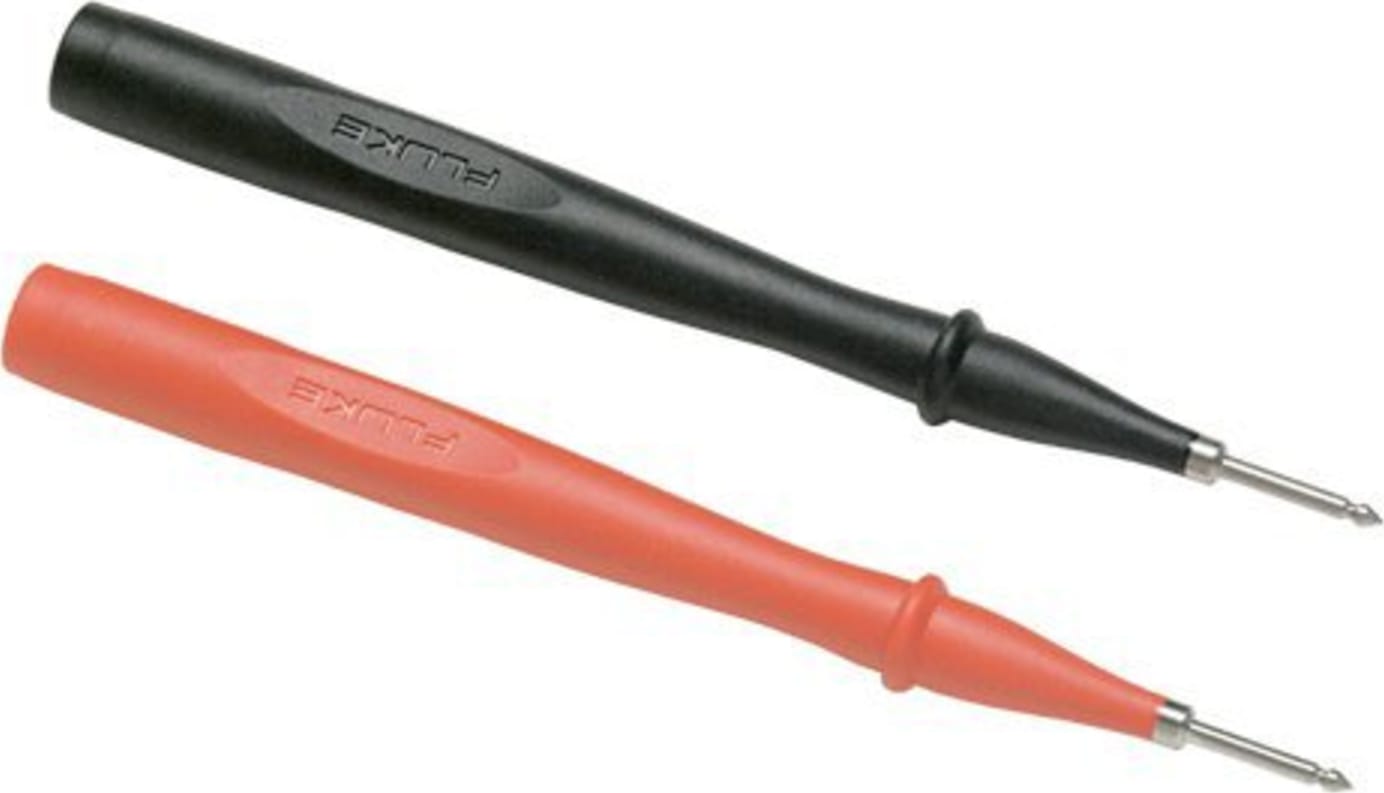
Fluke TP2-1 slim test probes are an engineered solution for access challenges in industrial electrical panels and compact electronic equipment.
These probes utilize an innovative design and slim body, enabling technicians to reach testing points that are inaccessible with standard probes, without the need for equipment relocation or hazardous manipulations.
The high build quality of these products guarantees durability and stable performance in harsh working conditions.
Key Features of Fluke TP2-1 Slim Test Probes
- Narrow ergonomic design for access to tight and compact terminals
- High safety rating complying with IEC 61010 and CAT III/IV standards
- Precision metal tips for secure connection and reduced contact resistance
- High-quality insulated handles for operator protection
- Compatibility with most digital multimeters and industrial testing tools
Technical Specifications
| Feature | Value |
| Model | TP2-1 |
| Brand | Fluke |
| Probe Type | Slim Reach |
| Safety Level | CAT III 1000V / CAT IV 600V |
| Tip Material | Stainless Steel |
| Tip Length | Narrow and Precise |
| Compatibility Standard | IEC 61010-031 |
Frequently Asked Questions
Are Fluke TP2-1 probes safe for use at high voltages?
Yes, these probes are designed to comply with CAT III and CAT IV safety standards, providing necessary safety for use in industrial environments with high voltages.
Are these probes compatible with other multimeters?
Yes, the standard 4mm sockets of these probes make them compatible with most available digital multimeters and testing tools in the market.
What is the main advantage of using slim probes compared to standard probes?
The main advantage is the ability to access points with limited space where using standard thick probes is impossible or dangerous.
Conclusion
Purchasing the Fluke TP2-1 slim test probe is a smart choice for any engineer or technician needing accuracy, safety, and convenience in their work.
This product facilitates faster and safer troubleshooting and maintenance processes by eliminating physical barriers at difficult access points, providing high added value for technical teams.